Free visual inspection and a written scope of work before any mitigation begins - photos, moisture readings, and drying logs go in your claim file
The scope we write is the scope we bill. Anything new gets shown to you, in writing, before we touch it.
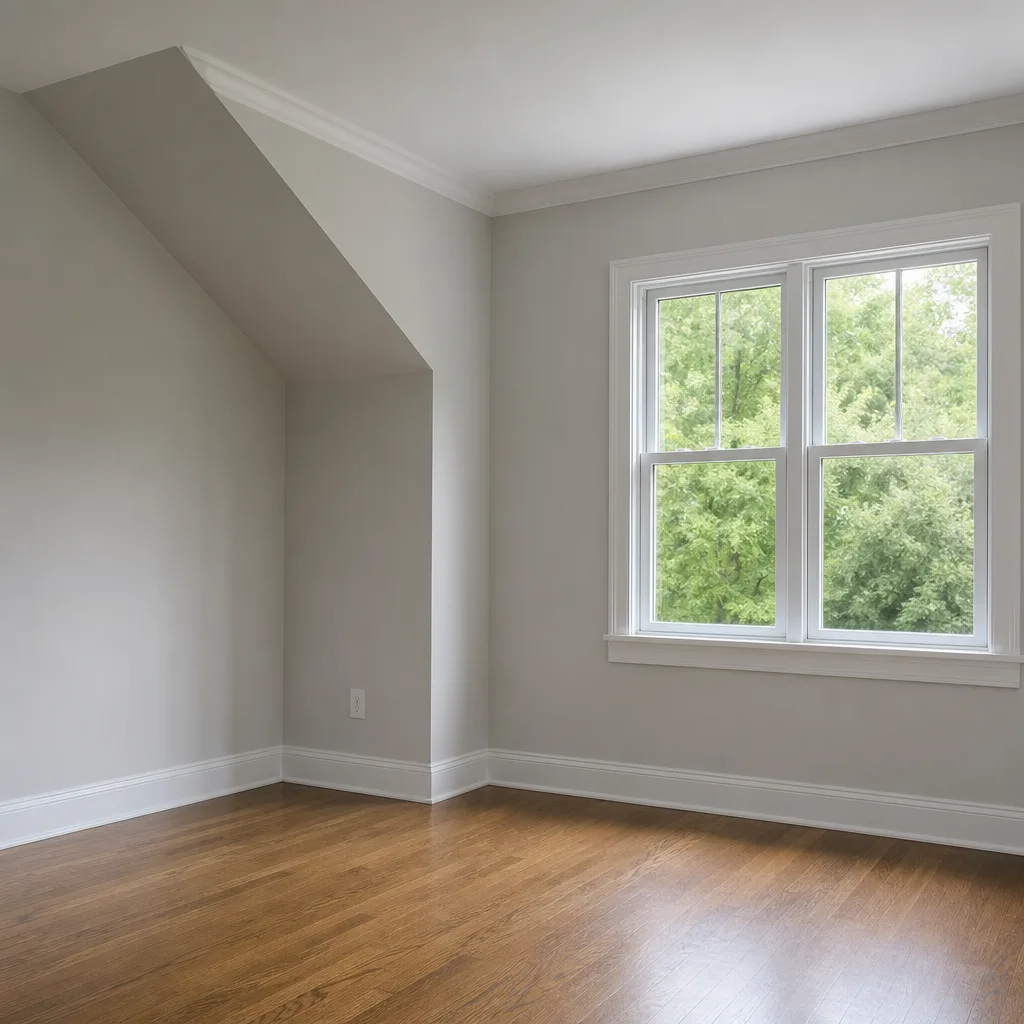
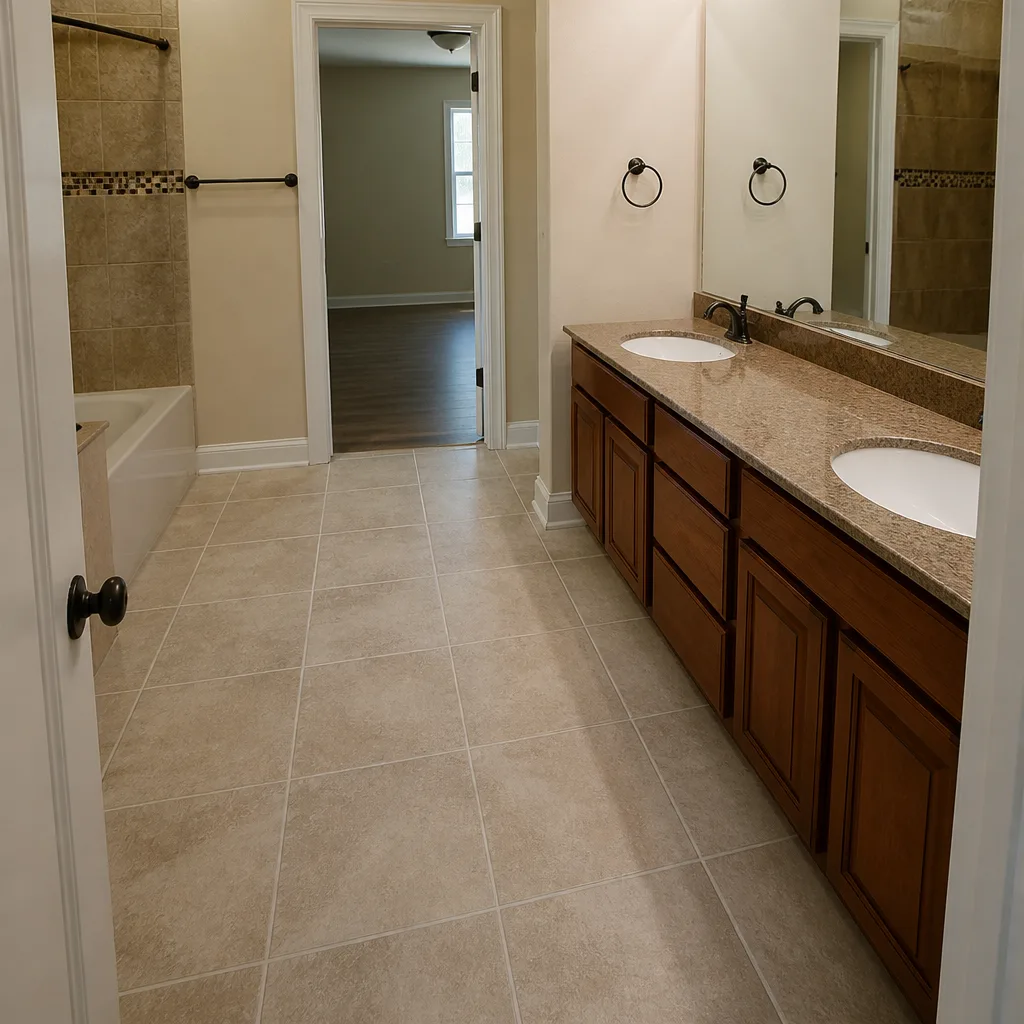
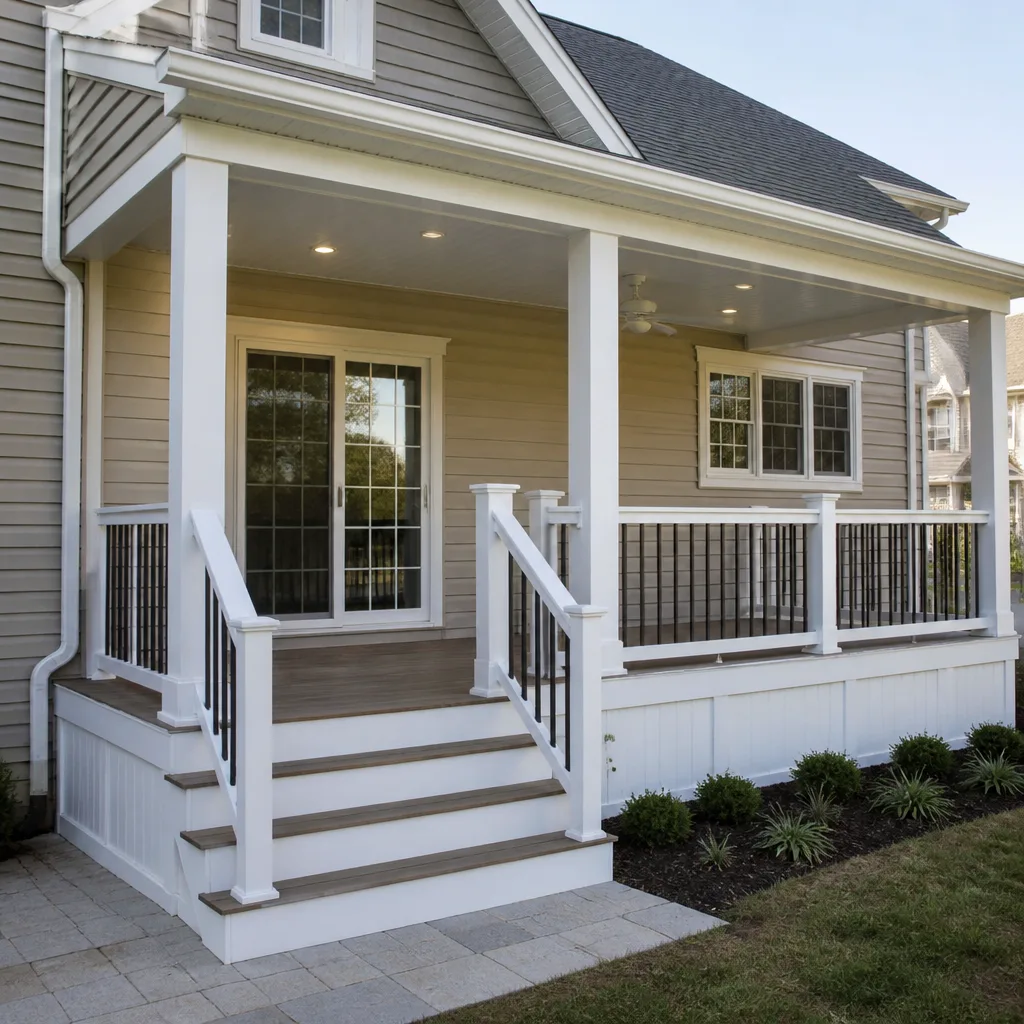
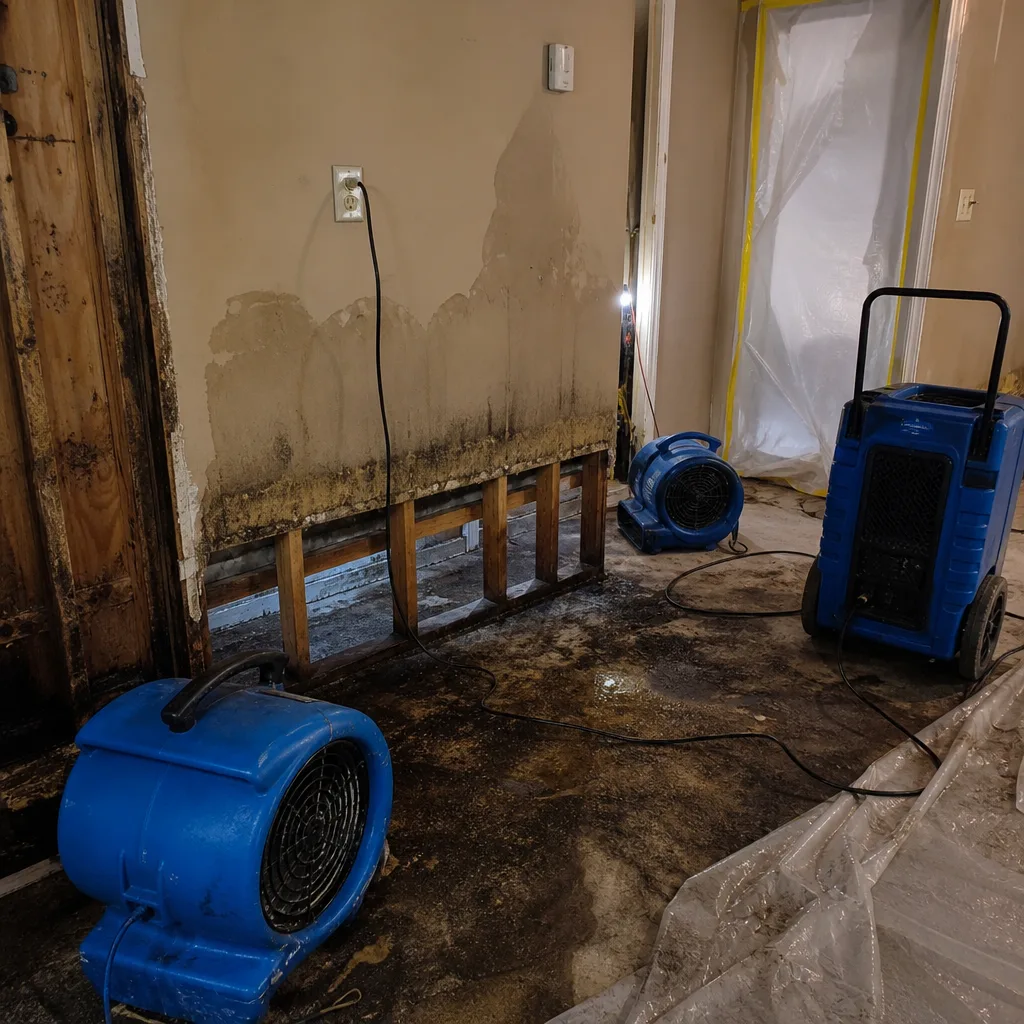 Before
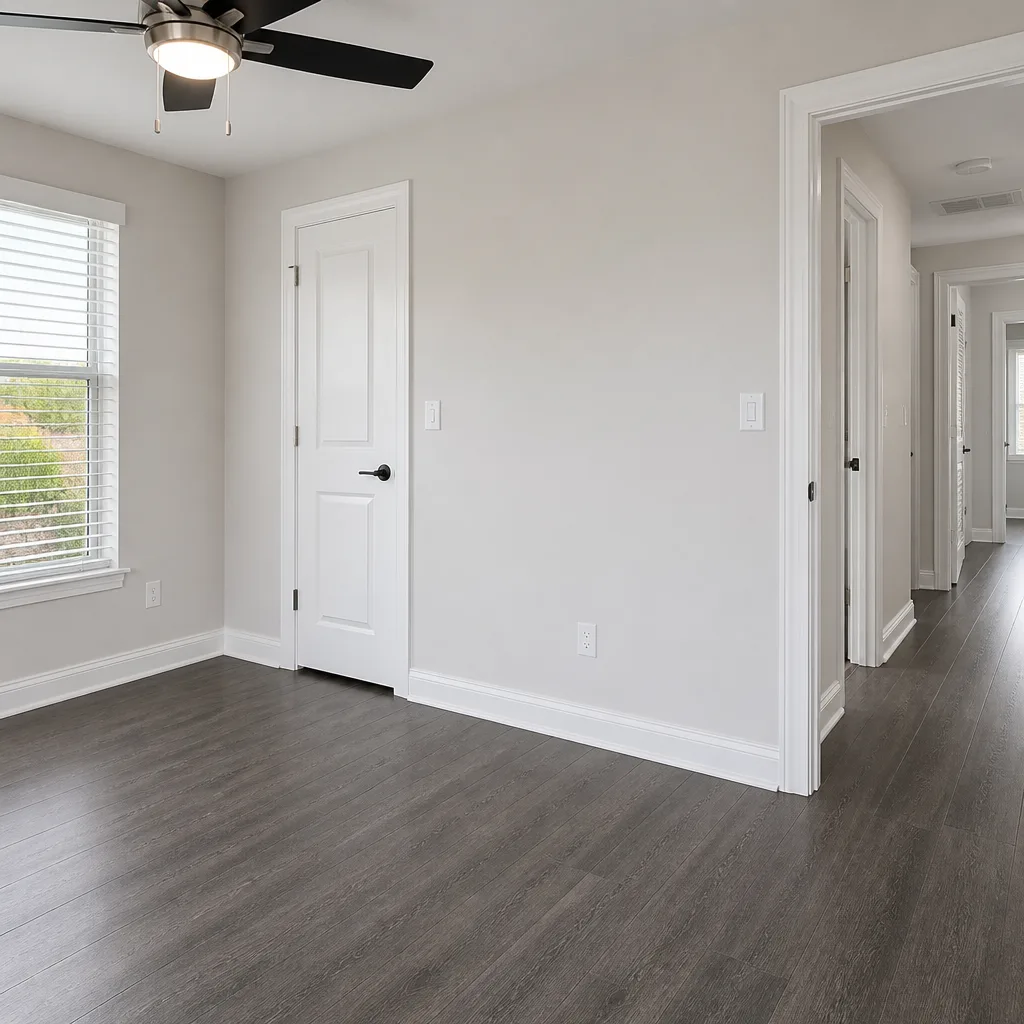 After
After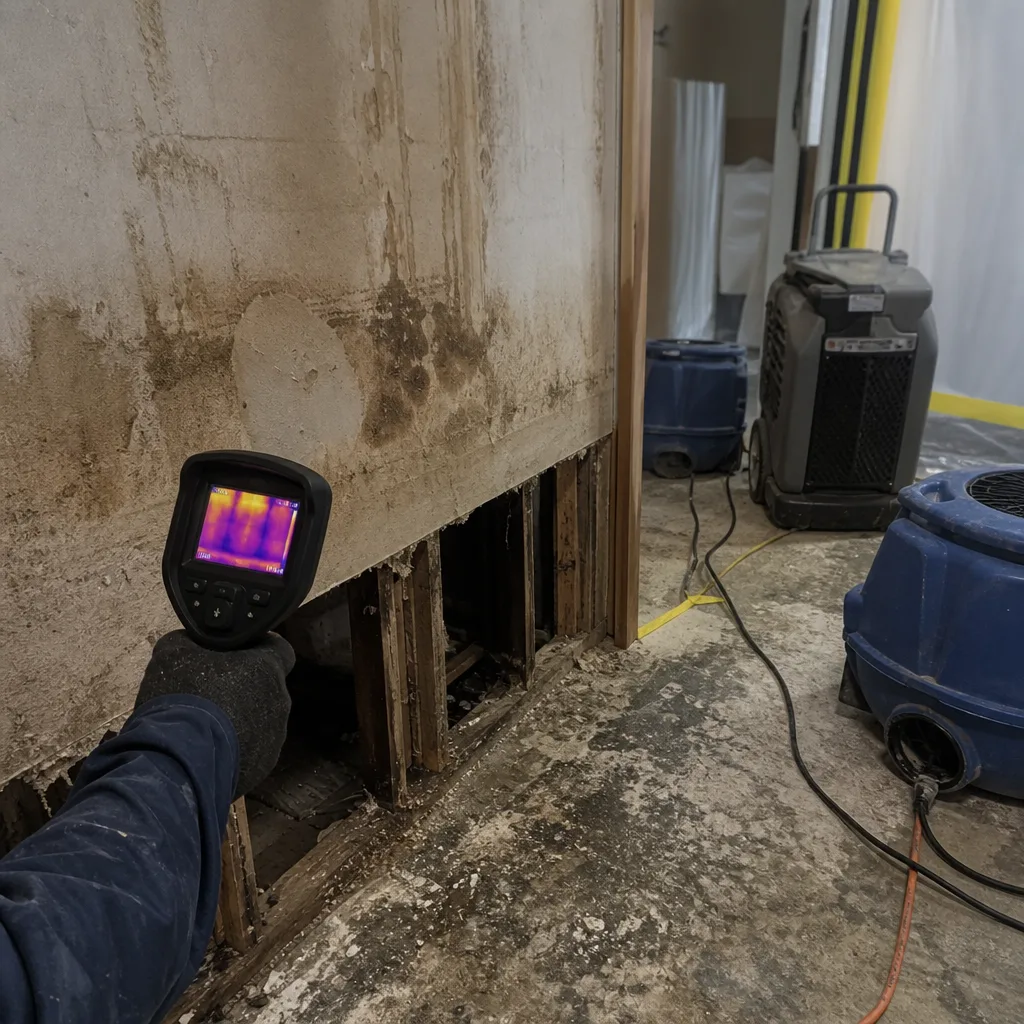 Before
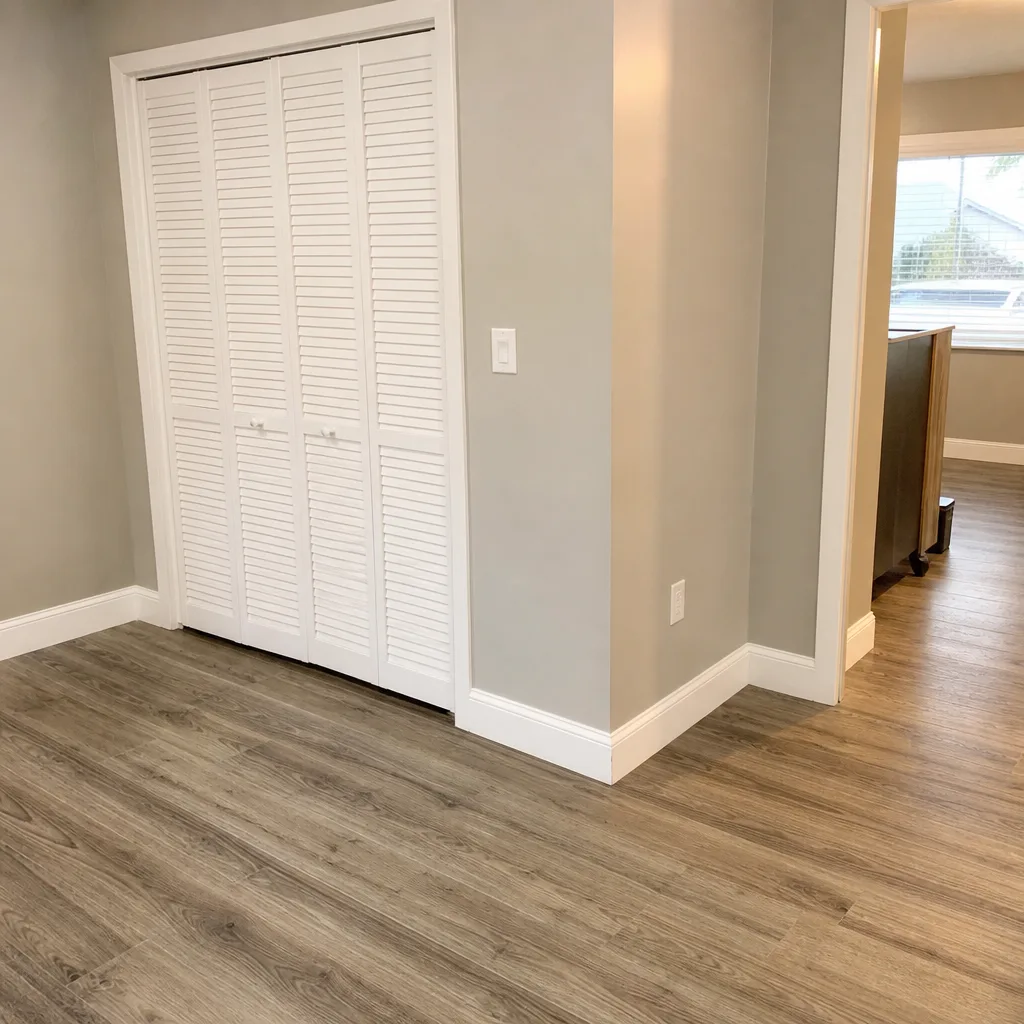 After
After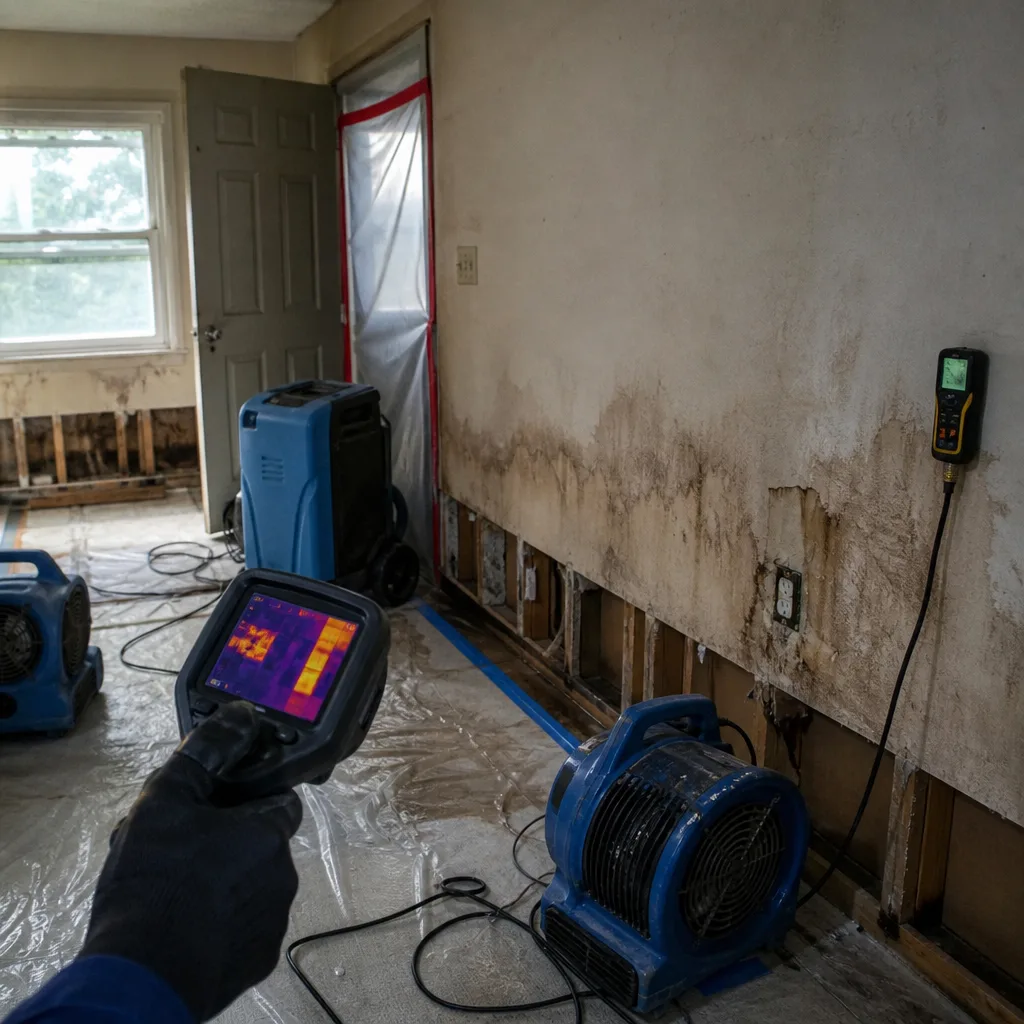 Before
 After
After24/7 Emergency Fire & Smoke Damage Restoration in Miami
Fire and smoke damage restoration in Miami typically costs $4,200-$18,500 depending on fire severity, square footage affected, and whether water from suppression triggered secondary mold damage. Most residential kitchen and living-space fires in Miami-Dade fall in the $6,800-$12,000 range for full cleanup, deodorization, and structural drying, with our crews arriving within 45 minutes of your call to (754) 222-3479. The first hour after a fire determines whether smoke residues set permanently into porous materials and whether suppression water begins colonizing mold inside your walls.
We answer live, 24 hours a day, 7 days a week. No voicemail, no callback queues. Our Miami (South FL) office dispatches crews across the metro area, from Brickell high-rises to single-family homes in Westchester and Hialeah. Every job starts with a free visual inspection and a written price before any work begins, Haven Standard, Clause 1. Call (754) 222-3479 now.
Understanding Fire & Smoke Damage Restoration Severity in Miami Properties
Fire damage in Miami carries a hidden multiplier: the water used to extinguish it. In Miami-Dade’s dominant CBS (concrete block stucco) construction, especially pre-1992 builds common in Hialeah and Westchester, that water soaks into block cavities and hides behind stucco finishes. Our moisture meters regularly find saturation 48 hours after a fire that looked “surface dry” to the naked eye. This is not a drying pattern you see in drier inland Florida markets.
Smoke residue types determine cleanup intensity. Dry smoke from fast-burning, high-heat fires leaves powdery, relatively removable residues. Wet smoke from slow, smoldering fires, plastic and synthetic combustion, produces sticky, acidic deposits that etch surfaces and penetrate deep into porous materials. Protein fires, common in kitchen incidents across Miami’s dense neighborhoods, leave nearly invisible but pungent residues that standard cleaning misses entirely.
Smoke migration follows pressure differentials and HVAC pathways, often carrying corrosive compounds into closets, behind cabinets, and through soffit spaces far from the fire origin. In Miami’s sealed CBS homes, that migration pattern is more contained than in wood-frame construction, but the compounds concentrate where they land. Tertiary smoke damage, where residues have chemically bonded with surfaces over 72+ hours, requires abrasive or solvent-based restoration rather than cleaning alone.
Why Miami Property Owners Choose DryMark Restoration Hollywood
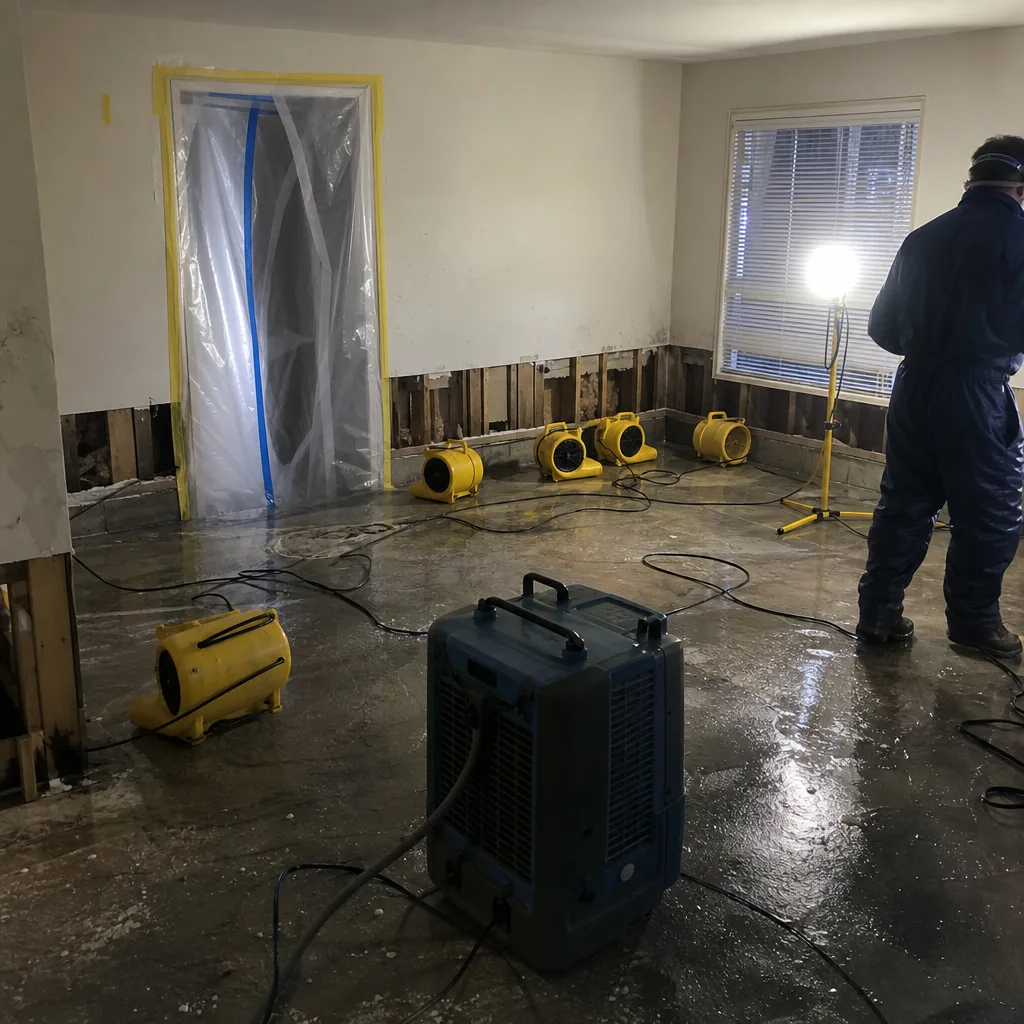
- 45-minute response commitment to Miami addresses, measured from dispatch confirmation to crew arrival, because smoke residues begin permanent bonding within the first hour and mold colonization in CBS walls starts within 24-48 hours of water intrusion.
- 24/7 live answer - a real person, never an automated system or voicemail tree, picks up every call to our emergency line, including holidays and hurricane standby periods.
- IICRC-certified crews holding FSRT (Fire and Smoke Restoration Technician) and WRT (Water Damage Restoration Technician) certifications, with AMRT (Applied Microbial Remediation Technician) credentials required for the mold prevention work that follows nearly every Miami fire suppression.
- Free visual inspection with moisture mapping and photo documentation before any scope is written or any price is quoted.
- Direct insurance billing with documented photo records, drying logs, and line-item scopes formatted for carrier submission, including Citizens Property Insurance and surplus-lines carriers common in Miami-Dade.
- One team from board-up to reconstruction - no handoffs between mitigation and rebuild contractors, no gaps in documentation, no disputed scope items between phases.
 Before
 After
AfterOur Fire & Smoke Damage Restoration Process
1. Inspection & Assessment
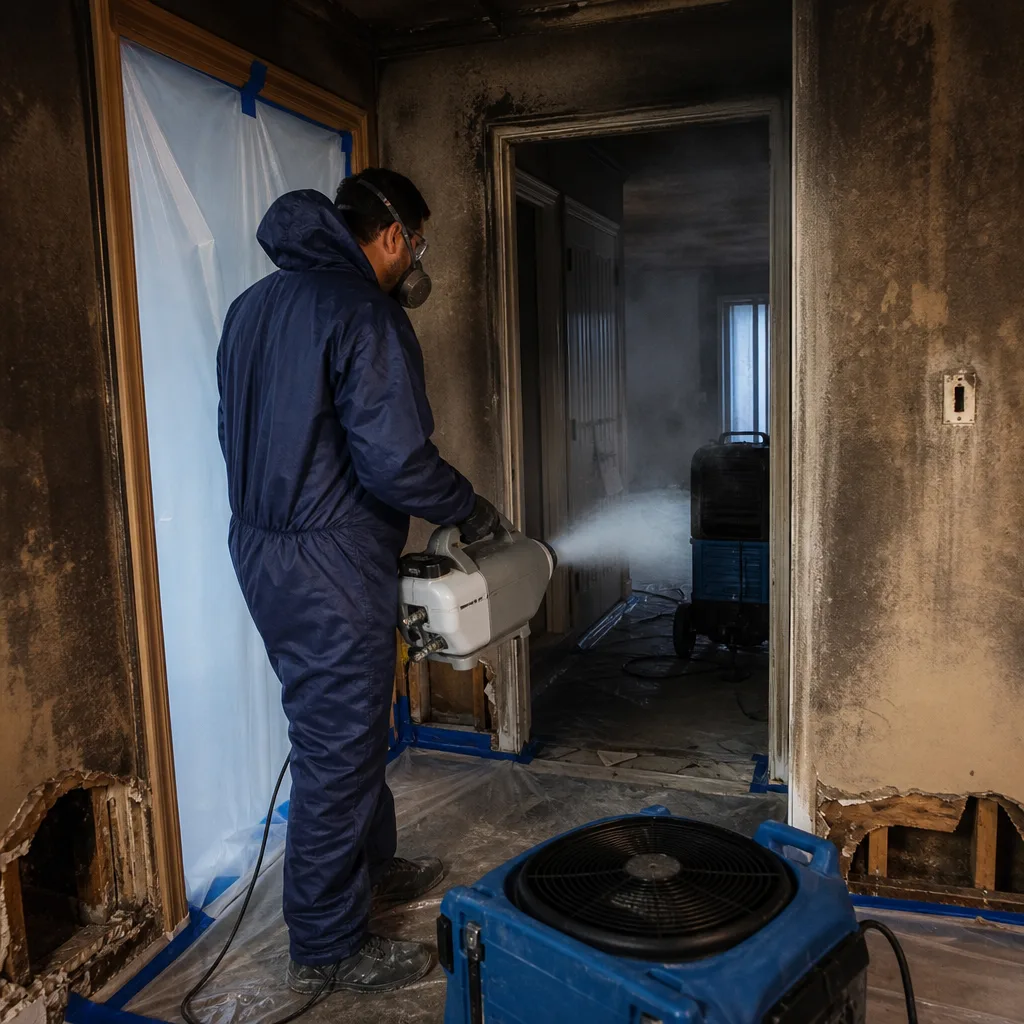
We document the full loss perimeter with thermal imaging, moisture meters, and hygrometers, mapping smoke migration paths and water intrusion points in CBS wall cavities. Every reading is logged for the carrier. You receive a written scope and price before any work begins, Haven Standard, Clause 1.
2. Emergency Board-Up & Stabilization
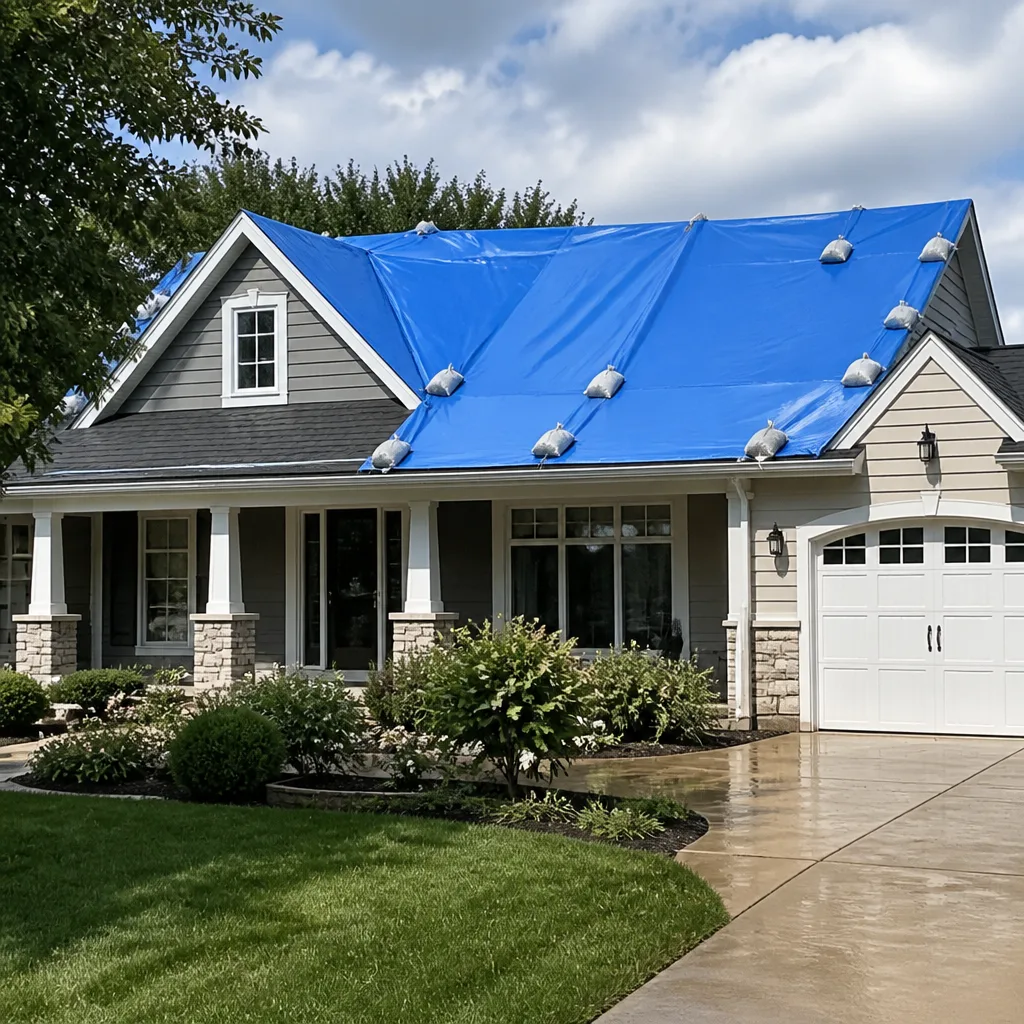
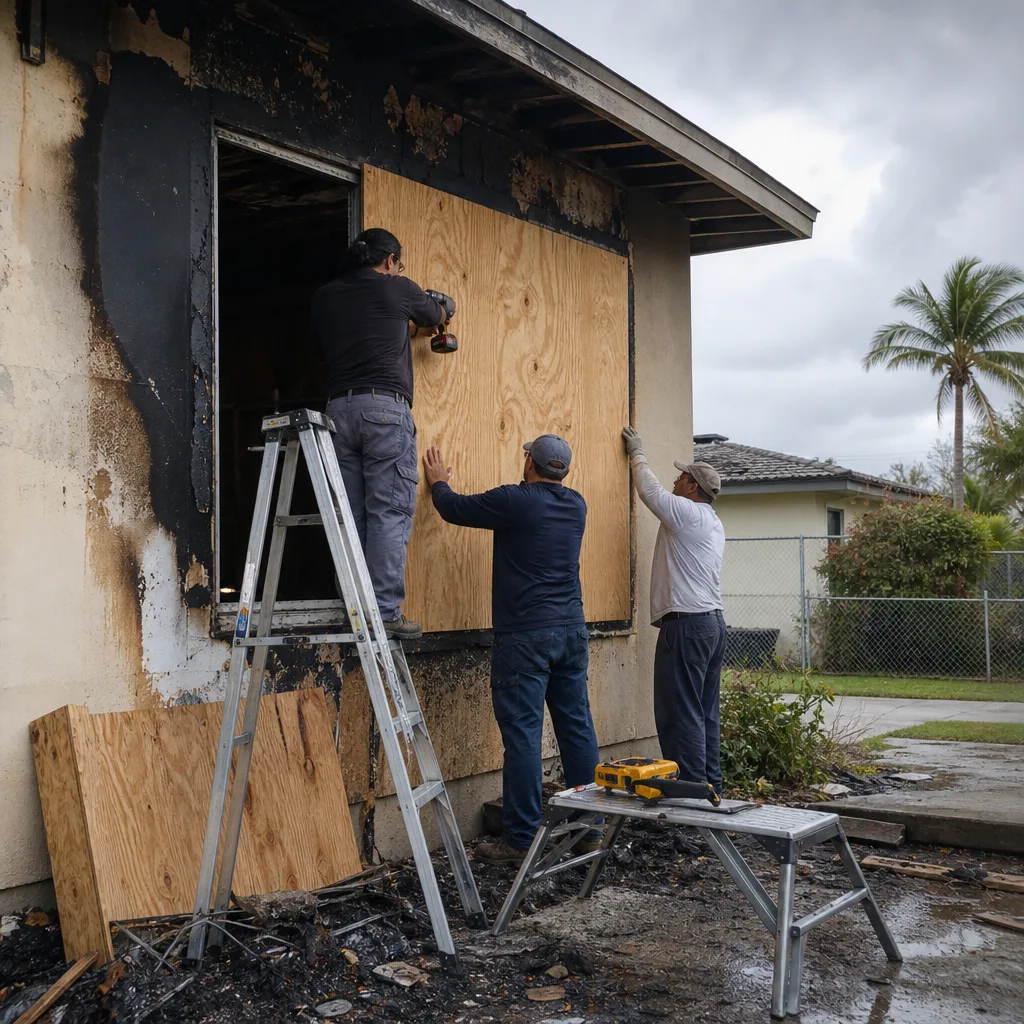
We secure compromised openings with fire-rated board-up materials and tarp damaged roof sections the same night, critical in Miami where afternoon thunderstorms arrive regardless of fire damage. Salt-air corrosion from coastal humidity often weakens garage-door hardware, hinges, and fasteners at fire scenes, so we inspect and reinforce entry points before they fail.
3. Water Extraction & Structural Drying
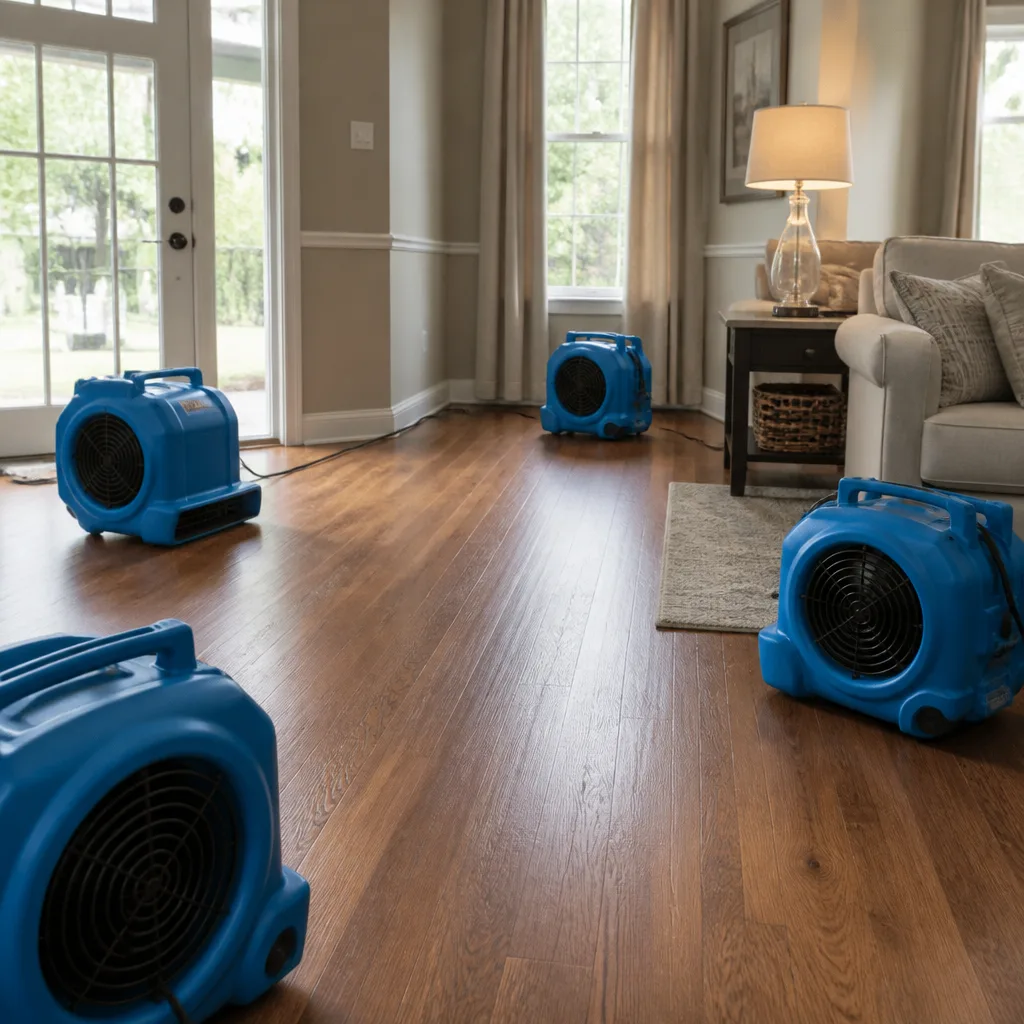
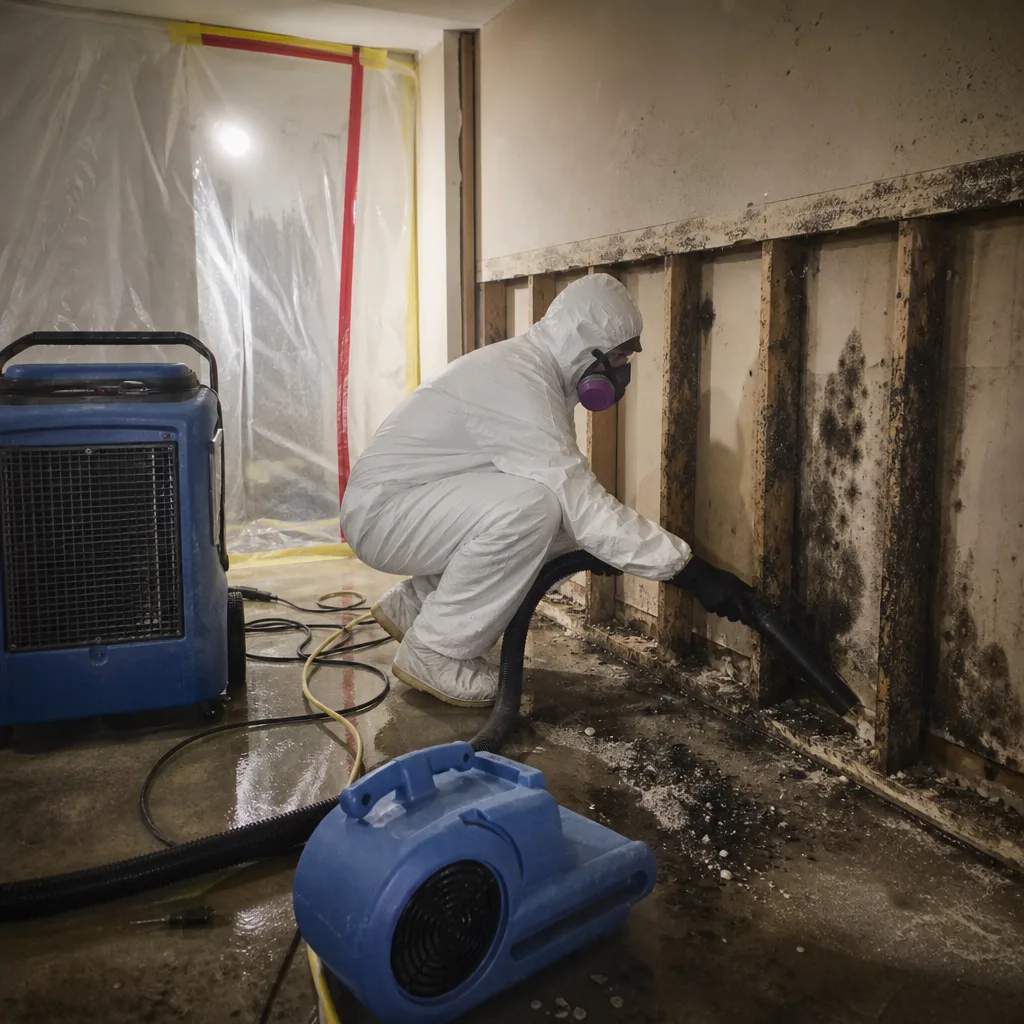
Fire suppression water is extracted from floors and wall cavities using Injectidry systems and high-volume extraction units. We deploy Dri-Eaz and Phoenix dehumidifiers sized to Miami’s ambient humidity, which rarely drops below 70%, making psychrometric drying calculations more demanding than in temperate climates. Daily moisture logs track vapor pressure differential until materials reach dry standard.
4. Smoke & Soot Removal
Dry, wet, and protein residues are identified by surface type and treated with appropriate chemistries: HEPA vacuuming for loose particulate, ultrasonic cleaning for non-porous contents, and solvent or abrasive methods for bonded tertiary residues. Air scrubbers with activated carbon filtration run continuously during this phase.
5. Odor Removal & Deodorization
Thermal fogging and ozone treatment neutralize odor compounds at the molecular level, followed by hydroxyl generators for safe occupied-space treatment. In Miami’s humidity, odor molecules bind more aggressively to porous materials; our protocol extends dwell times and verifies elimination with olfactory testing and air sampling rather than masking.
6. Repairs & Restoration
Structural repairs, finish replacement, and final cosmetic restoration are scoped in writing and executed by the same team that performed mitigation, ensuring continuity in documentation and warranty coverage under our 365-Day Done Right Promise, The Haven Standard.
Need Emergency Fire & Smoke Damage Restoration in Miami Now?
Crews minutes away, answering live 24 hours a day. The sooner we start, the less it costs.
Working With Your Insurance Company
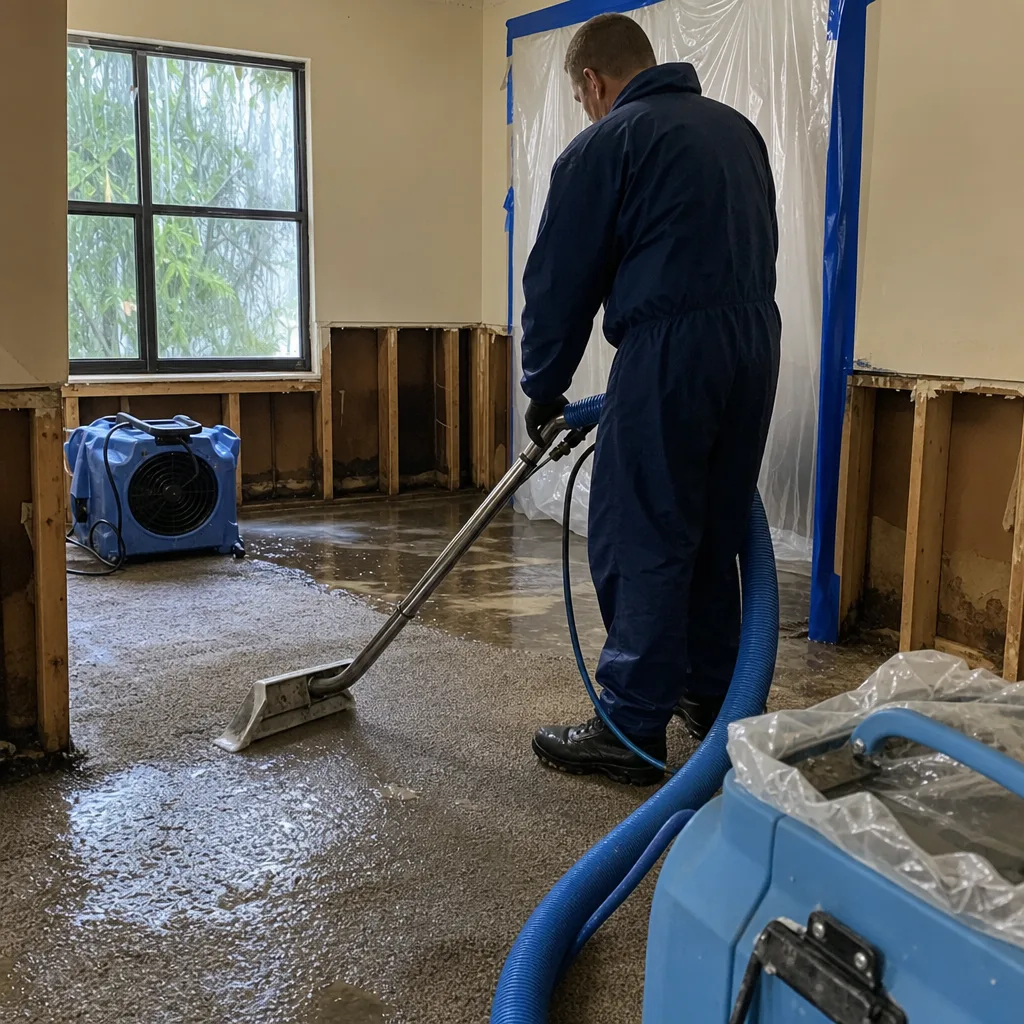
Nearly every Miami-Dade fire damage claim navigates a strained insurance market. Dozens of carriers have exited Florida, leaving a significant share of homeowners on Citizens Property Insurance or surplus-lines carriers with non-standard claims processes. Documentation precision is not optional here; it is the difference between a paid claim and a disputed denial.
We begin documenting from the first hour: photos of the loss scene before any disturbance, moisture readings at every accessible point, and a written scope with line-item pricing. Our estimates are formatted to industry standard (Xactimate) and submitted with drying logs, equipment placement diagrams, and material classifications. We communicate directly with your adjuster, provide supplemental documentation when requested, and coordinate payment to minimize your out-of-pocket exposure.
What We Provide Your Insurer
- Thorough documentation of the loss
- Photos of all damage, room by room
- Moisture readings and drying logs
- A detailed, line-item scope of work
- Direct coordination with your carrier
Built for Miami’s Loss Calendar
January through April brings dry season conditions and elevated electrical fire risk from space heaters and overloaded circuits in older pre-1992 wiring, common in Little Havana and Hialeah. May through October, lightning strikes spike during near-daily afternoon thunderstorms, with surge damage and subsequent electrical fires rising 40% above dry-season baselines. Hurricane season, June through November, compounds the pattern: fires from generator misuse, candle incidents during extended outages, and the catastrophic secondary effect of A/C loss in sealed CBS homes, where indoor humidity spikes to near-outdoor levels within hours, accelerating mold colonization in fire-suppression water before the structural drying phase even begins.
Year-round, kitchen protein fires dominate residential calls across Miami’s dense neighborhoods, from Coral Gables estates to Miami Beach condos. The city’s average elevation of six feet above sea level and king-tide flooding in coastal ZIP codes add a non-storm water intrusion pattern that keeps baseline humidity elevated even in “dry” months.
Fire & Smoke Damage Restoration Across Miami’s Neighborhoods
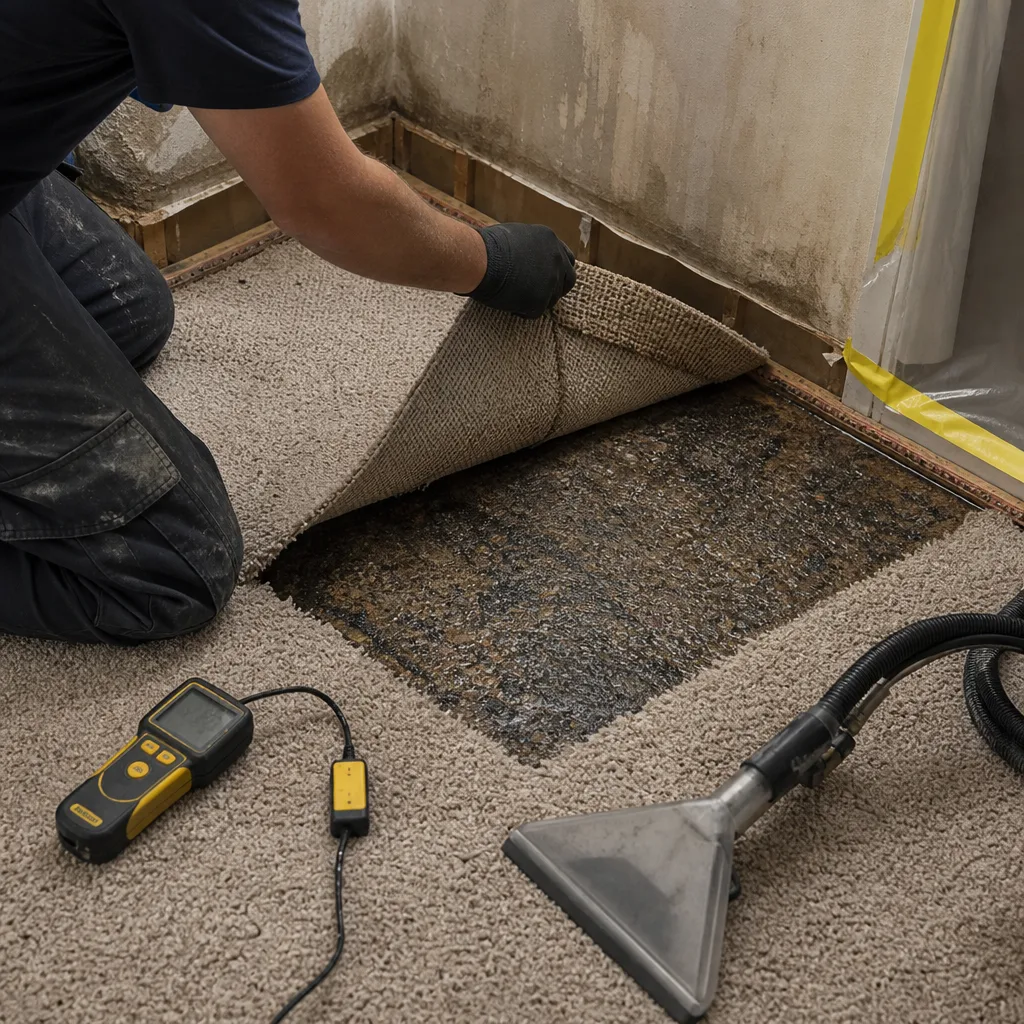
In Brickell and downtown Miami, high-rise fires present vertical smoke migration through shared HVAC and elevator shafts, requiring floor-by-floor assessment and coordinated building management access. Our crews maintain pre-registered credentials with major downtown properties to expedite entry.
Little Havana and Westchester contain dense concentrations of pre-1992 CBS homes with original low-slope roofs and no impact-rated openings. After a kitchen fire in a 1960s CBS home in Westchester, we pulled soaked insulation and found saturation behind the stucco that no one could see; our tech ran moisture mapping along the block walls, set up containment and air movers, and logged every moisture reading for the carrier. Because the home was pre-Andrew construction with a low-slope roof, we also tarped the burned section the same night to keep the afternoon storms out while the structural drying ran.
Hialeah neighborhoods mix pre- and post-Andrew construction in tight proximity, requiring our crews to identify code-era quickly and adjust structural risk assessments accordingly. Post-Andrew homes with impact-rated windows and improved roof connections contain smoke better but may have more synthetic materials producing complex wet smoke residues.
Miami Beach and Key Biscayne face the most aggressive salt-air corrosion environment in our service area. Garage-door springs, hinges, rollers, and fasteners at fire scenes often fail during board-up or pack-out, corroded years ahead of inland wear schedules. We carry galvanized and stainless hardware replacements specifically for coastal conditions.
Specialized Fire & Smoke Damage Restoration Services We Offer in Miami
Fire Damage Cleanup
Complete removal of fire-damaged structural materials, debris, and compromised contents, with hazardous waste disposal per Miami-Dade County requirements. Pre-1992 CBS homes receive enhanced cavity inspection for hidden water damage behind stucco.
Smoke & Soot Removal
Dry, wet, and protein residue identification and treatment by surface type, including ultrasonic cleaning for salvageable contents and abrasive methods for bonded tertiary residues. In Miami’s humidity, residues acidify faster; we accelerate initial response timelines accordingly.
Odor Removal & Deodorization
Thermal fogging, ozone, and hydroxyl treatment protocols adjusted for Miami’s high ambient humidity, which increases odor molecule binding to porous materials. Verification through air sampling, not masking agents.
Contents Cleaning & Pack-Out
Inventory, photograph, and transport salvageable contents to our controlled cleaning facility. Salt-air corrosion assessment for metal items, electronics, and firearms stored in coastal homes. Full chain-of-custody documentation for insurance.
Emergency Board-Up & Tarping
Immediate structural securing with fire-rated materials and weatherproof tarping, critical in Miami’s afternoon thunderstorm pattern. Coastal hardware inspection and reinforcement for corroded entry points.
What happens when you call
- 1
A real person answersNo phone trees - you reach a local pro.
- 2
You get an upfront price rangeHonest numbers before anyone is dispatched.
- 3
A background-checked tech heads outLicensed & insured, dispatched right away.
- 4
You approve before work beginsNothing starts until you say go.
Fire & Smoke Damage Restoration Costs in Miami, FL
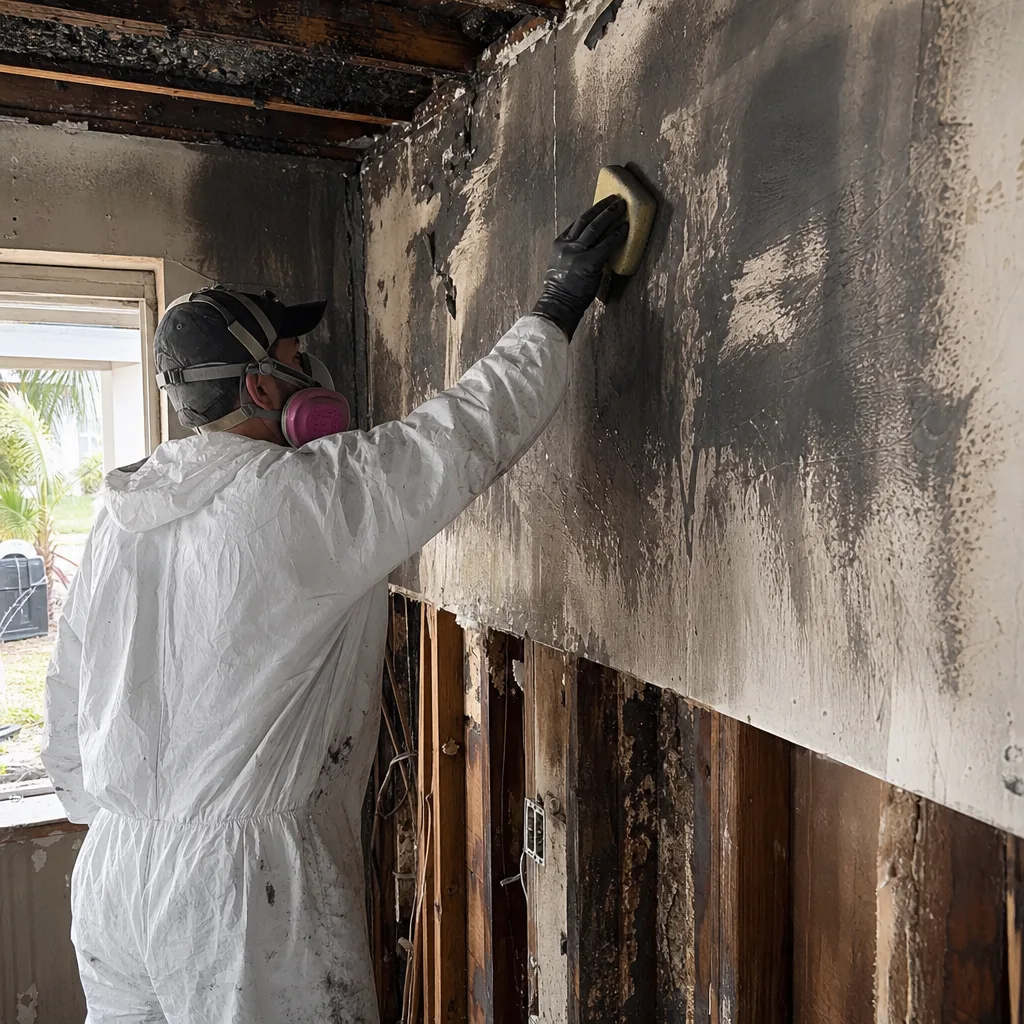
Fire damage cleanup in Miami runs $4,200-$18,500 for typical residential losses, with most kitchen and living-space fires falling between $6,800-$12,000. Smoke and soot removal alone, for fires with limited structural damage, ranges $2,800-$6,500. Odor removal and deodorization adds $1,500-$4,200 depending on square footage and contamination severity. Contents cleaning and pack-out runs $800-$3,500 based on item count and cleaning method required. Emergency board-up and tarping typically falls between $400-$1,800.
What moves the price: fire severity and residue type (protein fires cost more than dry smoke), square footage affected, whether water from suppression triggered mold remediation inside CBS walls, and whether structural repairs extend into reconstruction. Insurance typically covers direct fire and smoke damage plus necessary water damage mitigation; our documentation package supports full scope approval. Out-of-pocket exposure is limited to your deductible in most cases. Call (754) 222-3479 for a free inspection and written price, Haven Standard, Clause 1.
We Also Serve Cities Near Miami
Our Miami office dispatches crews throughout the metro area, including Miami Beach, where salt-air corrosion accelerates hardware failure and king-tide flooding complicates recovery; Coral Gables, with its mix of historic estate construction and post-Andrew code-era homes; Key Biscayne, the most aggressive coastal corrosion environment in our service radius; and Hialeah, with dense pre-1992 CBS housing stock requiring careful moisture mapping behind stucco finishes.
Serving Miami, FL - Our Local Coverage Area
We’re based in the Miami area and know this community well. Use the map below to see our service coverage - if you’re nearby, we can almost certainly help.
Miami Fire & Smoke Damage Restoration Questions, Answered
How fast does mold grow inside Miami CBS walls after a fire?
Active mold colonies establish inside Miami’s concrete block stucco walls within 24-48 hours of water intrusion from fire suppression. Miami’s ambient relative humidity rarely drops below 70%, and year-round temperatures in the 80s-90s create optimal fungal growth conditions that don’t exist at the same urgency in drier inland markets. We run moisture mapping along block cavities immediately after extraction and maintain drying logs until vapor pressure differential readings confirm dry standard. Call (754) 222-3479 for emergency response.
Why does fire-scene hardware fail faster in Miami than in other Florida cities?
Salt-air corrosion from coastal humidity attacks garage-door springs, hinges, rollers, tracks, fasteners, and opener chains years before inland homes see equivalent wear. At fire scenes, this pre-existing corrosion often causes hardware failure during board-up or pack-out operations. We carry galvanized and stainless replacement hardware specifically for Miami’s coastal conditions. Call (754) 222-3479 if your entry points are compromised.
What happens to my home if the power goes out after a fire during hurricane season?
A/C loss in sealed CBS homes spikes indoor humidity to near-outdoor levels within hours, turning a fire or water loss into a full mold remediation before the scope of work is even written. We deploy generator-powered dehumidification and air movement when grid power is unavailable, and tarp damaged roof sections immediately to prevent additional moisture intrusion from afternoon thunderstorms. Call (754) 222-3479 for standby generator protocol deployment.
Does fire-suppression water in my block walls need special treatment?
Yes. Water soaks into CBS cavities and hides behind stucco and finishes, invisible to visual inspection but detectable with moisture meters and thermal imaging. Standard surface drying misses this saturation, allowing mold colonization and structural degradation. Our protocol includes Injectidry cavity drying systems, daily moisture logs, and continued monitoring until block and insulation readings reach dry standard. Call (754) 222-3479 for cavity moisture assessment.
How do you handle insurance claims for fire damage in Miami-Dade?
We document from the first hour with photos, moisture readings, and written scopes formatted for carrier submission, including Citizens Property Insurance and surplus-lines carriers common in Miami-Dade’s strained market. Direct adjuster communication, supplemental documentation when requested, and payment coordination minimize your out-of-pocket exposure. A Free Second Opinion on any competitor’s written estimate is available at no charge. Call (754) 222-3479 to discuss your claim documentation.
Can I stay in my home during fire damage restoration?
Occupancy depends on air quality, structural integrity, and the extent of odor contamination. Protein fires and heavy smoke damage typically require temporary relocation during active cleaning and deodorization. We use hydroxyl generators for safer occupied-space treatment where conditions permit, and provide written air quality clearance documentation before recommending re-occupancy. Call (754) 222-3479 for site-specific guidance.
What certifications do your fire restoration technicians hold?
Our crews hold IICRC FSRT (Fire and Smoke Restoration Technician), WRT (Water Damage Restoration Technician), and AMRT (Applied Microbial Remediation Technician) certifications. AMRT is essential for the mold prevention work that follows nearly every Miami fire suppression. All technicians are background-checked, licensed, insured, and verified before arrival. Call (754) 222-3479 to confirm credential status for your job.
What should I do in the first 30 minutes after a fire?
Ensure all occupants are safe and accounted for, then call (754) 222-3479 for immediate dispatch. Do not enter until fire department clearance. If safe and authorized, shut off HVAC to prevent smoke migration, avoid touching soot-covered surfaces (oils from skin set residues permanently), and gather insurance policy information for our arrival. Our 24/7 live answer means no delay in dispatch confirmation.
Our Fire & Smoke Damage Restoration team is standing by. Every job starts with a free visual inspection, a written price before work begins, and a documented photo record on every visit. The 365-Day Done Right Promise, The Haven Standard, backs every completion.
Written by Alicia Brennan, Owner at Back to Dry Restoration, serving Miami since 2011.
Fire & Smoke Damage Restoration in Nearby Areas