
Free visual inspection and a written scope of work before any mitigation begins - photos, moisture readings, and drying logs go in your claim file
The scope we write is the scope we bill. Anything new gets shown to you, in writing, before we touch it.
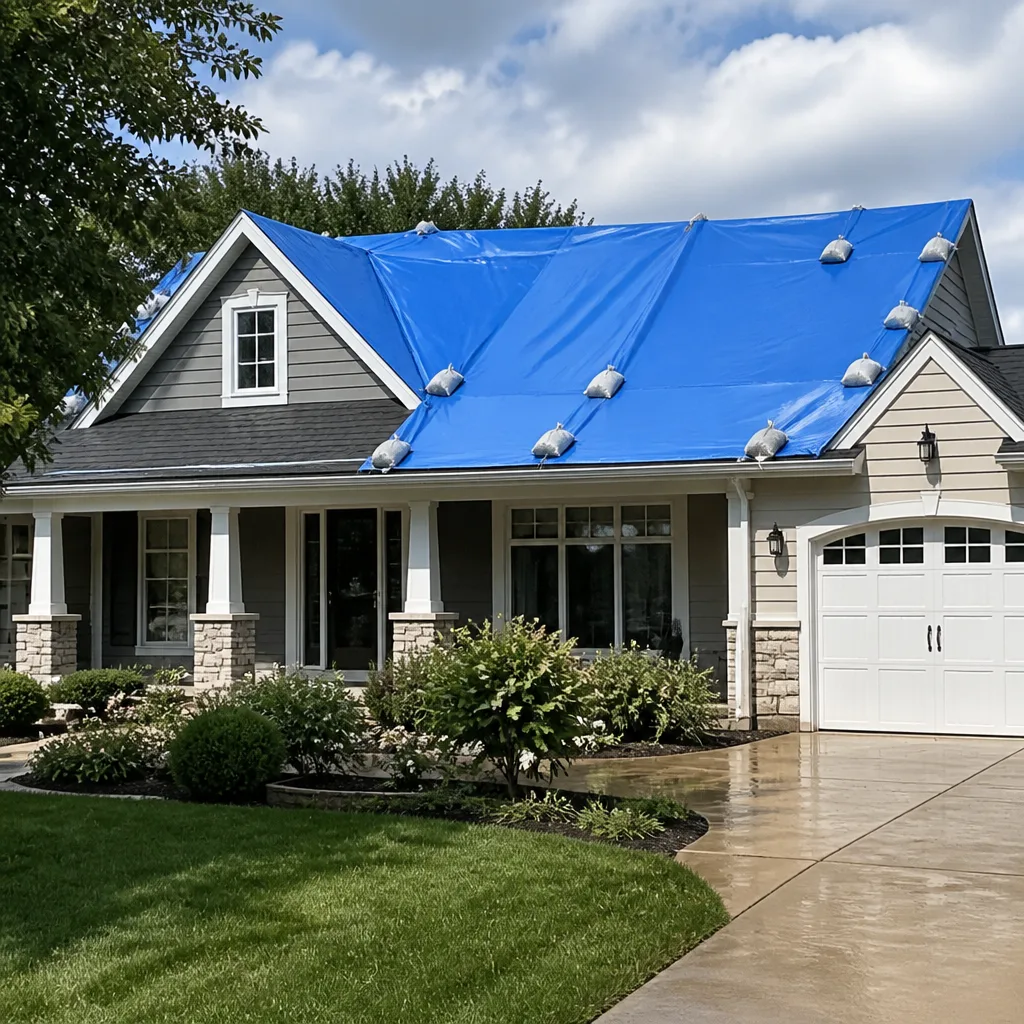
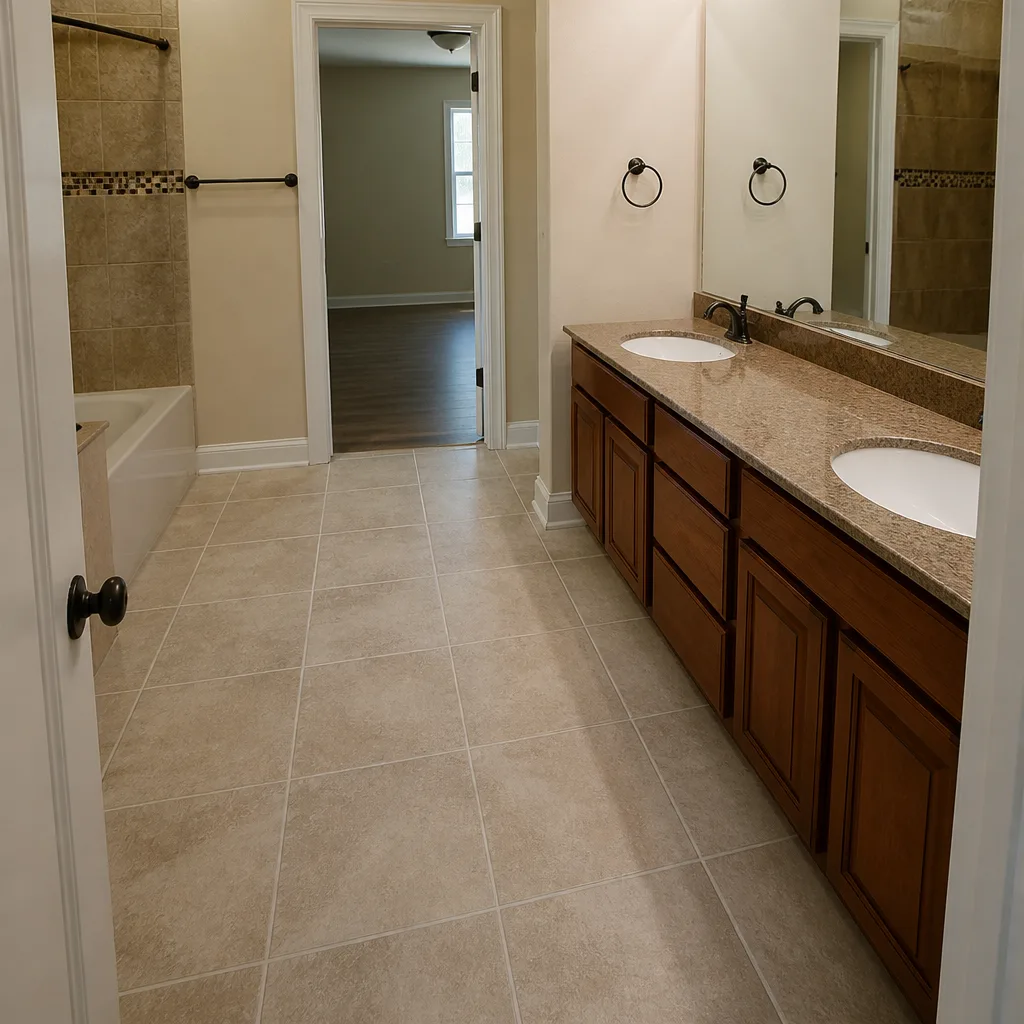
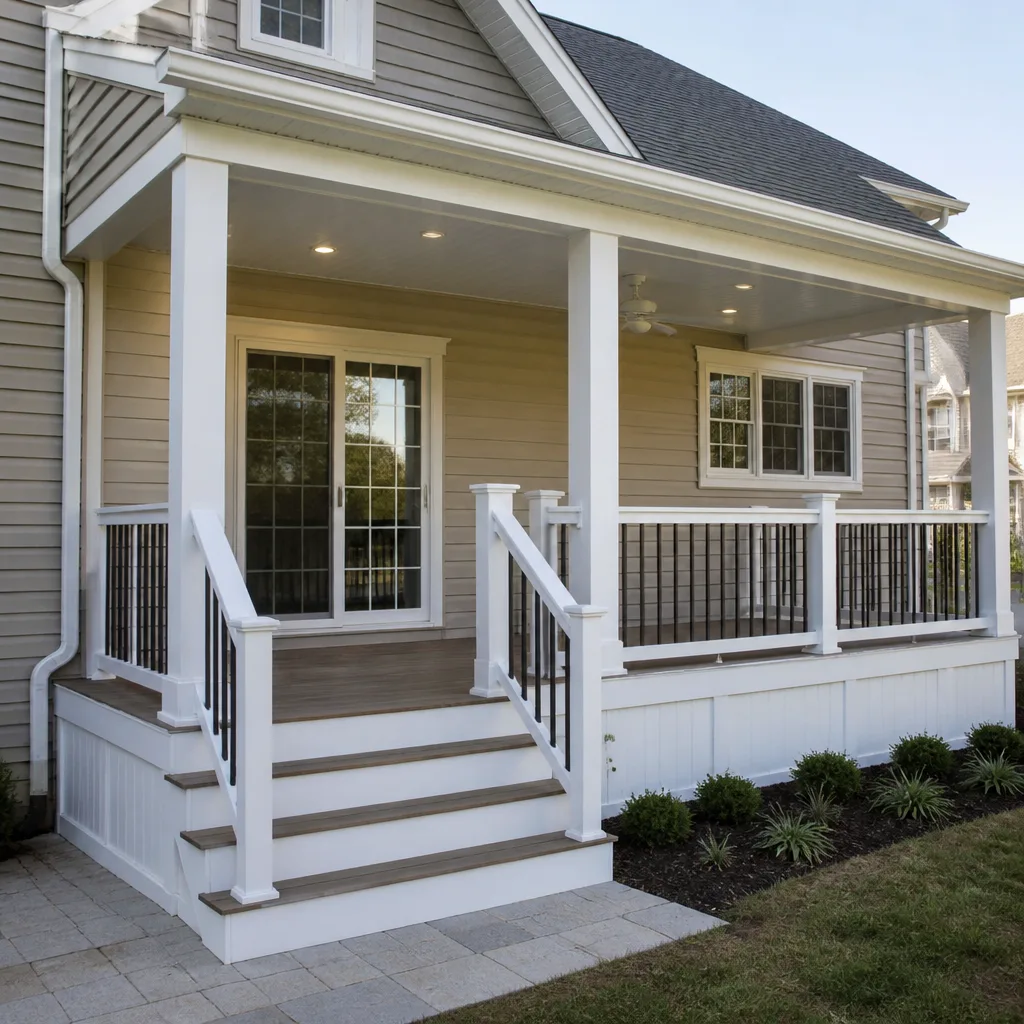
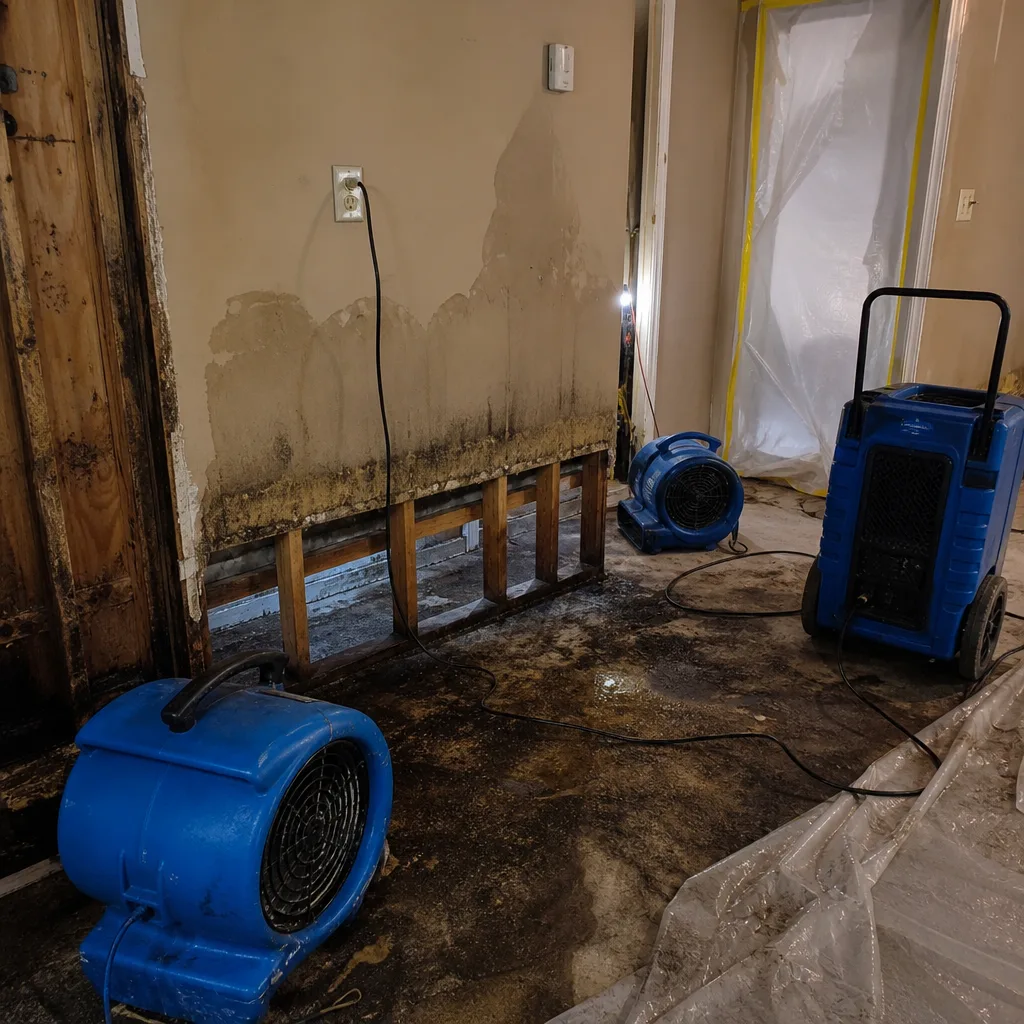 Before
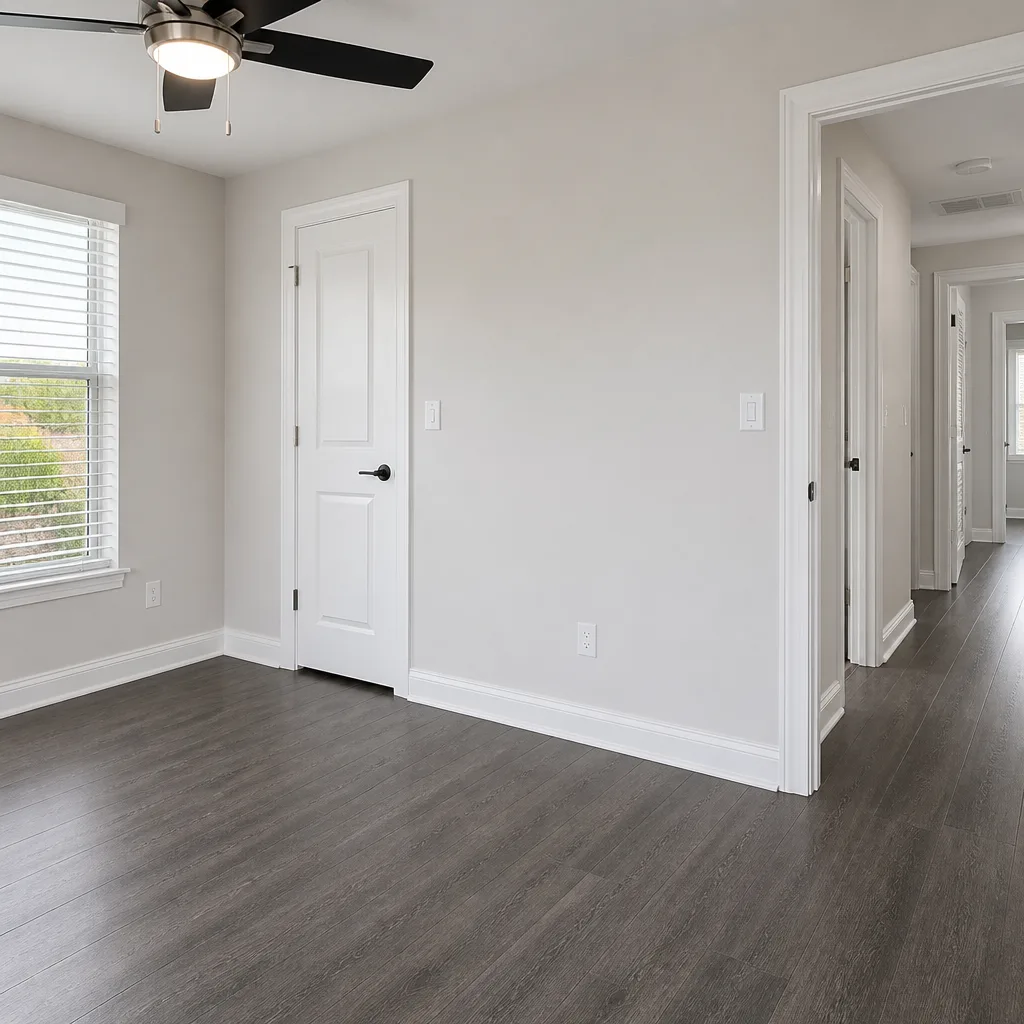 After
After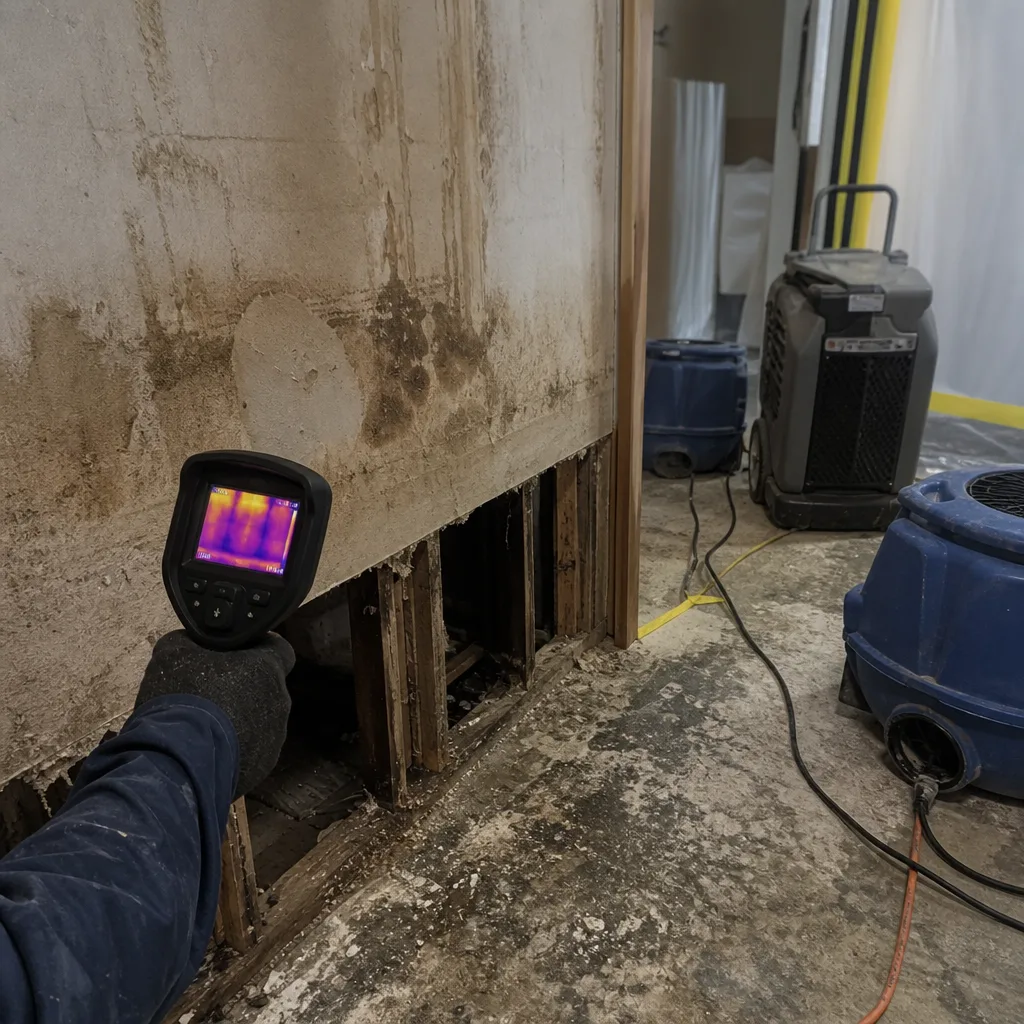 Before
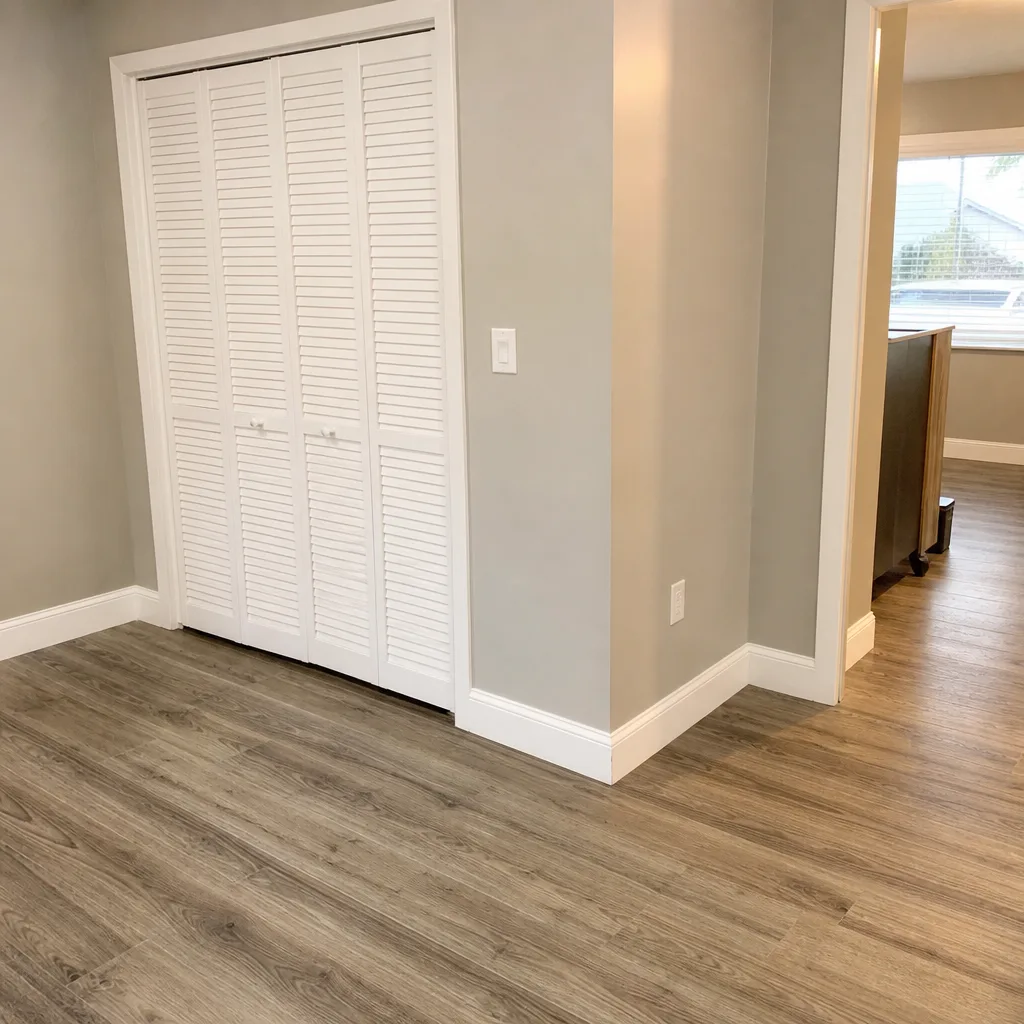 After
After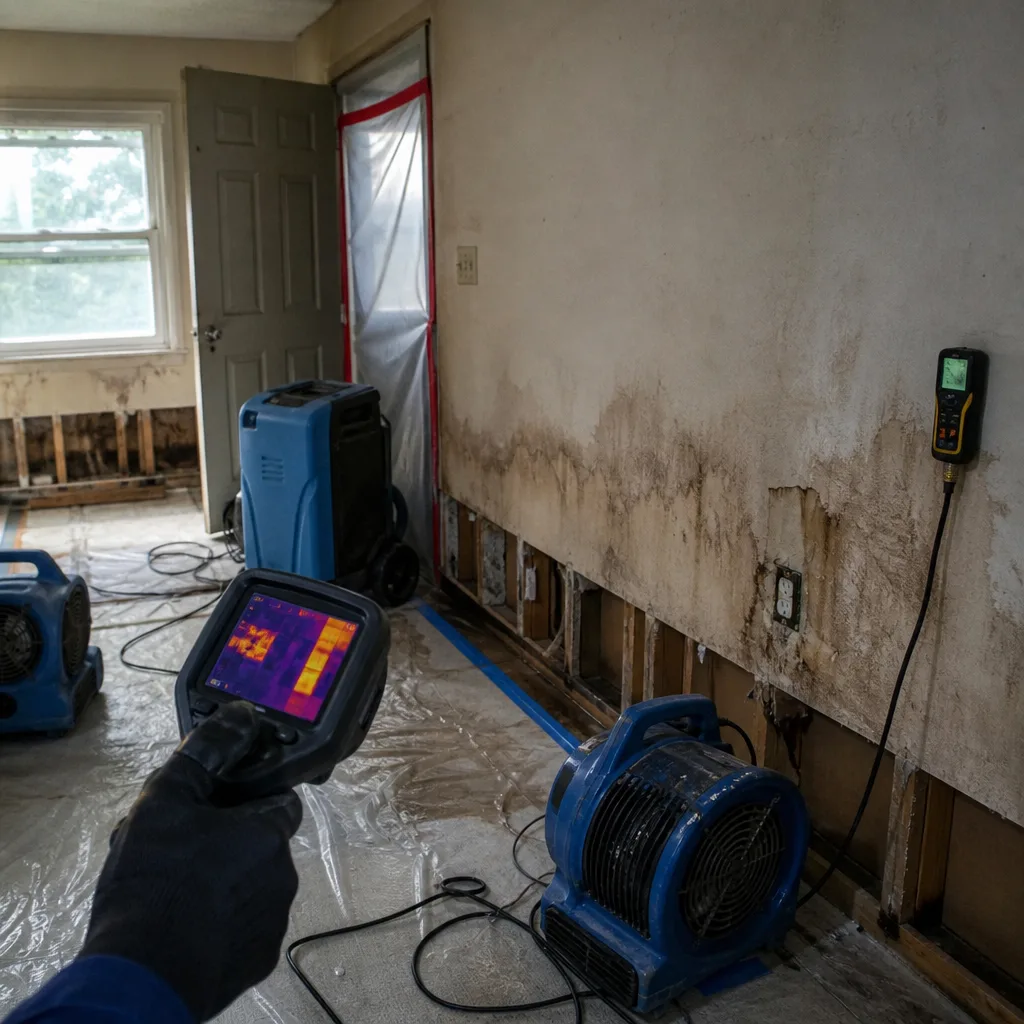 Before
 After
After24/7 Emergency Water Damage Restoration in Miami Gardens
Water damage restoration in Miami Gardens typically costs $2,800-$7,500 for a standard residential extraction and drying job, with emergency response available now at (754) 222-3479. Our crews are dispatched from our Miami office and can be on-site anywhere in Miami Gardens within 45 minutes. We answer live, 24 hours a day, 7 days a week - no voicemail, no callbacks tomorrow.
The first hour determines whether you’re looking at a three-day dry-out or a three-week reconstruction. In Miami Gardens, that urgency is compounded by two factors: pre-1992 CBS construction that wicks moisture like a sponge, and a wet-season water table that can rise to within inches of your slab. Call (754) 222-3479 and a real person will pick up, take your address, and get a crew moving.
Understanding Water Damage Restoration Severity in Miami Gardens Properties
Water damage breaks into three categories. Category 1 is clean water from a supply line - a burst pipe or failed ice-maker line. Category 2 is gray water with contamination risk - dishwasher discharge, sump pump failure, or seepage through a slab crack. Category 3 is black water: sewage, canal flooding, or any water that has passed through ground or building materials carrying pathogens.
Miami Gardens’s housing stock skews heavily toward 1950s-1970s single-story CBS ranch homes with flat or low-pitched built-up roofs. These homes predate Hurricane Andrew and the building code overhaul that followed. Open-cell concrete block walls absorb water faster than wood frame, and flat roofs with stacked membrane layers trap moisture between plies. A Category 1 supply-line break on a CBS wall can escalate to Category 2 conditions within 24 hours if ambient humidity stays above 75% RH, which it does here most of the year.
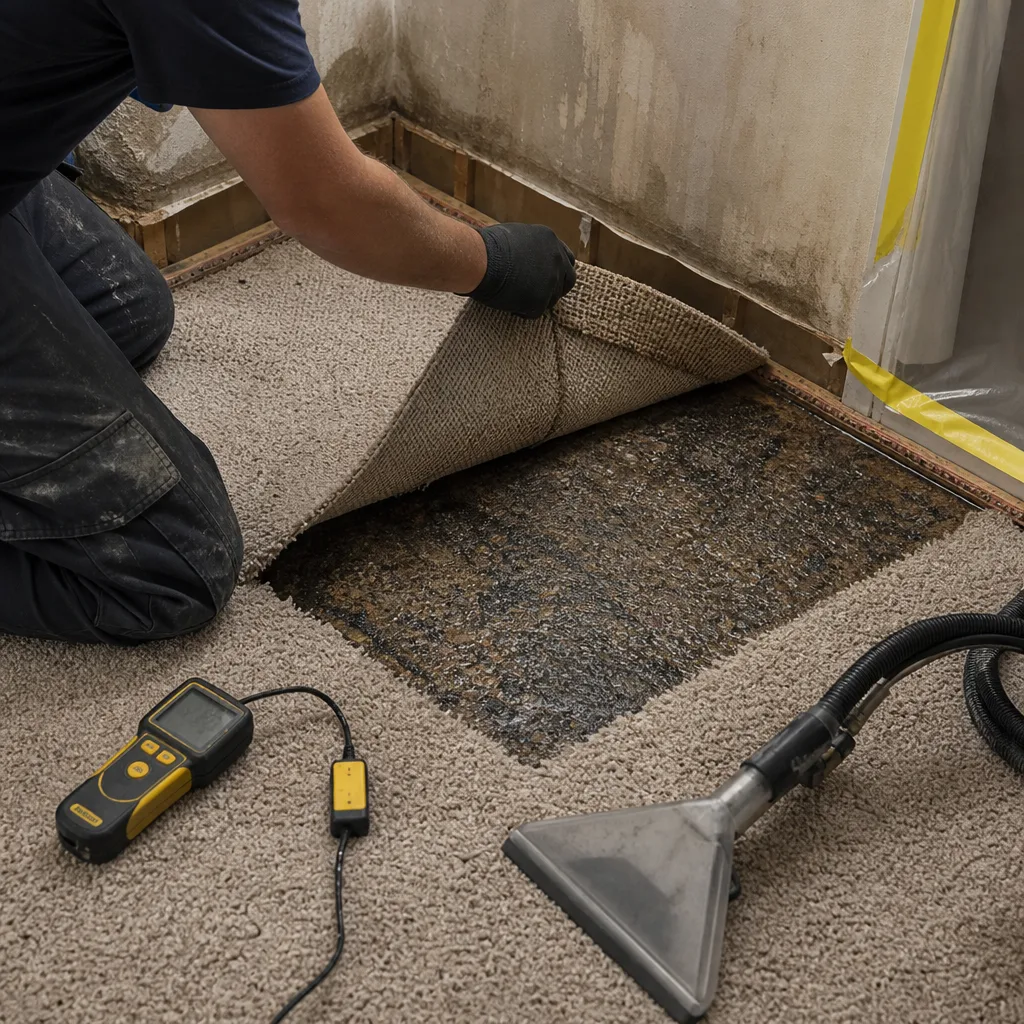
Moisture mapping with thermal imaging and pinless meters is how we find what the eye misses. In Miami Gardens, we regularly see readings above 20% wood moisture equivalent in block walls that look dry on the surface. Structural drying requires calculating vapor pressure differential - the force that drives moisture from wet materials into the air - then matching dehumidifier capacity to the cubic footage and latent load. Get the psychrometric data wrong and you’ll chase your tail for a week.
Why Miami Gardens Property Owners Choose DryMark Restoration Hollywood
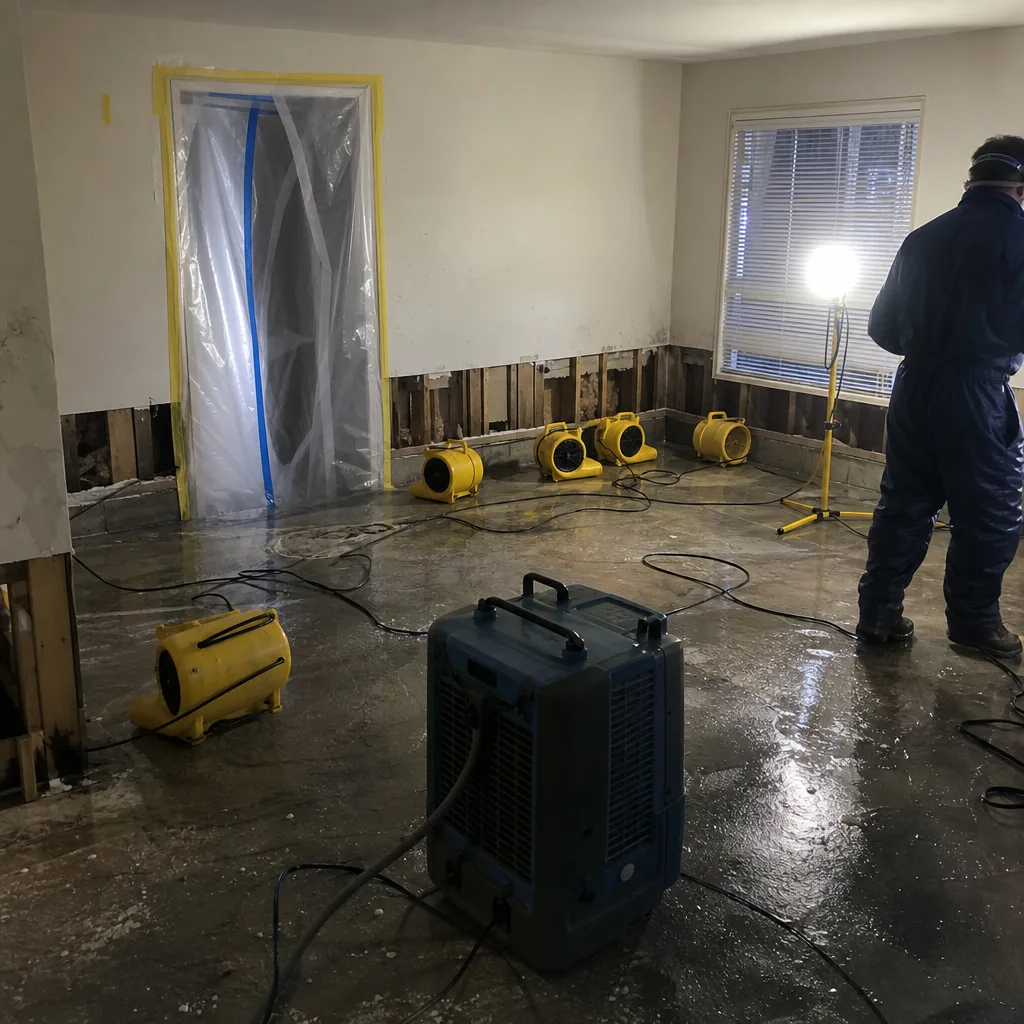
- 45-minute response commitment to any Miami Gardens address - our crews know the grid from Bunche Park to Norwood.
- 24/7 live answer: a real person, never an automated system or voicemail tree, every time you call (754) 222-3479.
- IICRC-certified crews holding WRT (Water Damage Restoration Technician) and ASD (Applied Structural Drying) credentials - license numbers provided on request.
- Free visual inspection with moisture readings and a written scope before any work begins, per Haven Standard, Clause 1.
- Direct insurance billing with photo-documented estimates that adjusters recognize and pay without dispute.
- One team from extraction through reconstruction - no handoffs to unknown subcontractors.
 Before
 After
AfterOur Water Damage Restoration Process
1. Inspection & Assessment
We arrive with thermal imaging cameras, pin and pinless moisture meters, and hygrometers to map the full extent of water migration. In Miami Gardens’s flat-roof CBS homes, this means checking for lateral membrane travel and simultaneous slab intrusion - two water sources that inexperienced crews often miss.
2. Extraction & Stabilization
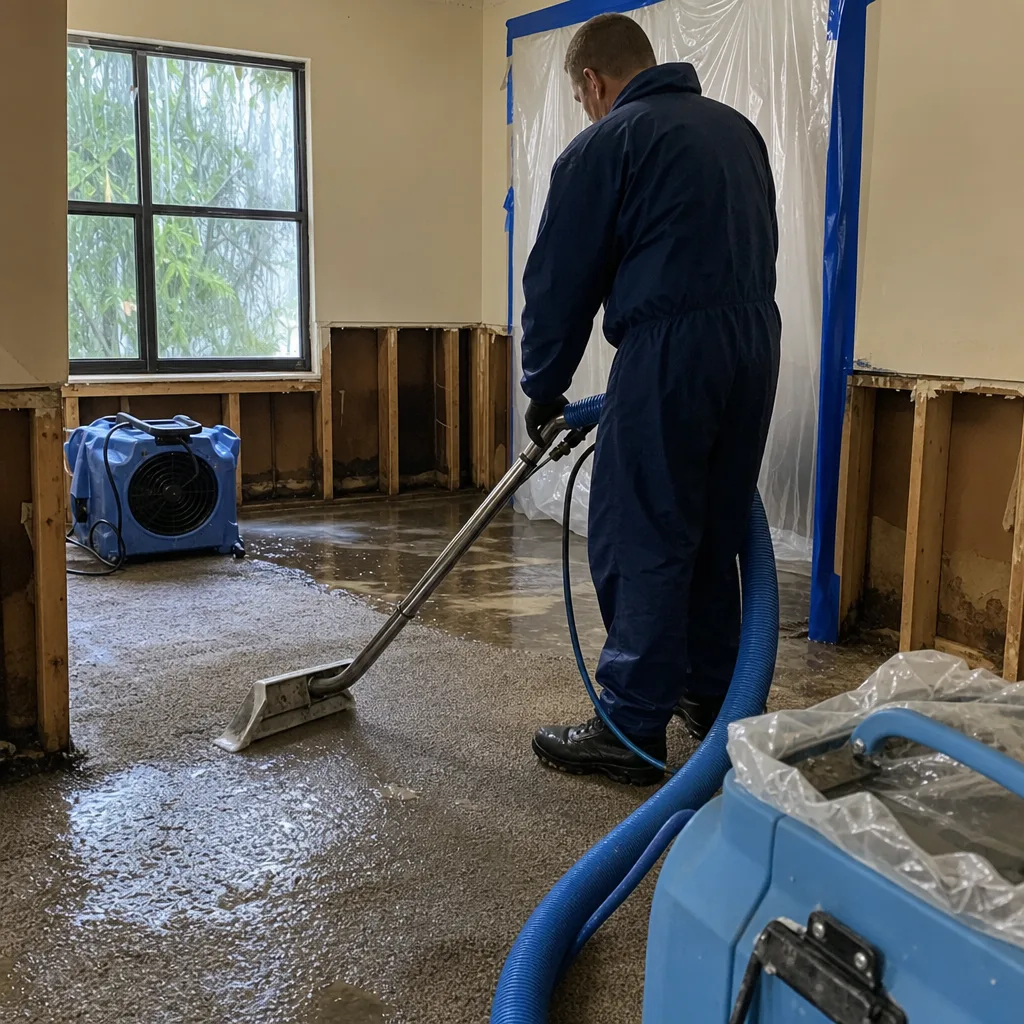
Truck-mounted extraction units remove standing water from floors, carpets, and pad. For Category 2 or 3 losses, we establish containment zones and deploy negative air machines with HEPA filtration to prevent cross-contamination.
3. Structural Drying & Dehumidification
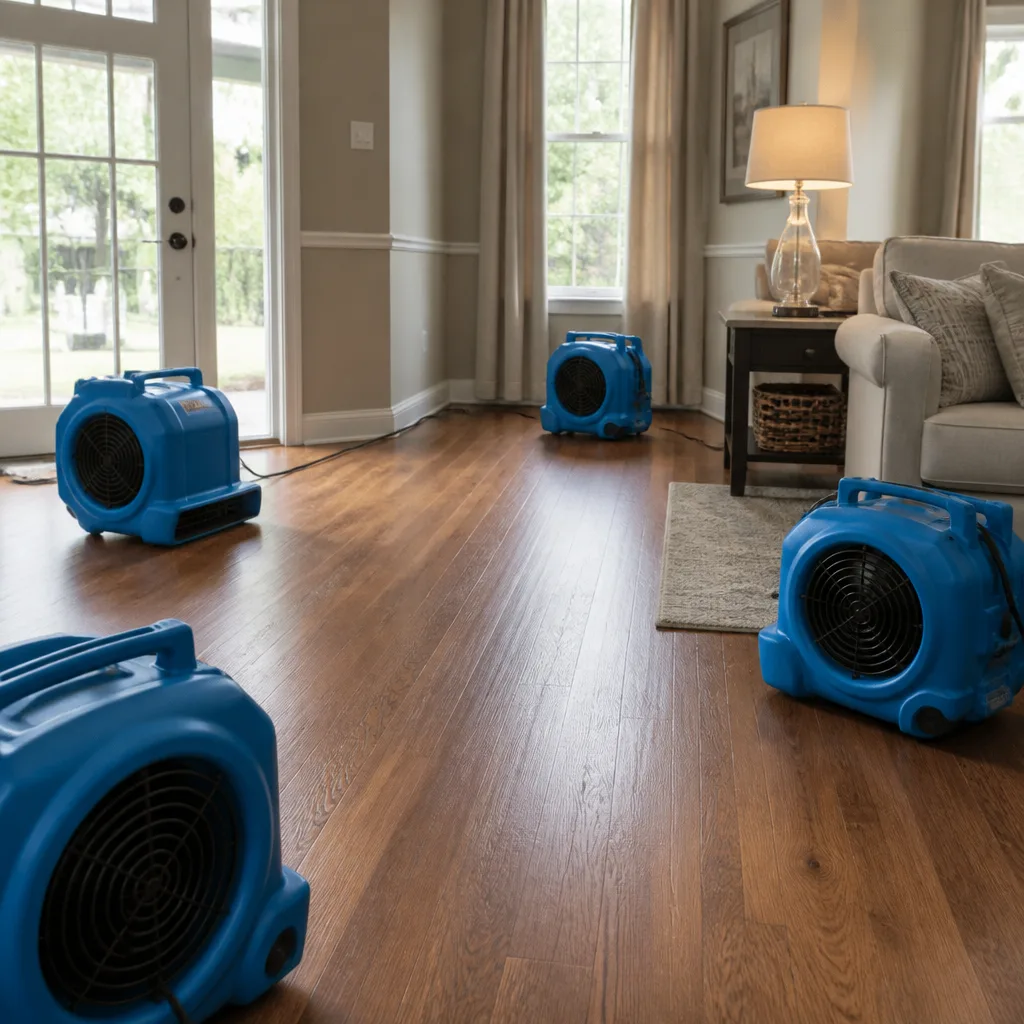
We size the drying system to the latent load: LGR dehumidifiers from Dri-Eaz or Phoenix, axial and centrifugal air movers from XPOWER, and when needed, Injectidry cavity-drying systems for wet wall and ceiling voids. Daily moisture logs track progress to IICRC S500 standards.
4. Cleaning & Sanitization
All affected surfaces receive antimicrobial treatment appropriate to the water category. For Category 3 losses, we remove porous materials and apply EPA-registered disinfectants with proper dwell times.
5. Ceiling & Roof Leak Water Damage Treatment
This is where Miami Gardens jobs diverge from standard protocols. Flat roofs with multiple membrane layers require targeted drying of the ply cavity, not just the ceiling below. We use Injectidry hose systems and targeted dehumidification to dry trapped substrate without full roof tear-off when structurally sound.
6. Repairs & Restoration
Once moisture readings hit dry standard - typically 12-16% wood moisture equivalent for this climate - we repair or replace drywall, insulation, flooring, and finish materials. A written scope, agreed before work began, governs every line item.
Need Emergency Water Damage Restoration in Miami Gardens Now?
Crews minutes away, answering live 24 hours a day. The sooner we start, the less it costs.
Working With Your Insurance Company
Documentation starts the moment we arrive. Every photo, every moisture reading, every cubic foot of affected space is recorded before anything moves. Adjusters in South Florida see a lot of restoration invoices; the ones that get paid are the ones with evidence behind them.
We write Xactimate estimates that match industry-standard pricing for Miami-Dade County. Your adjuster gets the same scope we gave you - no surprises, no padded line items. When carrier questions arise, we handle the back-and-forth directly, supplying additional documentation from our photo record and daily drying logs.
What We Provide Your Insurer
- Thorough documentation of the loss
- Photos of all damage, room by room
- Moisture readings and drying logs
- A detailed, line-item scope of work
- Direct coordination with your carrier
Built for Miami Gardens’s Loss Calendar
January through April is dry season, but cold snaps still burst exposed hose bibs and supply lines in unconditioned garages. May brings the first severe thunderstorms, testing flat roofs that haven’t seen sustained rain in months. June through October is the core risk period: tropical systems, daily afternoon convection, and a water table that rises until groundwater intrusion becomes as common as roof leaks.
November’s king tides can back up drainage canals and push water into low-lying areas near the C-9 and C-8 canal corridors. December is relatively quiet - the month to address maintenance before the cycle repeats.
Year-round, Miami Gardens’s 80°F-plus temperatures and 75%+ RH mean mold colonization starts fast. The safe window for structural drying without microbial growth is under 48 hours. In a 1960s CBS home with open-cell block walls, we treat 24 hours as the practical limit.
Water Damage Restoration Across Miami Gardens’s Neighborhoods
Bunche Park, north of NW 183rd Street, is dense with 1960s CBS ranches on slab foundations. The flat roofs here carry decades of re-roofing layers, and we’ve responded to dozens of calls where water traveled laterally through four or five membrane plies before surfacing in a bedroom ceiling. Our crews know to scope 20 feet beyond the visible stain.
Norwood, closer to the Palmetto Expressway, has similar vintage construction but with more recent additions and enclosed patios that create valley drains prone to backup. The mix of original and modified rooflines means moisture mapping takes longer - we account for every transition.
Carol City and the area around Hard Rock Stadium see heavier tree canopy, so wind-driven rain through soffit vents and gable ends is a recurring pattern. After any named storm, we run multiple crews in this corridor for simultaneous roof and slab events.
The NW 183rd Street corridor itself is our highest-call zone for ceiling and roof leak water damage. The combination of aging built-up roofs, stacked membranes, and CBS wall construction produces the lateral travel problem we described - a failure mode that crews unfamiliar with Miami Gardens’s housing stock routinely under-scope.
Specialized Water Damage Restoration Services We Offer in Miami Gardens
Emergency Water Extraction
Truck-mounted and portable extraction for standing water of any depth. In Miami Gardens, we often extract from slab-on-grade homes where the water table has risen through floor cracks simultaneous with a roof leak - two sources, one response.
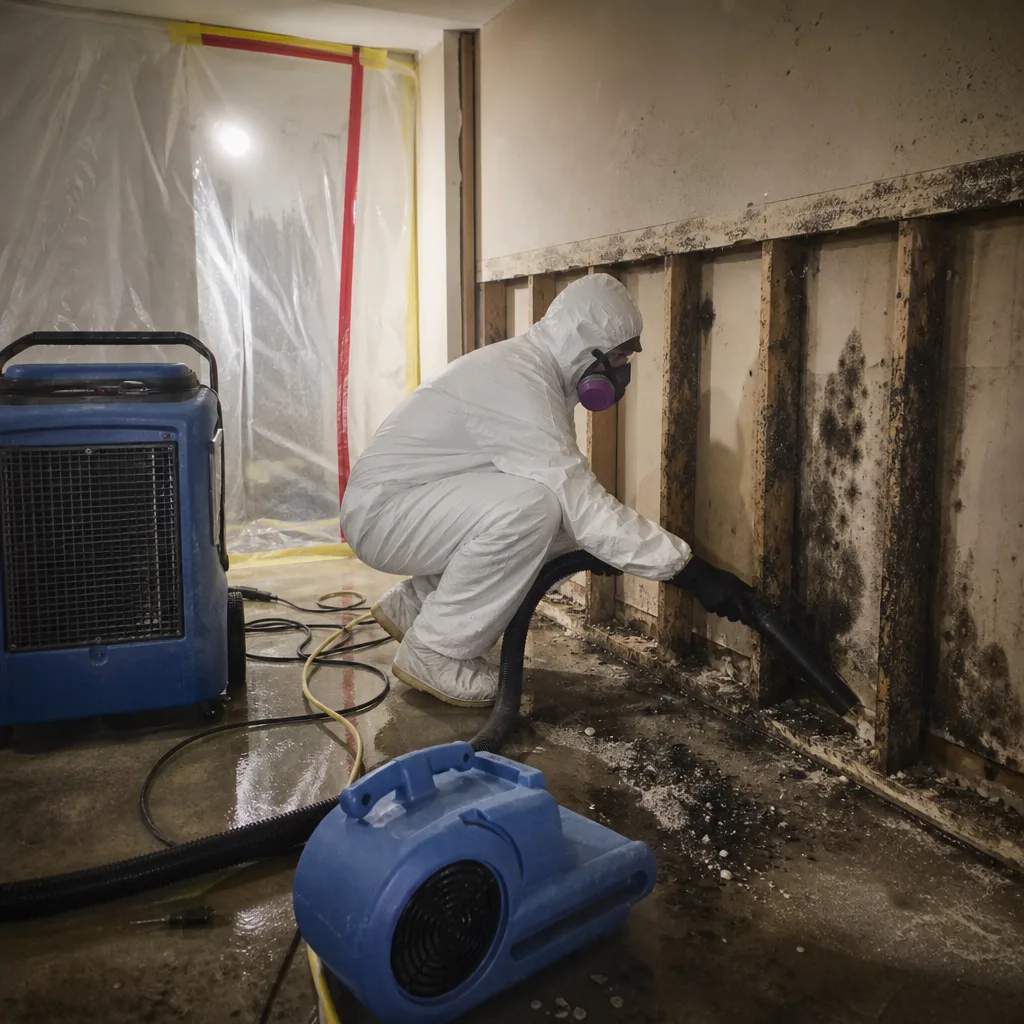
Structural Drying & Dehumidification
LGR dehumidifiers, air movers, and Injectidry cavity systems sized to the latent load of CBS construction. We calculate vapor pressure differential and document daily psychrometric data to prove dry standard to your insurer.
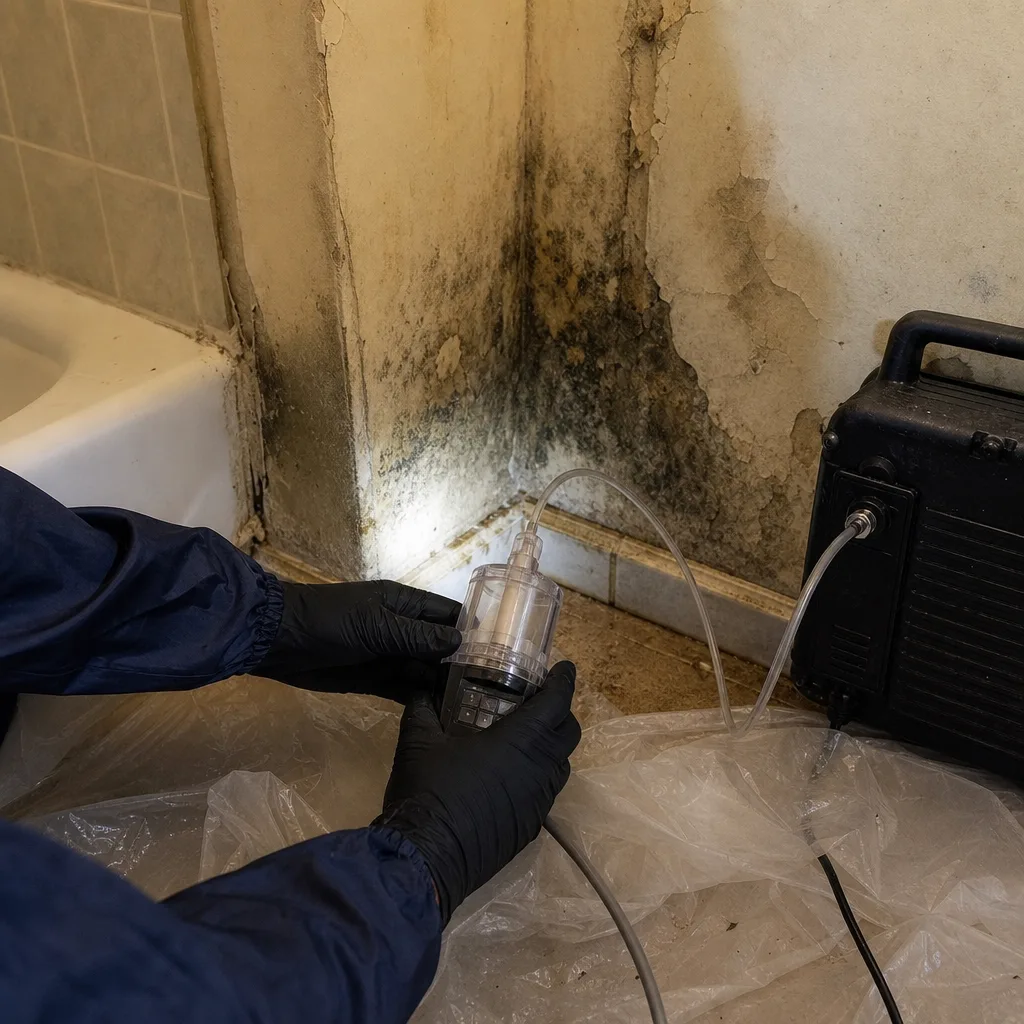
Flood Cleanup
Canal flooding and storm surge events bring Category 3 water into Miami Gardens homes near drainage basins. Full PPE, containment, and disposal per IICRC S500 and local hazardous waste regulations.
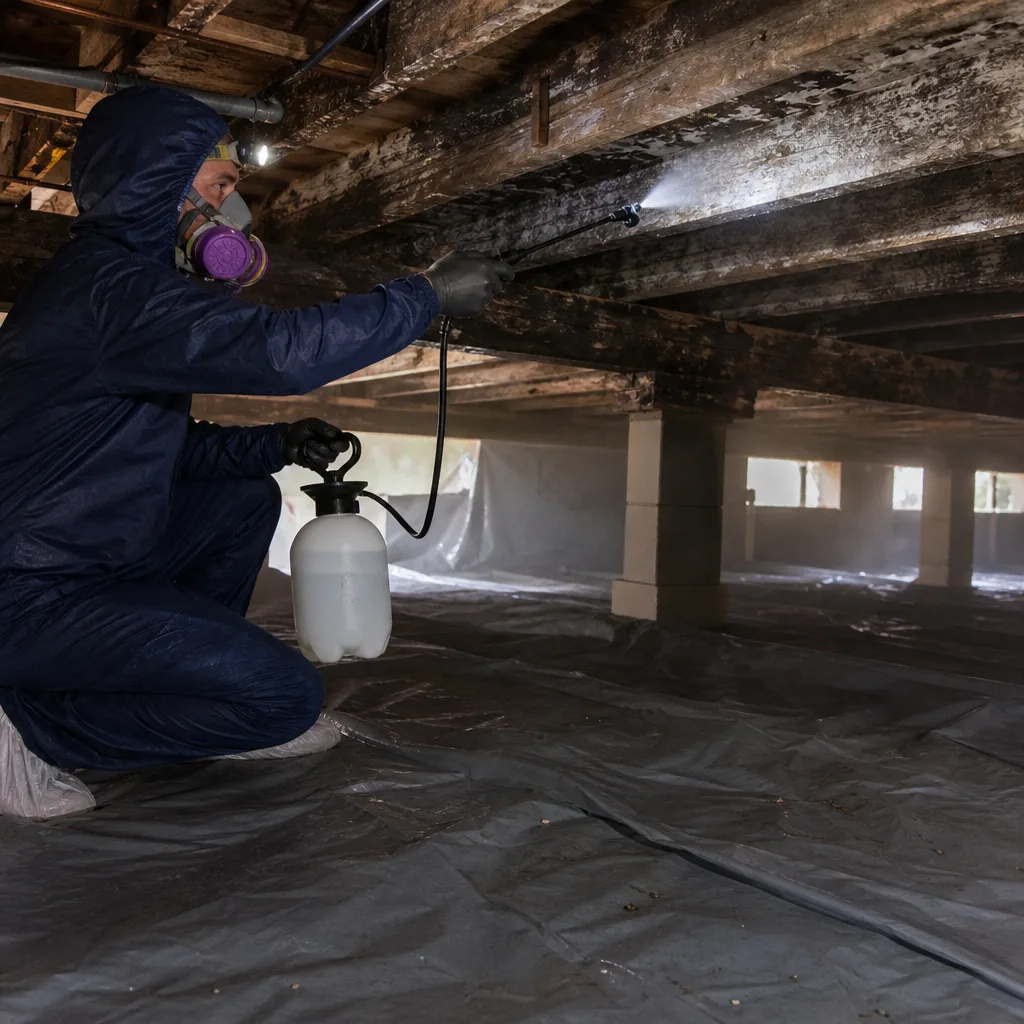
Burst Pipe Restoration
From copper pinholes to polybutylene failures, we extract, dry, and document the line-of-sight damage plus hidden migration through walls and soffits. A written scope before repairs begin.
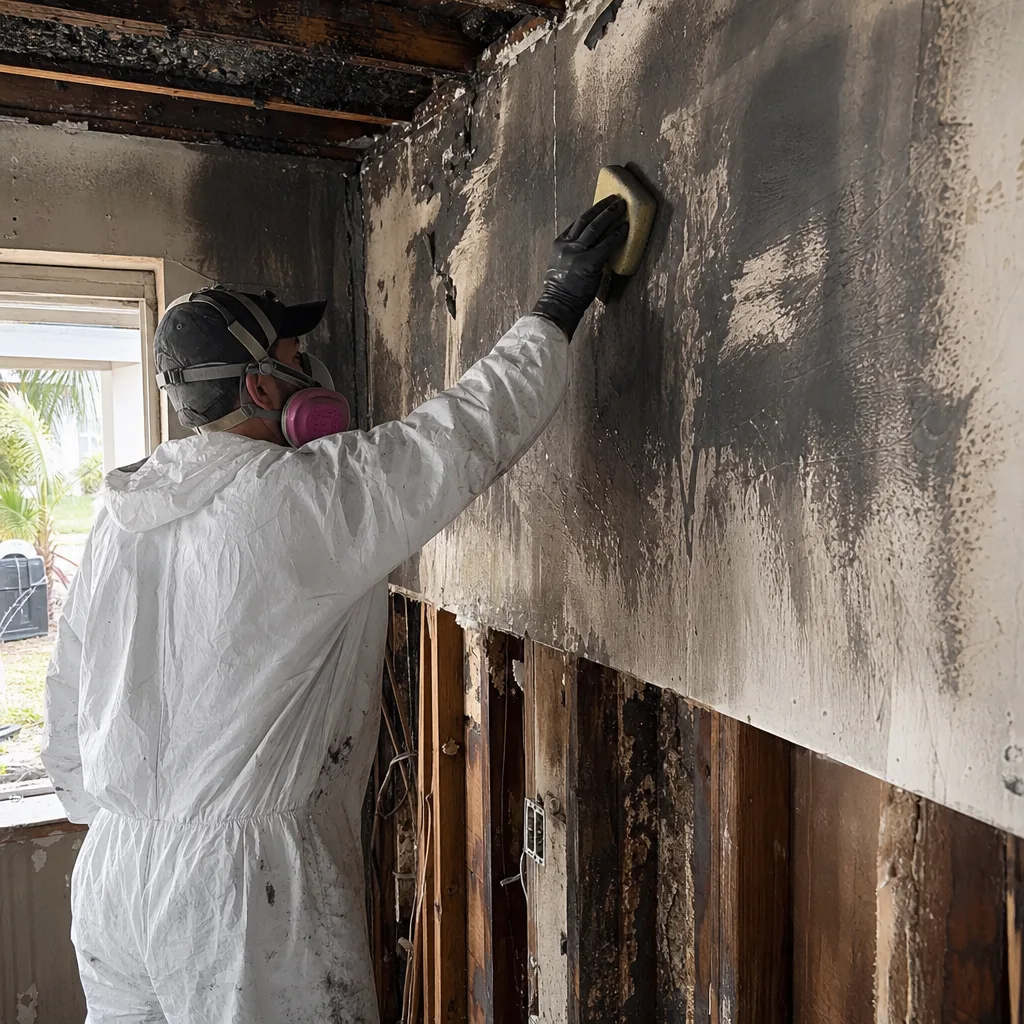
Basement Water Removal
True basements are rare in Miami Gardens, but we handle below-grade additions, crawl spaces, and sunken patios that flood during wet-season water table peaks.
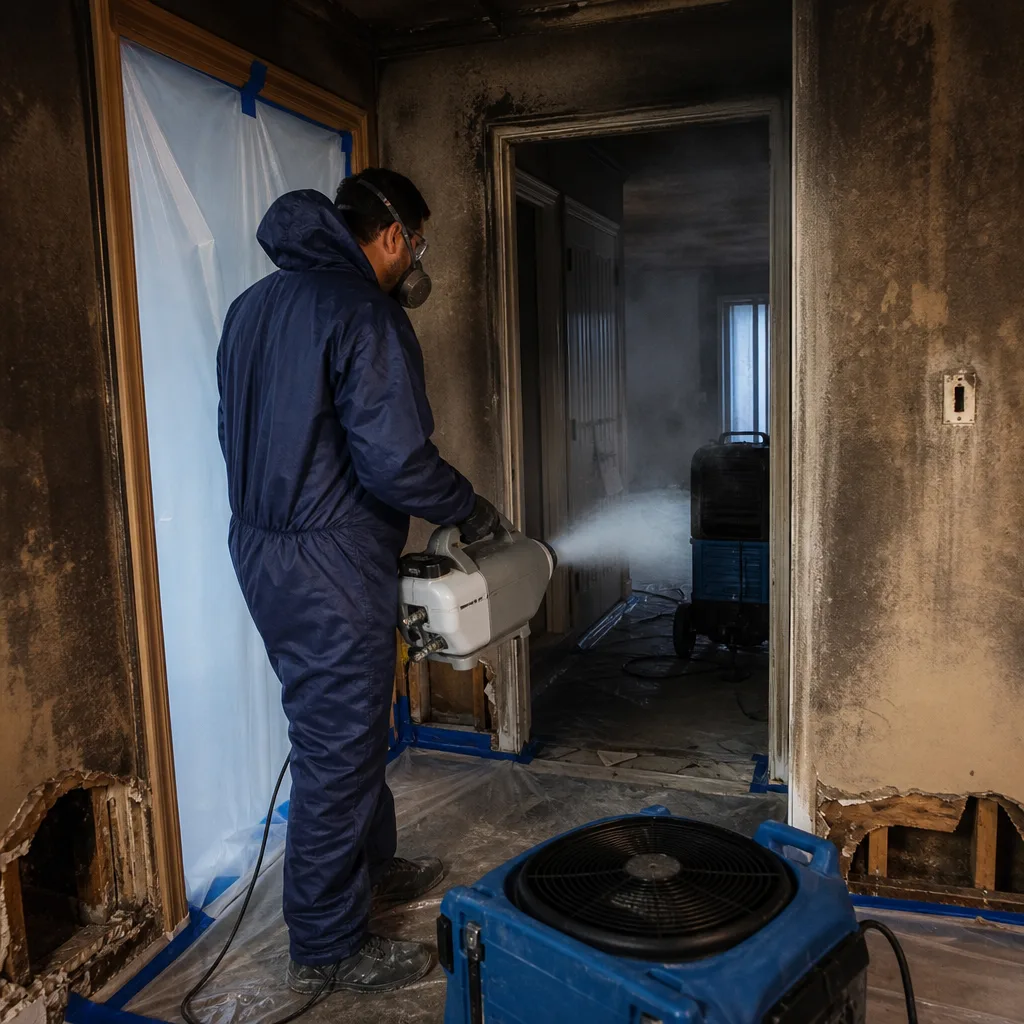
Ceiling & Roof Leak Water Damage
Our specialty in this market. Flat-roof membrane systems with lateral ply travel require targeted drying and antimicrobial treatment of the cavity, not just cosmetic ceiling repair. We scope the full water path and document it.
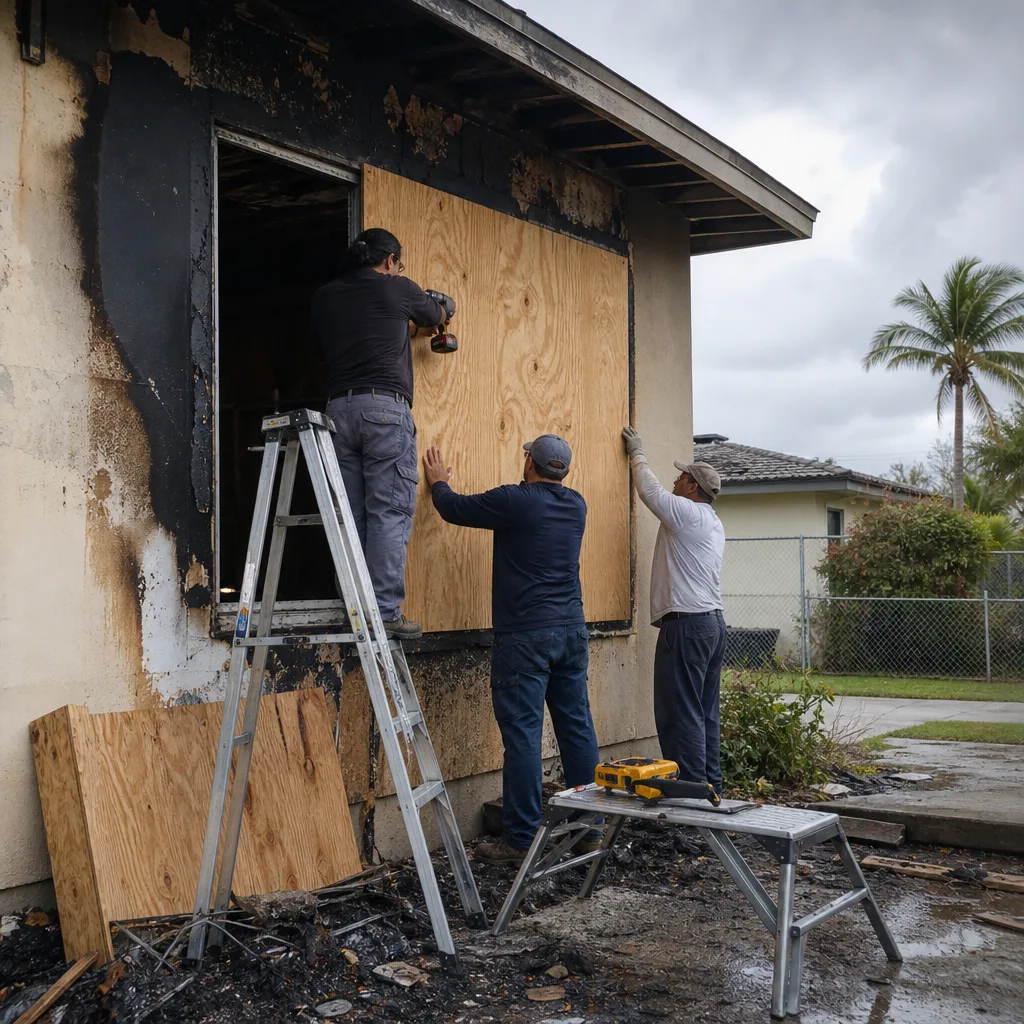
What happens when you call
- 1
A real person answersNo phone trees - you reach a local pro.
- 2
You get an upfront price rangeHonest numbers before anyone is dispatched.
- 3
A background-checked tech heads outLicensed & insured, dispatched right away.
- 4
You approve before work beginsNothing starts until you say go.
Water Damage Restoration Costs in Miami Gardens, FL
Emergency water extraction and initial stabilization in Miami Gardens typically runs $800-$1,800 depending on affected square footage and water depth. Structural drying for a standard 1,200-square-foot CBS ranch with 2-3 rooms affected is generally $2,800-$4,500. Category 3 flood cleanup with full personal protective equipment, disposal, and antimicrobial treatment starts around $4,500 and can reach $7,500-$12,000 for whole-house events with significant material removal.
What moves the price: water category (clean vs. contaminated), affected square footage, whether the roof cavity requires Injectidry treatment, and whether slab cracks add groundwater intrusion to the scope. Insurance typically covers sudden and accidental water damage from the top down; rising groundwater may require separate flood coverage.
Every job starts with a free visual inspection and a written price before work begins - Haven Standard, Clause 1. Bring a competitor’s written estimate and we’ll provide a free second opinion at no charge.
We Also Serve Cities Near Miami Gardens
Our crews respond throughout northern Miami-Dade and southern Broward, including Miami Gardens and neighboring Hialeah, North Miami Beach, Pembroke Pines, and Hollywood. Dispatch and scheduling are coordinated from our Miami office; crews serve all listed cities locally.
Serving Miami Gardens, FL - Our Local Coverage Area
We’re based in the Miami Gardens area and know this community well. Use the map below to see our service coverage - if you’re nearby, we can almost certainly help.
Miami Gardens Water Damage Restoration Questions, Answered
Why do water stains show up on a Miami Gardens ceiling far from where the roof is actually leaking?
Flat roofs in Miami Gardens, especially along the NW 183rd Street corridor, often carry four or five stacked membrane layers from successive re-roofs. When storm water breaches the outer ply, it travels laterally between layers before finding a ceiling penetration to surface through. We’ve traced stains 20 feet from the actual breach. Moisture mapping with thermal imaging finds the real entry point. Call (754) 222-3479 for a free inspection.
How fast does mold become a problem after water damage in a 1960s Miami Gardens CBS home?
Mold colonization can begin within 24-48 hours in any water-damaged structure, but Miami Gardens’s combination of open-cell concrete block walls and ambient humidity routinely above 75% RH compresses that window to under 48 hours, often closer to 24. The block wicks moisture inward faster than wood frame, and the humidity prevents natural evaporation. We begin structural drying the same day we arrive. Call (754) 222-3479 for emergency response.
Can you dry a Miami Gardens home without removing all the old roof membranes?
Yes, when the roof structure is sound and the moisture is trapped in the ply cavity rather than saturating the deck. We use Injectidry cavity-drying systems and targeted dehumidification to dry between membrane layers without full tear-off. If the deck is compromised or mold has colonized the substrate, we document that finding and include full replacement in the written scope. Call (754) 222-3479 for an assessment.
Why does a slab crack in Miami Gardens matter during a storm event?
Miami Gardens sits at 8-10 feet above sea level on low-permeability limestone. During the June-October wet season, the water table rises to within inches of grade, so any slab crack becomes a direct conduit for groundwater intrusion. A storm event can produce simultaneous roof loading and foundation pressure - two water sources hitting the same structure. Our moisture mapping checks both. Call (754) 222-3479 if you see water appearing from below during or after rain.
How do you classify water damage differently when a flood event brings canal water into a Miami Gardens home versus a clean supply-line break?
Canal water is Category 3 black water - it carries pathogens, chemicals, and sediment from agricultural and urban runoff. We deploy full PPE, establish containment with negative air pressure, remove porous materials, and apply EPA-registered disinfectants with documented dwell times. A clean supply-line break is Category 1, treated with extraction and standard structural drying. The classification determines disposal requirements, antimicrobial protocol, and whether materials can be restored or must be removed. Call (754) 222-3479 and we’ll assess on arrival.
How fast can your crew actually get to my Miami Gardens address?
We commit to 45 minutes from call to arrival anywhere in Miami Gardens. Our crews are staged from our Miami office and know the local grid. Live dispatch answers at (754) 222-3479 24 hours a day - no voicemail, no callbacks tomorrow.
Will my insurance cover the full restoration, or just the cleanup?
Standard homeowner policies cover sudden and accidental water damage from above - burst pipes, roof leaks, wind-driven rain. They typically do not cover rising groundwater or flood events without separate flood coverage. We document the water source, category, and line of sight to support your claim, and we bill your carrier directly for covered portions. Call (754) 222-3479 and we’ll review your situation.
Can my family stay in the home during drying?
For Category 1 losses affecting one or two rooms, often yes, with containment separating the work area. For Category 2 or 3, or when multiple rooms require equipment generating significant noise and airflow, we recommend temporary relocation. We discuss this during the initial assessment and include any relocation-related documentation your insurer requires. Call (754) 222-3479 to discuss your specific situation.
We ran an emergency water extraction call off NW 183rd Street where a thunderstorm forced water under four and five layers of stacked roofing membrane on a 1968 CBS ranch - moisture readings lit up a bedroom ceiling 20 feet from the breach, but our techs tracked the lateral travel inside the plies and opened containment beyond the first visible stain. Because the walls were open-cell block, we cut in air movers and dehumidification the same day and used antimicrobial treatment on the saturated plies so structural drying could begin before the 24-to-48-hour mold window closed.
Written by Alicia Brennan, Owner at DryMark Restoration Hollywood, serving Miami Gardens since 2011 under The Haven Standard.
Water Damage Restoration in Nearby Areas