
Free visual inspection and a written scope of work before any mitigation begins - photos, moisture readings, and drying logs go in your claim file
The scope we write is the scope we bill. Anything new gets shown to you, in writing, before we touch it.
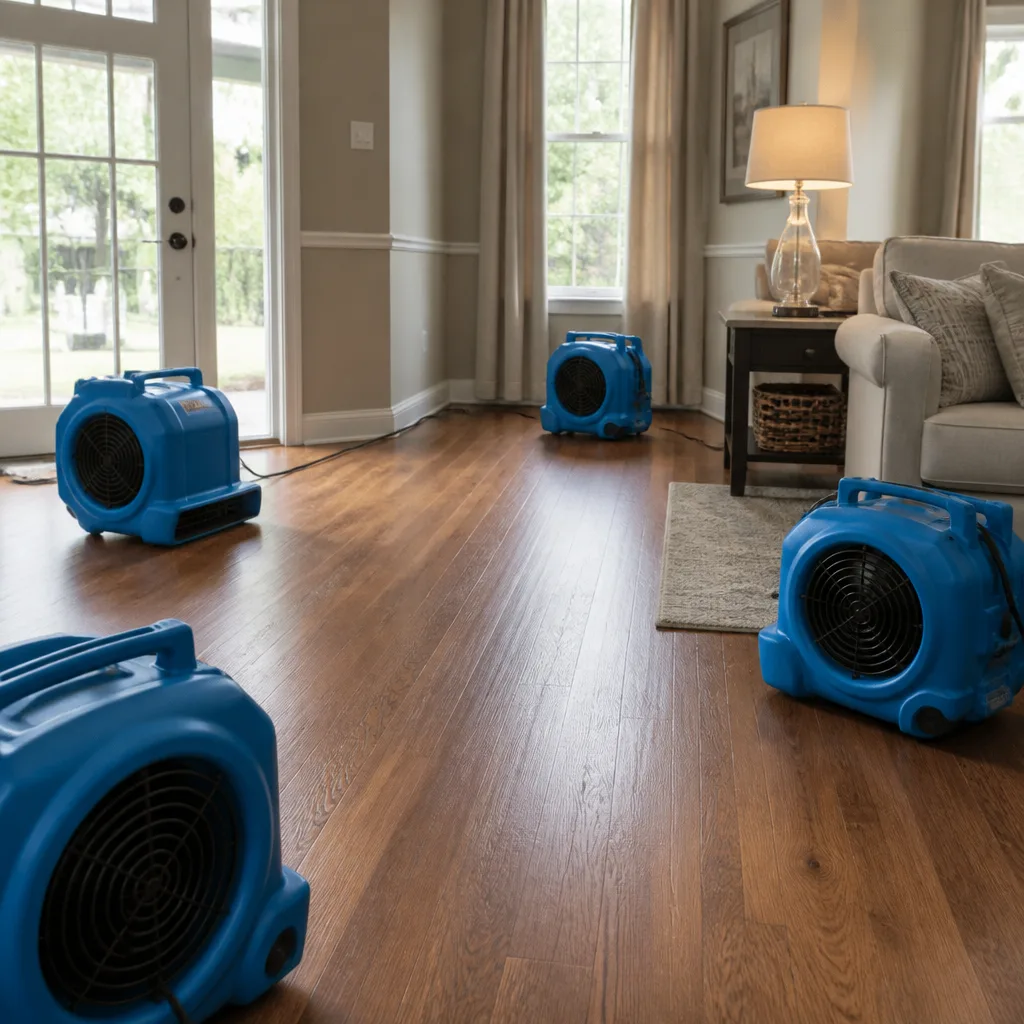
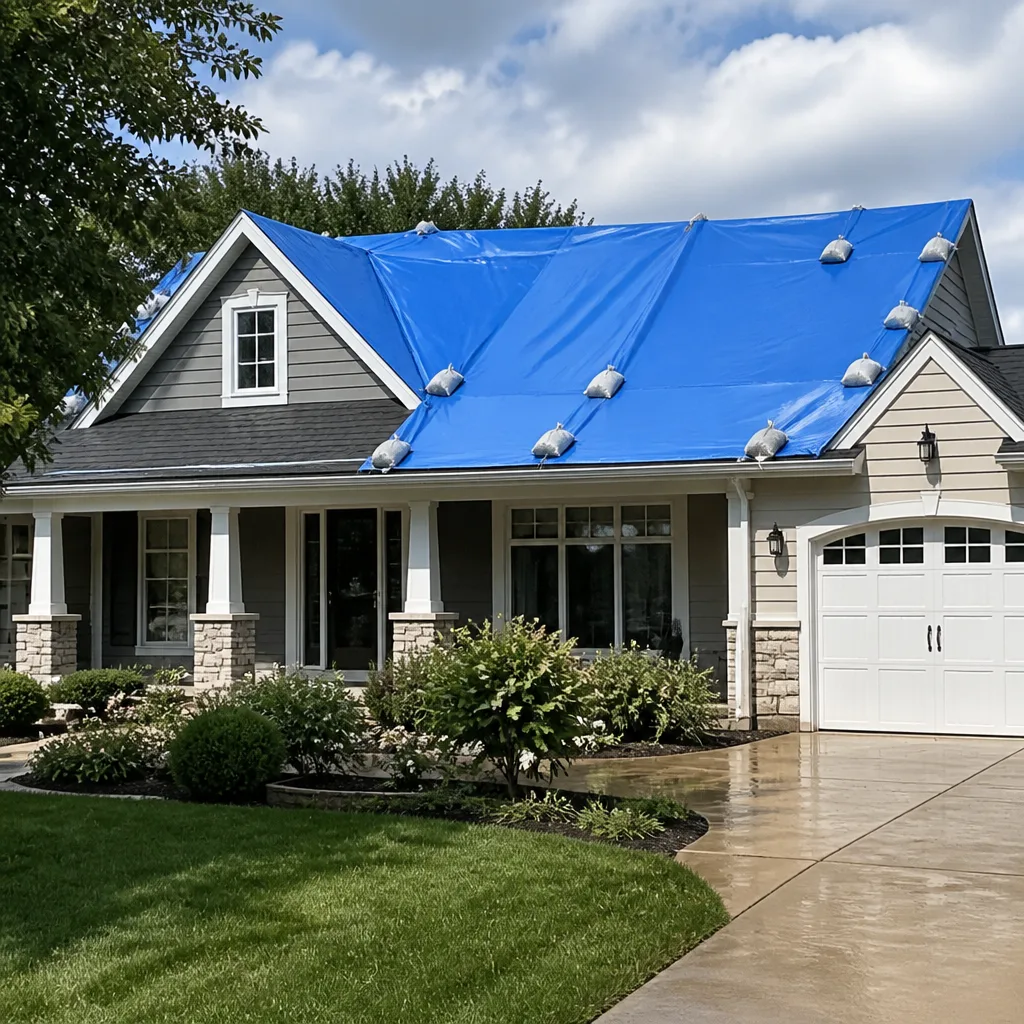
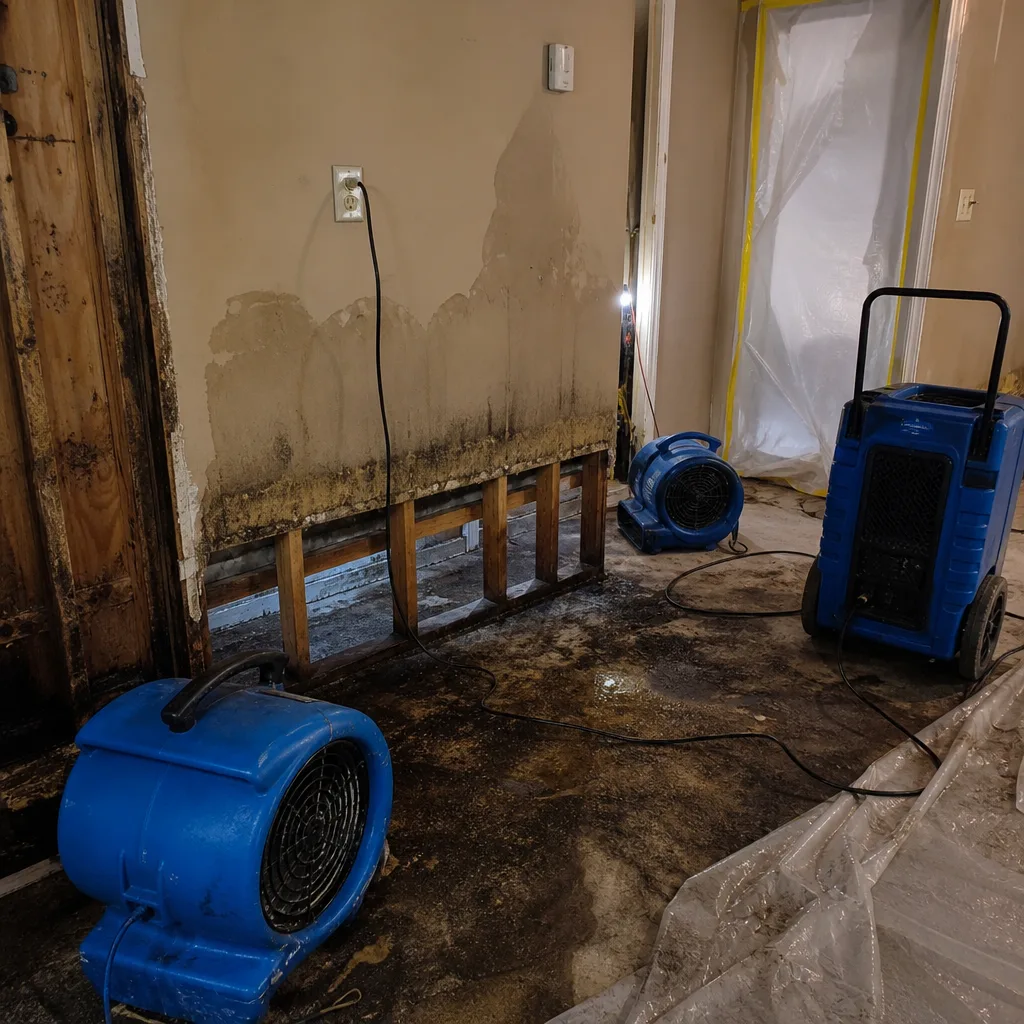 Before
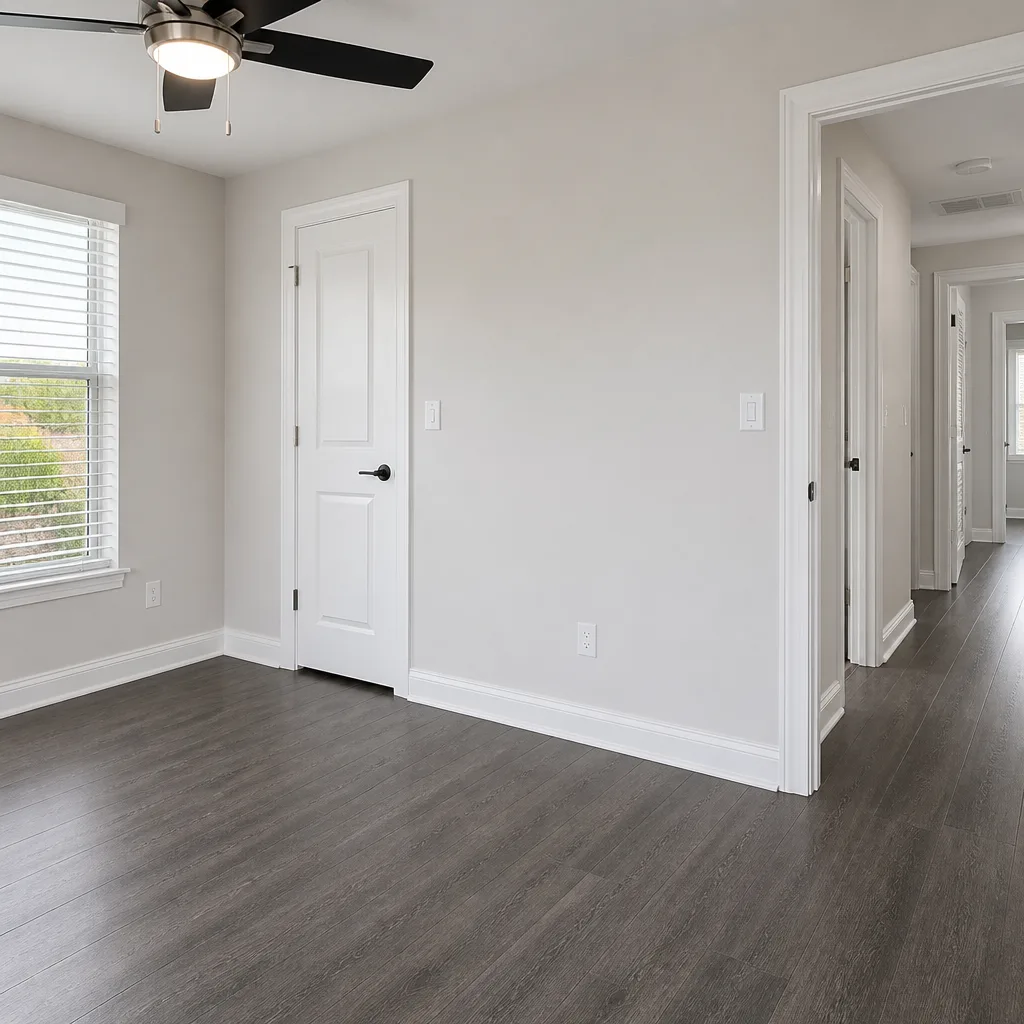 After
After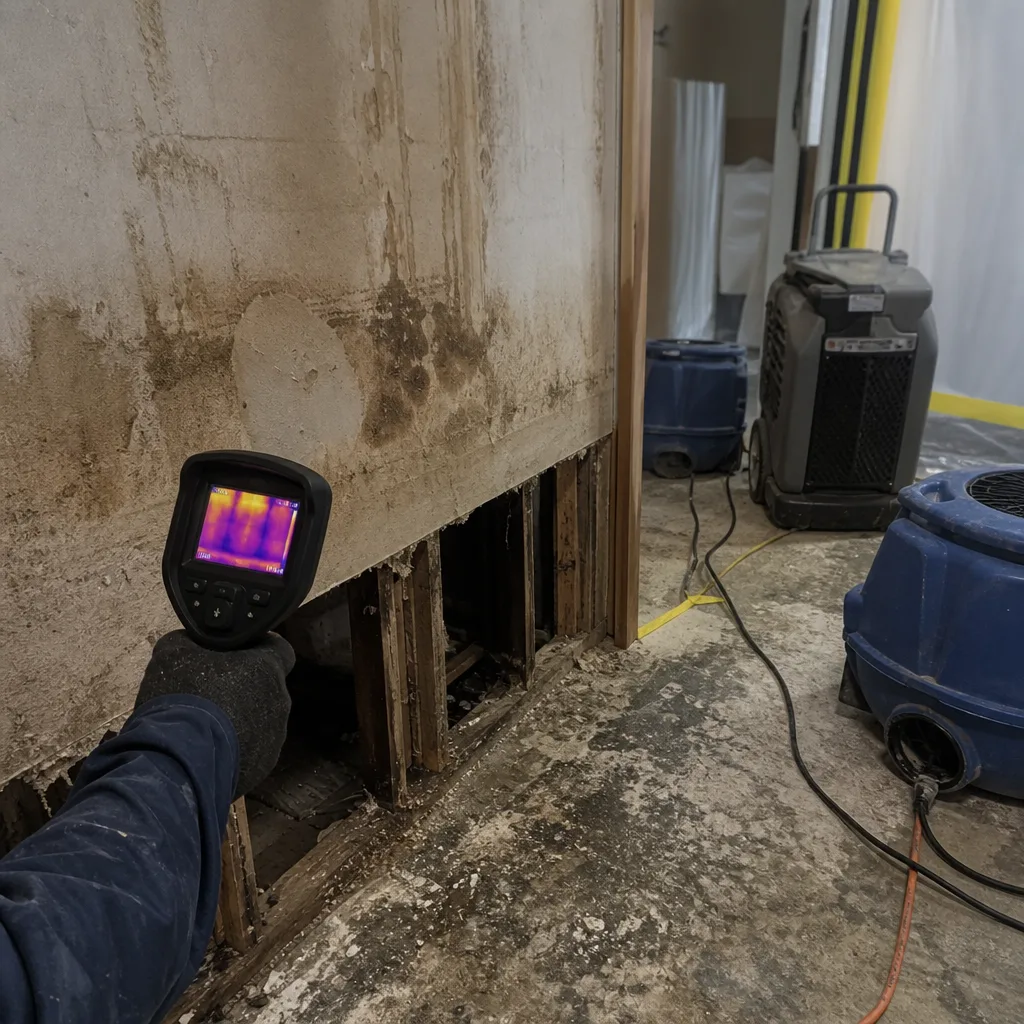 Before
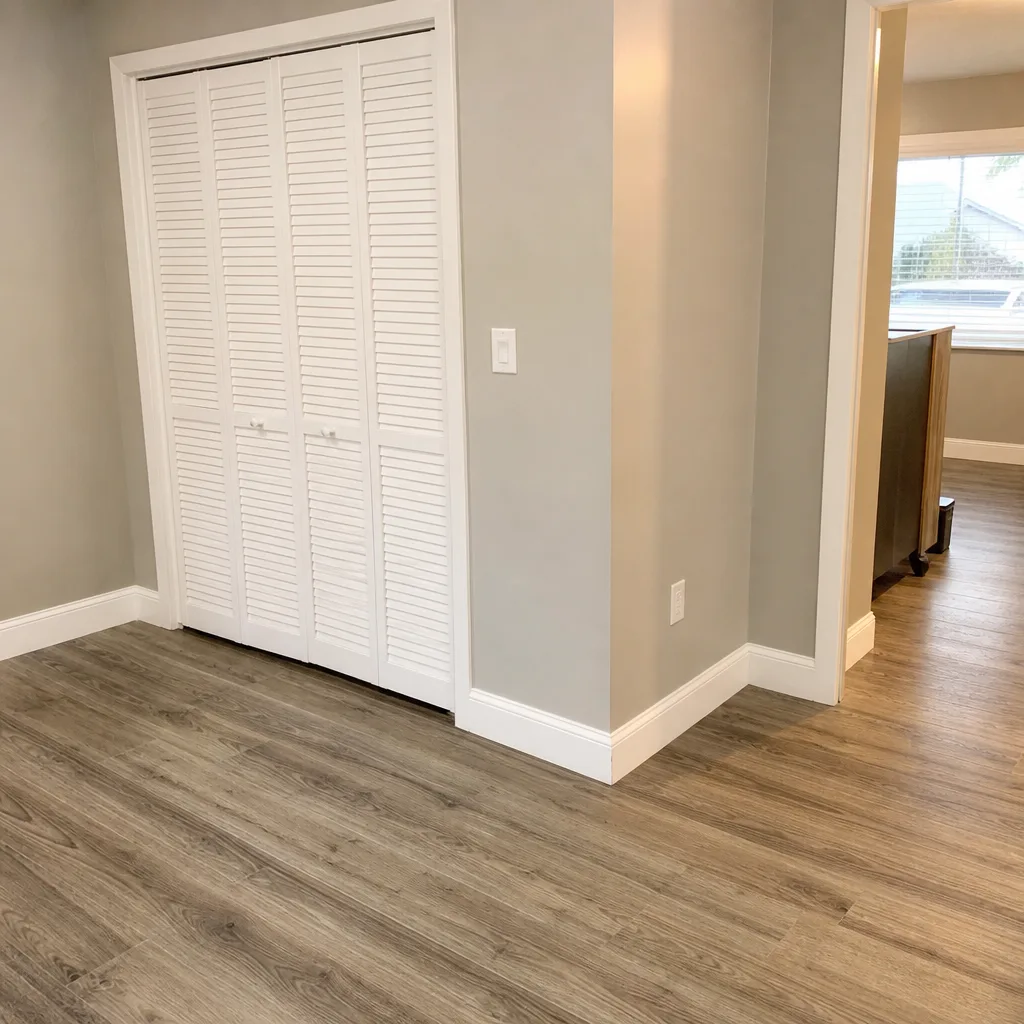 After
After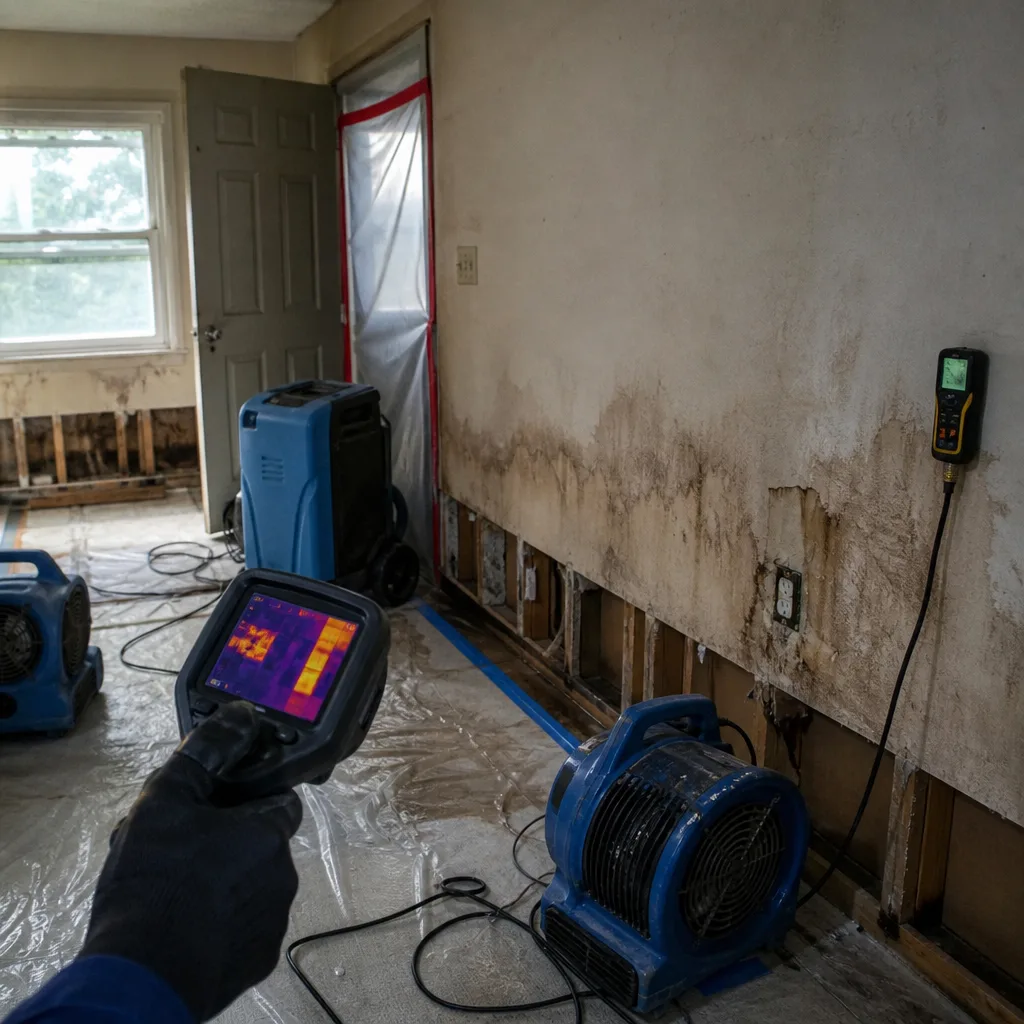 Before
 After
After24/7 Emergency Mold Remediation in Miami
Call (754) 222-3479 and a live person answers, 24 hours a day. Crews dispatch from our Miami (South FL) office to homes across the metro area, including Miami Beach, Coral Gables, and Hialeah. We arrive with moisture meters, thermal imaging, and containment materials ready to deploy. In Miami, the first hour matters more than almost anywhere in the continental US: our ambient humidity rarely drops below 70%, and water inside a concrete block stucco wall can trigger active mold colonies within 24 to 48 hours. Waiting until morning to call means the difference between a contained removal and a whole-wall gut. We provide a free visual inspection on arrival and a written price before any work begins, every time, under Haven Standard, Clause 1.
Understanding Mold Remediation Severity in Miami Properties
We classify mold contamination by affected square footage, material porosity, and whether the colony has penetrated behind finished surfaces. Category 1 is surface growth on non-porous materials like tile or sealed metal, addressable with HEPA vacuuming and antimicrobial treatment. Category 2 involves porous materials such as drywall, insulation, or carpet with visible colonization, requiring removal of affected substrates and controlled drying. Category 3 is hidden, extensive growth inside wall cavities, HVAC systems, or structural framing, demanding full containment with negative air pressure, air scrubbing, and clearance testing by a third-party inspector.
Miami’s housing stock makes Category 3 far more common here than in frame-built cities. Pre-1992 CBS homes in Hialeah, Westchester, and Little Havana have stucco exteriors that crack with thermal cycling, allowing chronic moisture infiltration into block cavities where mold proliferates unseen for years. Post-Andrew construction improved impact ratings and sealed assemblies, but the older stock dominates our call volume. We map moisture with penetrating probes and thermal imaging to distinguish surface contamination from cavity colonization before we quote a scope. Tertiary drying, the final phase where we use vapor pressure differential to pull bound moisture from dense materials, is often the longest stage in Miami block-wall jobs.
Why Miami Property Owners Choose DryMark Restoration Hollywood
- 45-minute response commitment to Miami addresses, because mold doesn’t wait for business hours in 85-degree overnight lows.
- 24/7 live answer - a real person, never an automated system or voicemail tree, on every call to (754) 222-3479.
- IICRC-certified crews holding AMRT (Applied Microbial Remediation Technician) and WRT (Water Damage Restoration Technician) credentials, with license numbers verified before they arrive at your door.
- Free visual inspection on every call, with moisture readings taken before we discuss next steps.
- Direct insurance billing and adjuster coordination, including the non-standard claims processes common with Citizens Property Insurance and surplus-lines carriers.
- One team from containment to reconstruction - no handoffs between vendors that lose documentation mid-claim.
 Before
 After
AfterOur Mold Remediation Process
1. Inspection & Assessment
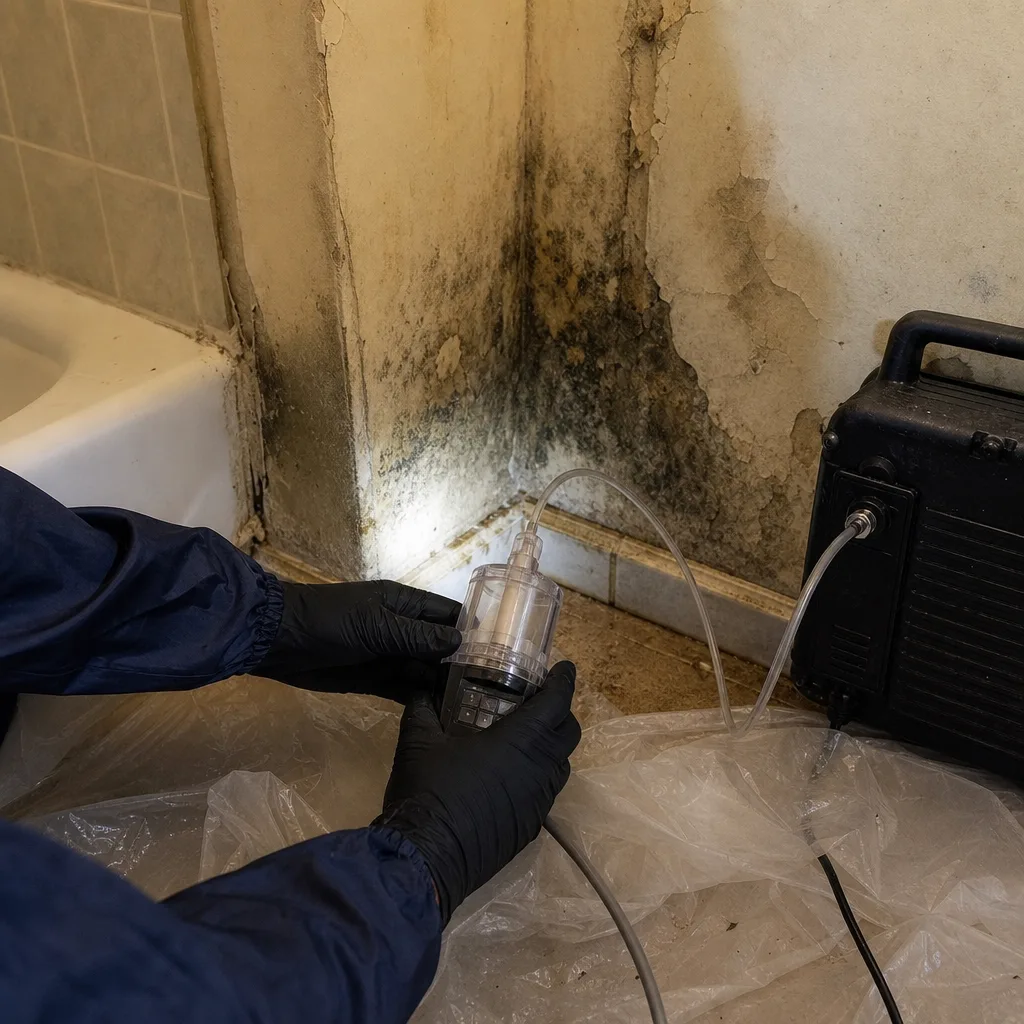
We arrive with FLIR thermal imaging, penetrating moisture probes, and hygrometers to map the full extent of colonization, including hidden cavity moisture behind stucco and drywall. Every reading is logged with time, location, and photo documentation.
2. Containment & Air Filtration
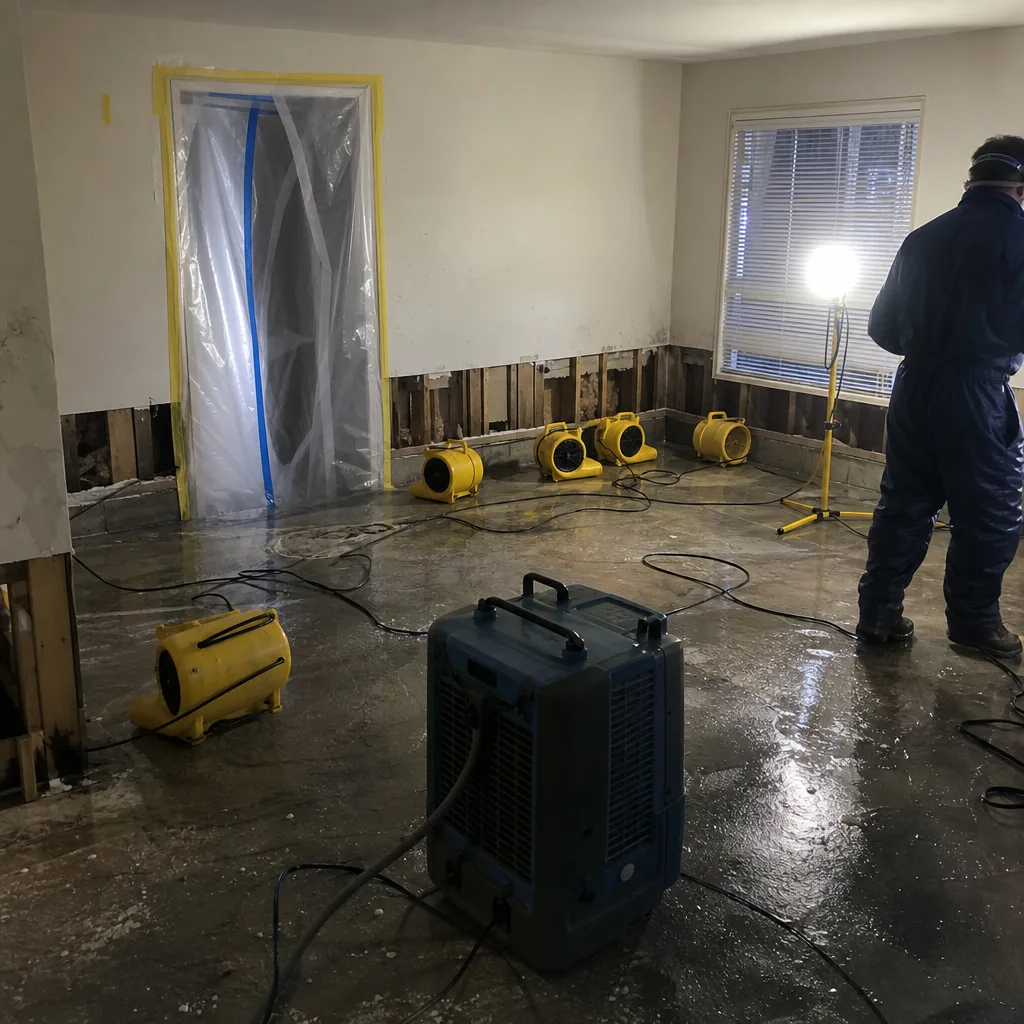
We establish polyethylene containment barriers and negative air pressure using HEPA air scrubbers to prevent spore migration during removal. In Miami’s tight CBS floor plans, this step is critical to protect adjacent rooms.
3. Controlled Demolition & Removal
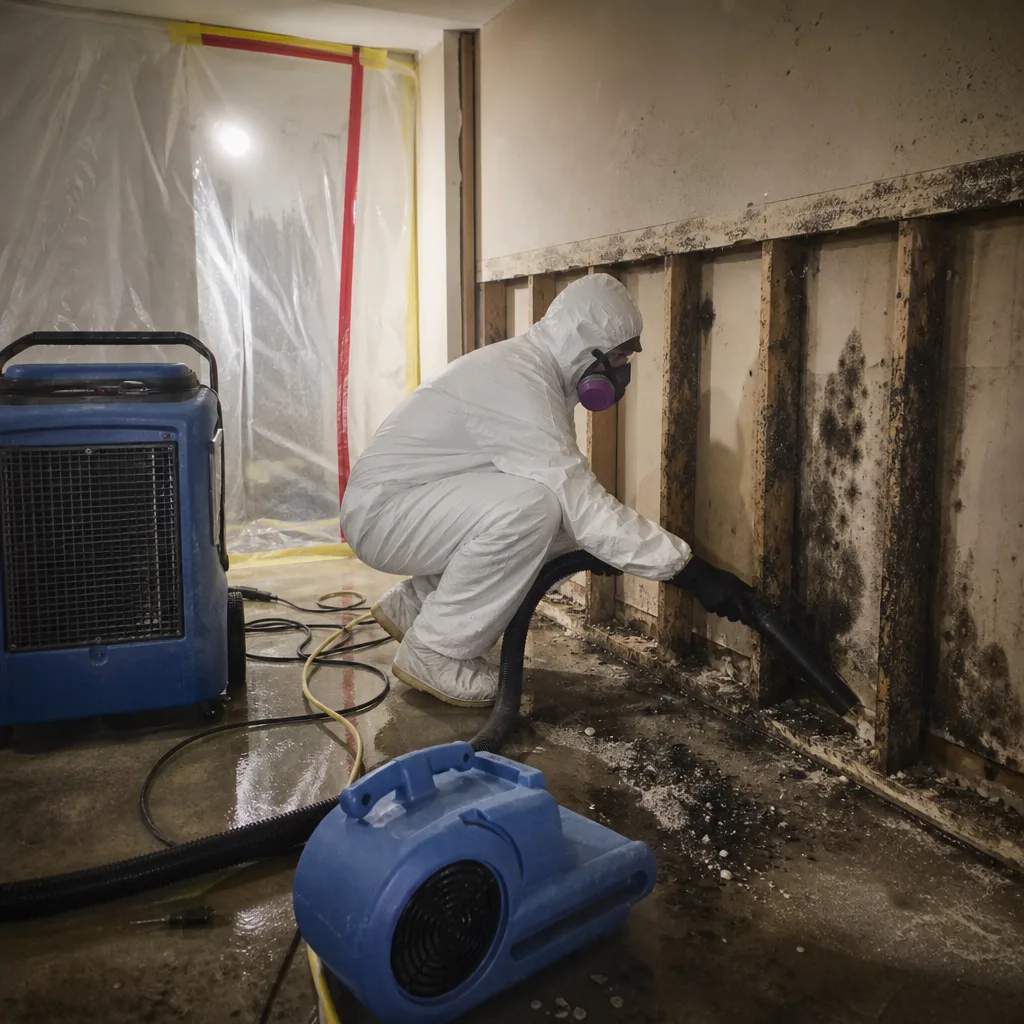
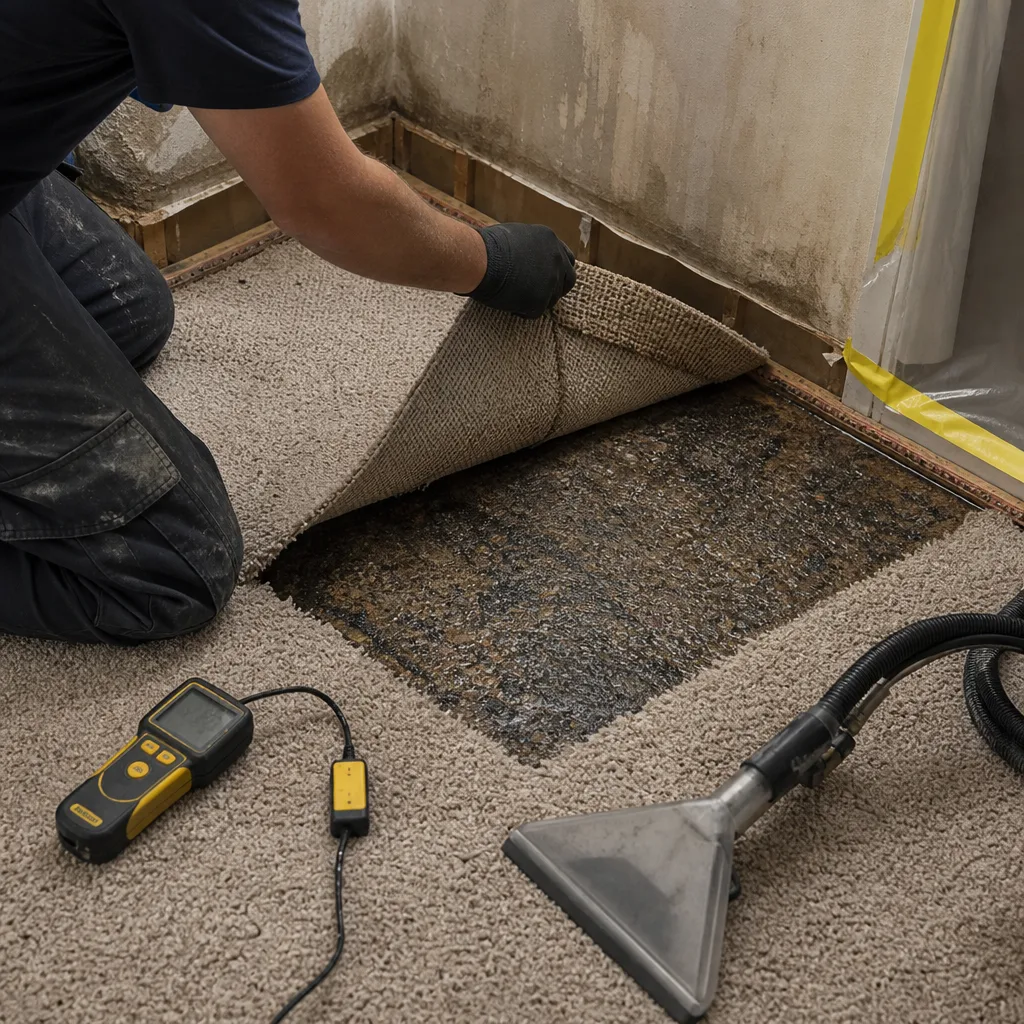
Affected drywall, insulation, and porous finishes are removed to expose block or framing. We cut precisely to minimize reconstruction scope, never demo more than the moisture map justifies.
4. Cleaning & Antimicrobial Treatment
Remaining hard surfaces receive HEPA vacuuming and EPA-registered antimicrobial application. We treat the full cavity, not just the visible stain, because Miami humidity sustains residual spore activity others miss.
5. Structural Drying & Moisture Control
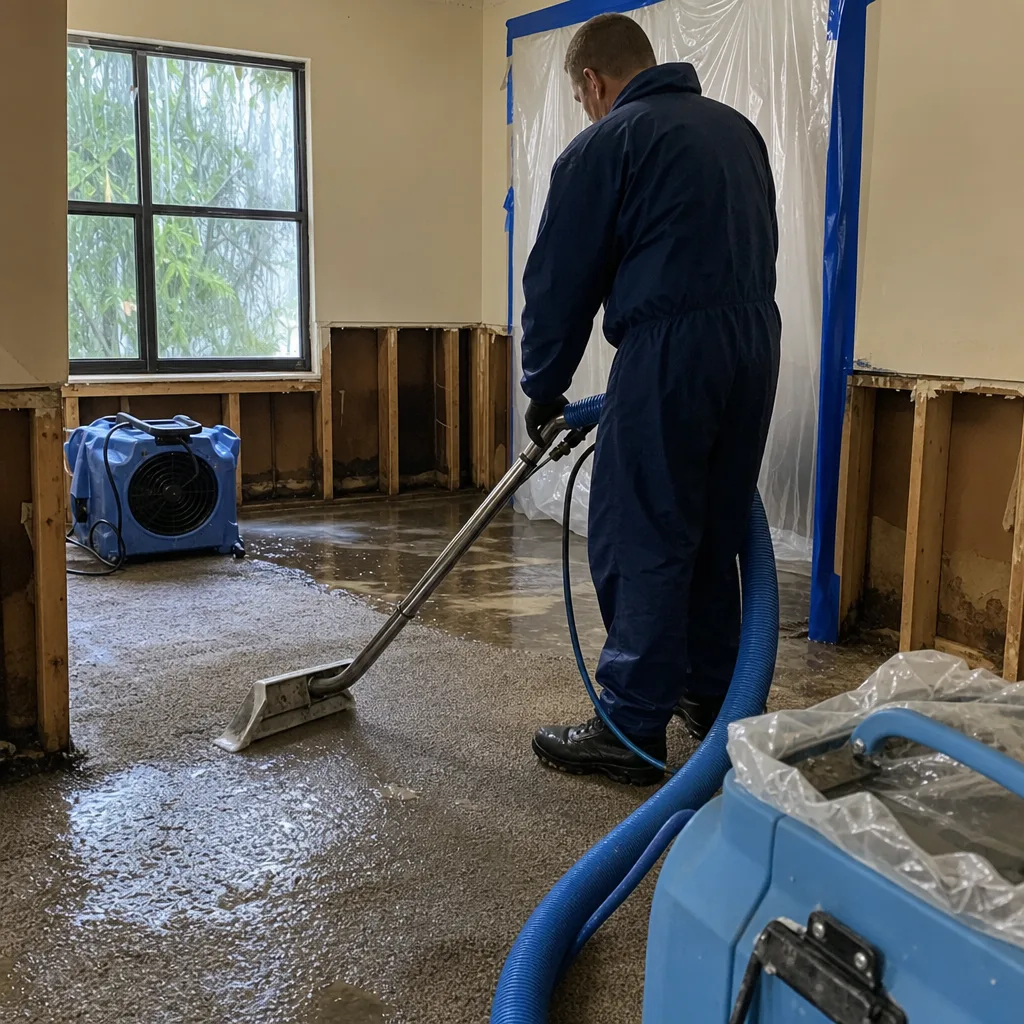
We deploy Phoenix dehumidifiers, Injectidry cavity drying systems, and calculated air movement to drive wall cavities below 12% moisture content. Daily psychrometric data and drying logs track progress to IICRC standards.
6. Clearance Testing & Restoration
Third-party air and surface sampling confirms spore counts at or below outdoor baseline before containment comes down. Reconstruction follows with the same crew, same documentation standard, and a written warranty under our 365-Day Done Right Promise.
Need Emergency Mold Remediation in Miami Now?
Crews minutes away, answering live 24 hours a day. The sooner we start, the less it costs.
Working With Your Insurance Company
Miami’s insurance market is unlike anywhere else in the US. Dozens of carriers have exited Florida, leaving a massive share of Miami-Dade homeowners on Citizens Property Insurance or surplus-lines policies with non-standard claims processes, longer cycle times, and stricter documentation requirements. We know this because our founder, Alicia Brennan, built Back to Dry Restoration in 2011 after working as a claims adjuster and watching homeowners lose legitimate claims to sloppy documentation.
We start building your file from the first hour. Every moisture reading, every photo, every drying log is captured to IICRC, RIA, and IFA standards. We produce industry-standard estimates and communicate directly with your adjuster, whether they’re from a national carrier or a surplus-lines managing general agent. Our photo record on every visit is included as standard, never an upsell.
What We Provide Your Insurer
- Thorough documentation of the loss
- Photos of all damage, room by room
- Moisture readings and drying logs
- A detailed, line-item scope of work
- Direct coordination with your carrier
Built for Miami’s Loss Calendar
May through October brings near-daily afternoon thunderstorms and the wet season’s peak mold pressure, but Miami’s restoration calendar has no true off-season. January through April’s drier months still see chronic moisture from stucco cracks and aging flat roofs that pool water during brief winter cold fronts. King tide season, roughly September through November, pushes saltwater up through storm drains in coastal neighborhoods like Miami Beach and Key Biscayne, flooding garages and ground floors without a cloud in the sky. These are non-storm losses with no wind component, and carriers often dispute coverage.
The most dangerous window is post-hurricane: when power fails and air conditioning stops, sealed CBS homes spike to outdoor humidity within hours. A water damage job becomes a mold remediation within 48 to 72 hours. We prepare for this with generator-compatible drying systems and protocols for homes without climate control. After Hurricane Irma in 2017, we saw mold establish in previously dry homes across Westchester and Coral Gables simply because AC was out for five days.
Mold Remediation Across Miami’s Neighborhoods
In Little Havana, the 1950s-1980s CBS stock dominates, with original flat roofs and stucco that has endured six decades of thermal expansion. We regularly find moisture readings above 20% in block cavities where hairline exterior cracks have gone unsealed. In Westchester, similar vintage homes often have additions with incompatible rooflines that create chronic leak points at valley flashing. Our crews know to probe these transition areas first.
Miami Beach presents a different profile: lower elevations, salt-air corrosion of metal flashing, and a higher concentration of condominiums with shared wall assemblies and association-managed maintenance delays. King tide flooding in garages and ground-floor units is increasingly common. Coral Gables mixes pre-Andrew estates with newer construction, but even the affluent areas have legacy plumbing and original cast-iron drains that fail catastrophically behind finished walls. We adjust our moisture mapping depth and documentation detail to each neighborhood’s actual risk profile, not a one-size template.
Specialized Mold Remediation Services We Offer in Miami
Mold Inspection & Testing
We begin with a visual inspection and moisture mapping, then collect air and surface samples for third-party lab analysis when clearance documentation is required for real estate transactions or insurance claims. In Miami, we always probe CBS wall cavities because surface readings deceive.
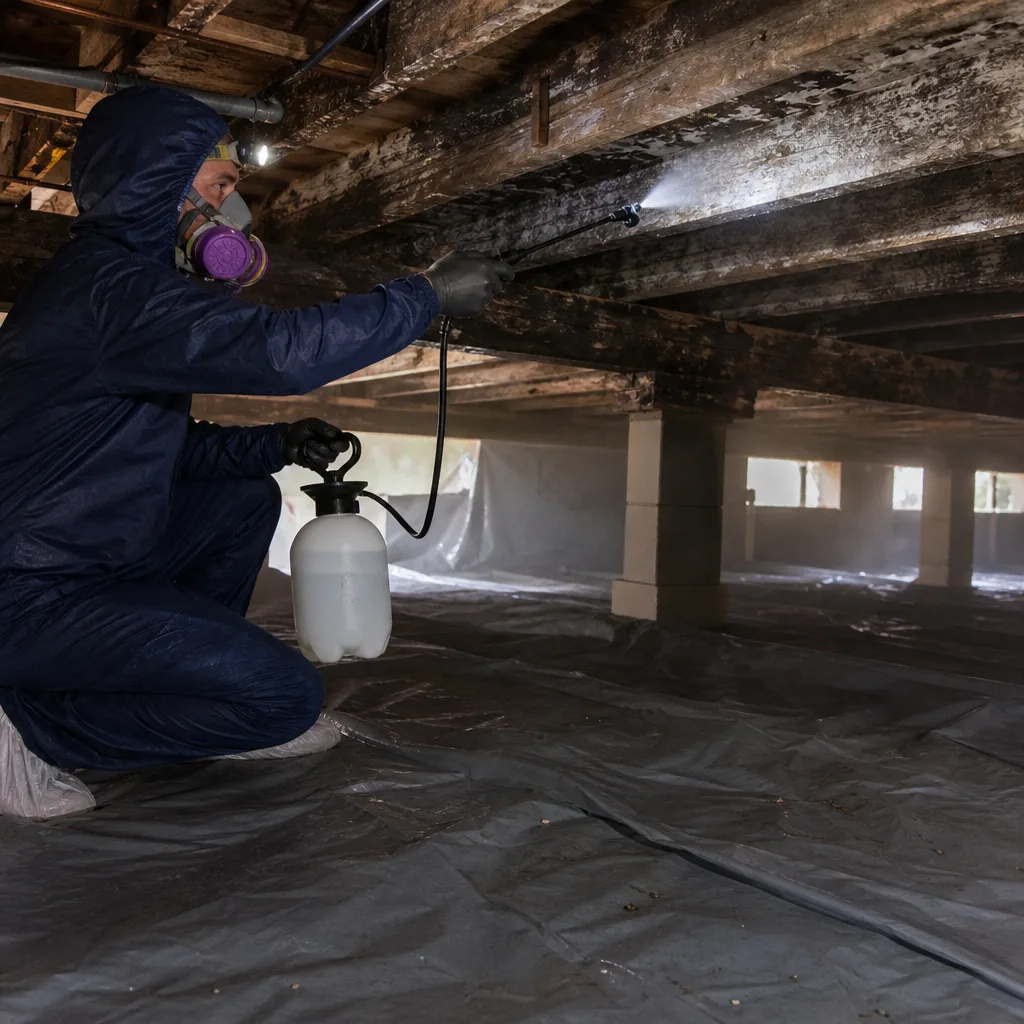
Mold Removal
Containment, controlled demolition, HEPA filtration, and antimicrobial treatment of affected porous materials. We remove only what the moisture map demands, preserving undamaged finishes to minimize reconstruction cost.
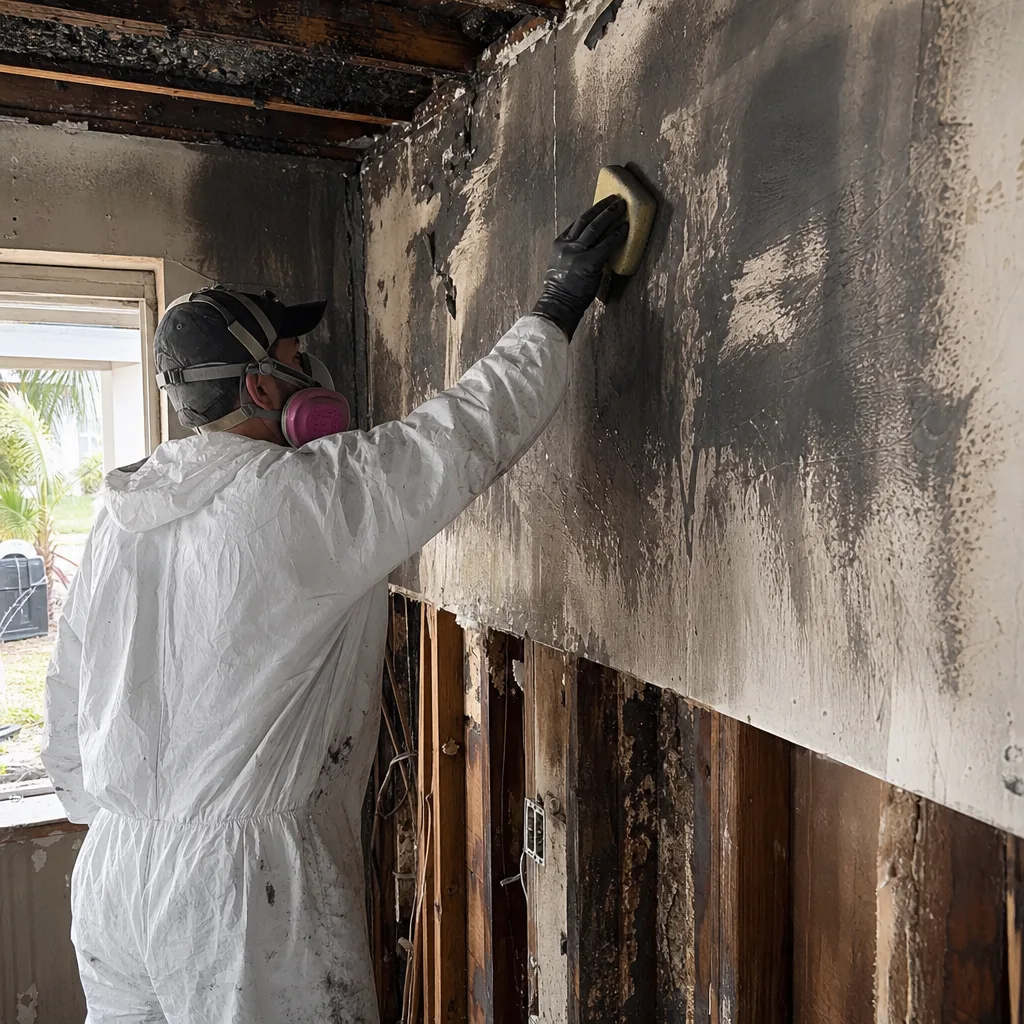
Black Mold Remediation
Stachybotrys and other toxigenic species require enhanced PPE, strict containment, and specialized disposal. We document chain of custody for contaminated materials and provide lab-verified clearance before reoccupancy.
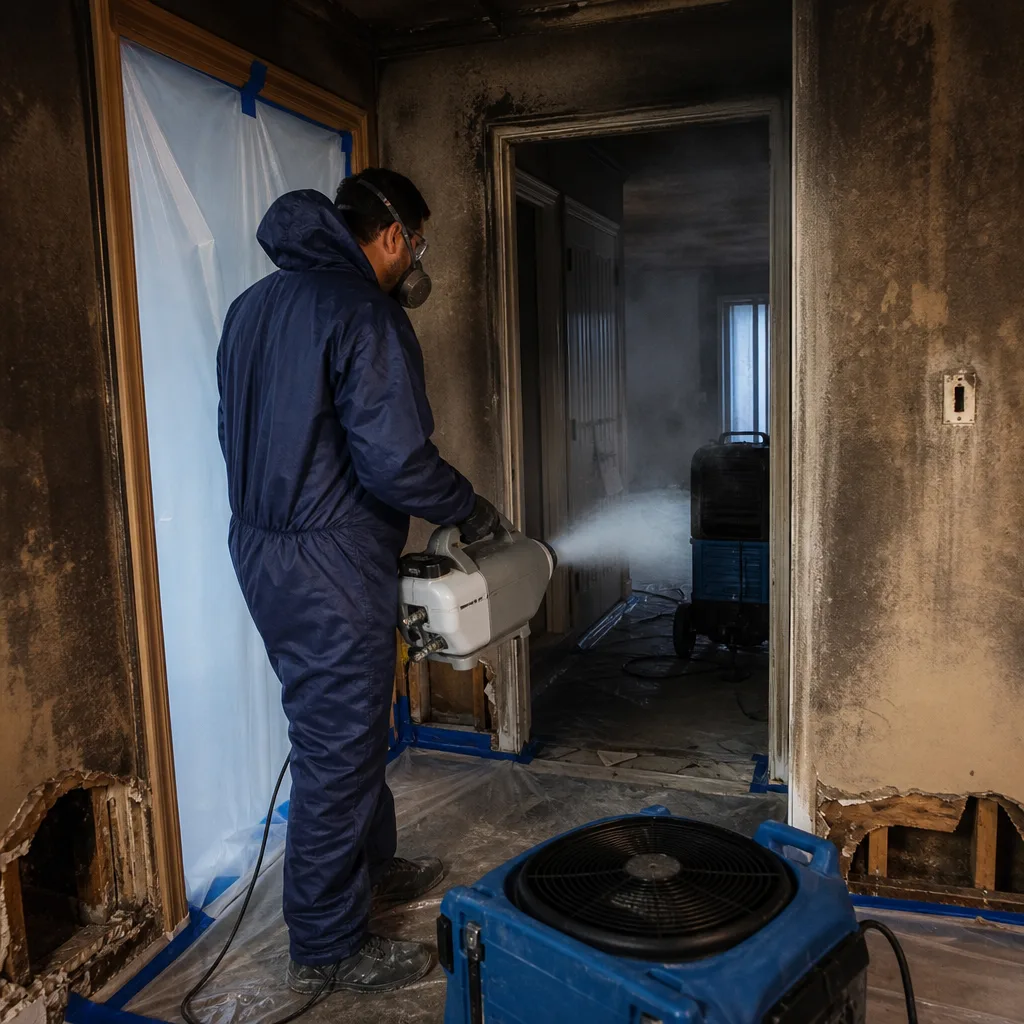
Air Quality Restoration
HEPA air scrubbing, duct cleaning where colonization has spread to HVAC systems, and post-remediation air sampling to confirm indoor spore counts at or below outdoor baseline.
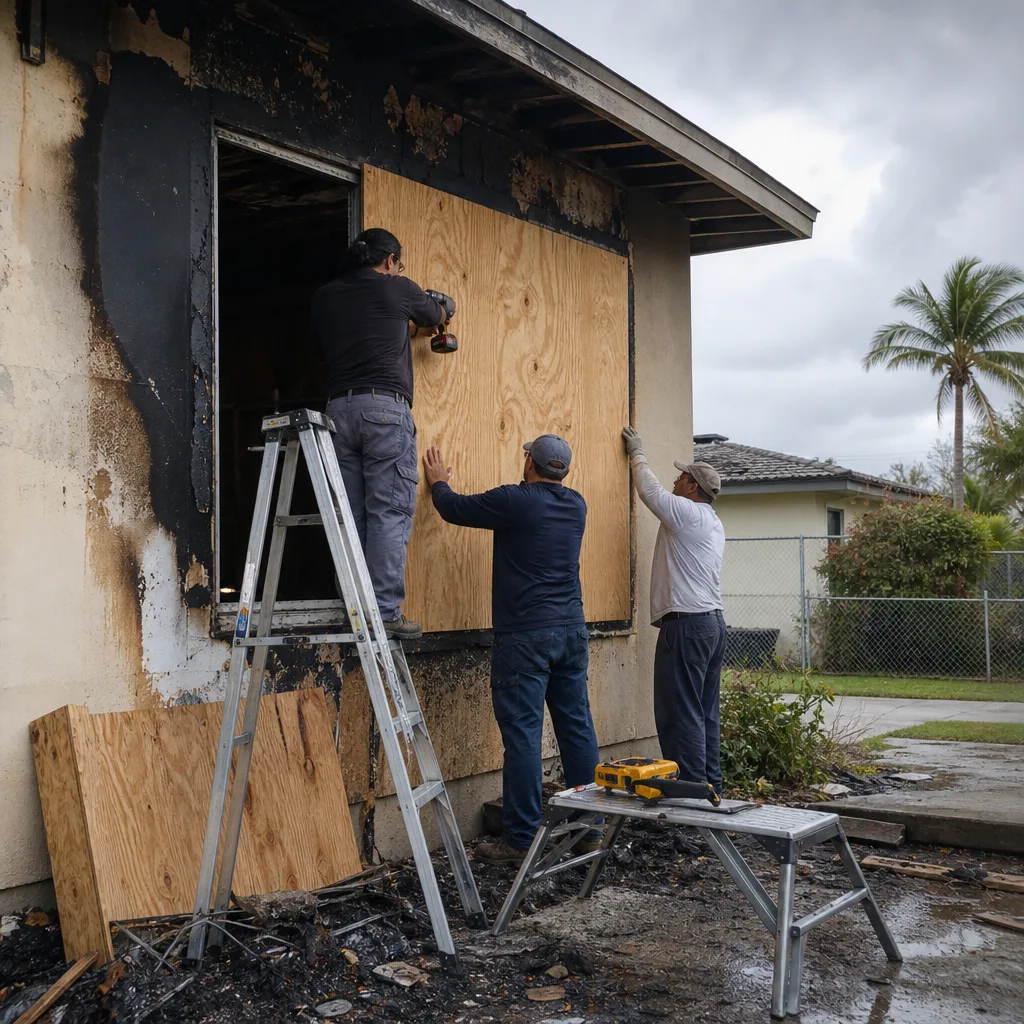
Crawl Space Treatment
Raised homes in flood-prone Miami pockets require subfloor moisture control, vapor barrier installation, and targeted treatment of joist and sheathing colonization.
Moisture & Humidity Control
We install and monitor dehumidification systems sized to Miami’s relentless humidity, with remote monitoring options for seasonal residents and second homes.
What happens when you call
- 1
A real person answersNo phone trees - you reach a local pro.
- 2
You get an upfront price rangeHonest numbers before anyone is dispatched.
- 3
A background-checked tech heads outLicensed & insured, dispatched right away.
- 4
You approve before work beginsNothing starts until you say go.
Mold Remediation Costs in Miami, FL
Our Mold Remediation team provides written pricing before work begins on every job, per Haven Standard, Clause 1. Typical costs in Miami’s market:
| Service | Typical Range |
|---|---|
| Surface mold treatment (non-porous, under 10 sq ft) | $350 - $750 |
| Single-room remediation with limited drywall removal | $1,200 - $2,800 |
| Cavity mold in CBS wall, containment + drying | $2,500 - $5,500 |
| Whole-area remediation with HVAC involvement | $5,000 - $12,000 |
| Black mold / toxigenic species with enhanced protocols | $4,500 - $15,000+ |
| Third-party clearance testing | $300 - $600 |
What moves the price: square footage of colonization, whether growth is behind finished surfaces, presence of toxigenic species, HVAC contamination, and the reconstruction scope required after removal. Insurance typically covers mold resulting from a covered water loss, but not long-term maintenance neglect. We review your policy and provide a Free Second Opinion on any competitor’s written estimate. Call (754) 222-3479 for an exact quote - estimates are free.
We Also Serve Cities Near Miami
Our Mold Remediation in Miami crews respond throughout the metro area, including Miami Beach with its flood-prone low elevations, Coral Gables and its mix of legacy estates and newer construction, Key Biscayne with salt-air and storm-surge exposure, and Hialeah with one of the highest concentrations of pre-1992 CBS housing in the county. Same documentation standard, same written price guarantee, same live-answer dispatch.
Serving Miami, FL - Our Local Coverage Area
We’re based in the Miami area and know this community well. Use the map below to see our service coverage - if you’re nearby, we can almost certainly help.
Miami Mold Remediation Questions, Answered
How fast can mold actually start in a Miami home after a water leak?
Active colonies can establish within 24 to 48 hours in Miami, compared to 72 hours or longer in drier climates. Our ambient humidity rarely drops below 70%, and CBS block walls hold moisture like a sponge once stucco cracks allow entry. Call (754) 222-3479 the same day as the leak - we moisture-map on arrival and contain before colonies spread.
Why do CBS block homes in Little Havana and Westchester hide mold so well?
Concrete block stucco construction places the moisture barrier behind a hard exterior finish, so water enters through cracks and migrates inside the block cavity while the interior paint reads dry. We’ve pulled 28% moisture readings from block cavities with perfectly dry-looking drywall. Only penetrating probes and thermal imaging reveal the truth. Call us for a free visual inspection with full moisture mapping.
Does the pre/post-Hurricane Andrew construction divide matter for mold remediation?
Yes, dramatically. Pre-1992 homes in Miami typically have weaker roof-to-wall connections, original flat or low-slope roofs with aged membranes, and no impact-rated openings, all major water-intrusion vectors. Post-Andrew construction sealed better but pre-1992 stock still dominates our mold calls in Hialeah, Little Havana, and Westchester. We adjust our inspection protocols accordingly. Call (754) 222-3479 to discuss your home’s vintage and risk profile.
How does losing AC after a storm turn a water job into a mold job in Miami?
Sealed CBS homes without climate control spike to outdoor humidity within hours. After Hurricane Irma, we saw mold establish in previously dry homes across Westchester and Coral Gables after just five days without AC. We deploy generator-compatible drying systems and accelerated dehumidification for post-storm jobs. Call immediately if your home has water intrusion and no power.
What documentation do Miami homeowners need for a Citizens or surplus-lines mold claim?
Forensic moisture readings, daily drying logs, photo-documented assessments, and a detailed line-item scope of work are essential. Non-standard carriers deny claims for insufficient documentation more aggressively than national carriers. We build this file from hour one to IICRC, RIA, and IFA standards. Call (754) 222-3479 and we’ll review your policy and estimate at no charge.
Can we stay in the home during mold remediation?
For Category 1 surface treatment, usually yes. For Category 2 or 3 with containment and air scrubbing, we recommend temporary relocation, especially for immunocompromised residents, children, or when toxigenic species are suspected. We discuss this during the free visual inspection and coordinate with your insurance on additional living expense coverage when applicable. Call to discuss your specific situation.
How long does mold remediation take in Miami?
Category 1 jobs: 1 to 2 days. Category 2 with limited removal: 3 to 5 days. Category 3 cavity colonization in CBS walls: 5 to 10 days, with drying time being the variable. Miami humidity extends tertiary drying compared to drier markets. We provide daily moisture logs so you see progress, not guesswork. Call (754) 222-3479 for a timeline based on your moisture readings.
What should I do in the first 30 minutes after discovering mold?
Stop the moisture source if safe to do so, turn off HVAC to prevent spore circulation, and call (754) 222-3479. Do not disturb visible growth, bleach it, or run fans, which aerosolize spores. We answer live 24/7 and dispatch with containment materials ready. The first 30 minutes set the scope for the entire job.
Call (754) 222-3479 now for 24/7 live answer and a free visual inspection with written pricing before any work begins. Our Miami crews are minutes away, with moisture meters, containment materials, and the documentation standard that turns restoration invoices into payable claims.
Written by Alicia Brennan, Owner at Back to Dry Restoration, serving Miami since 2011.
Mold Remediation in Nearby Areas