
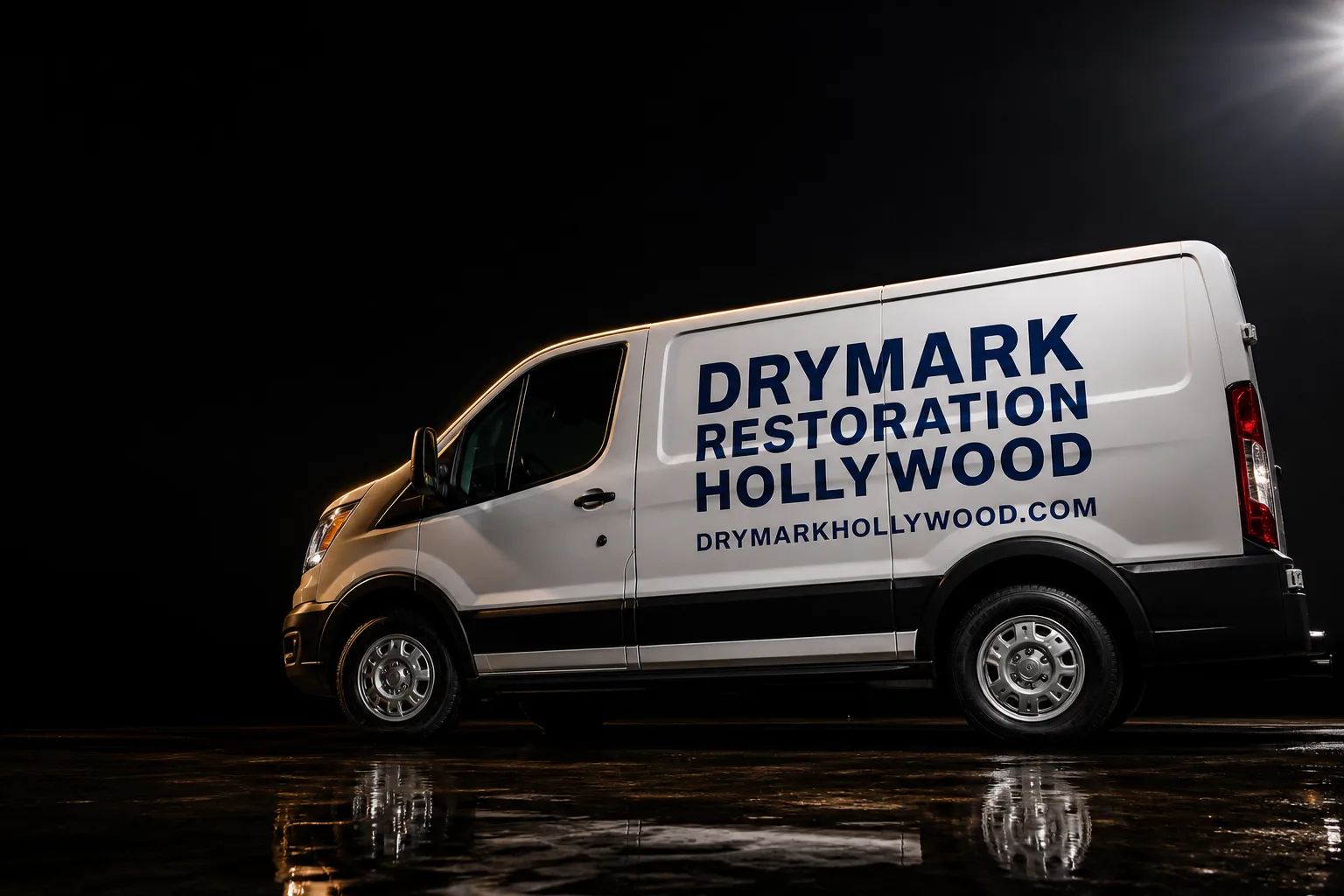
Free visual inspection and a written scope of work before any mitigation begins - photos, moisture readings, and drying logs go in your claim file
The scope we write is the scope we bill. Anything new gets shown to you, in writing, before we touch it.
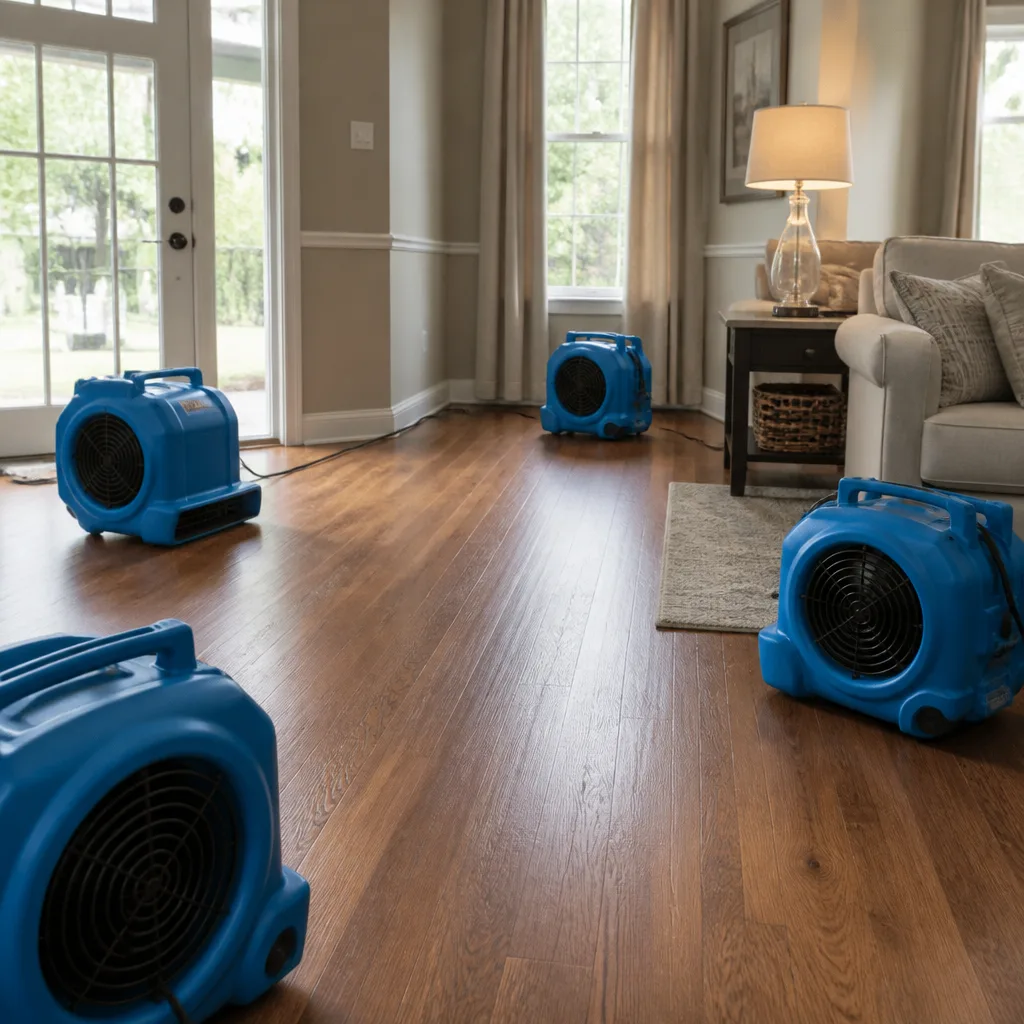
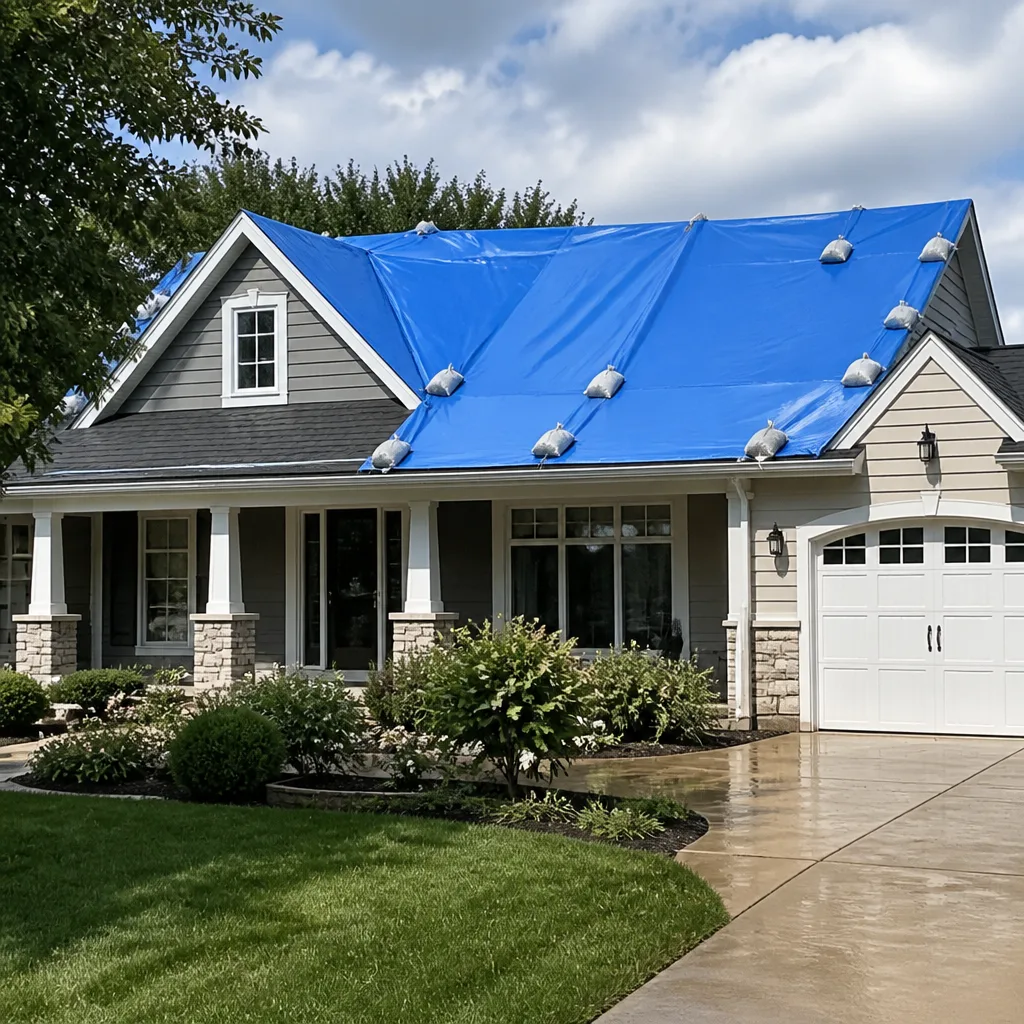
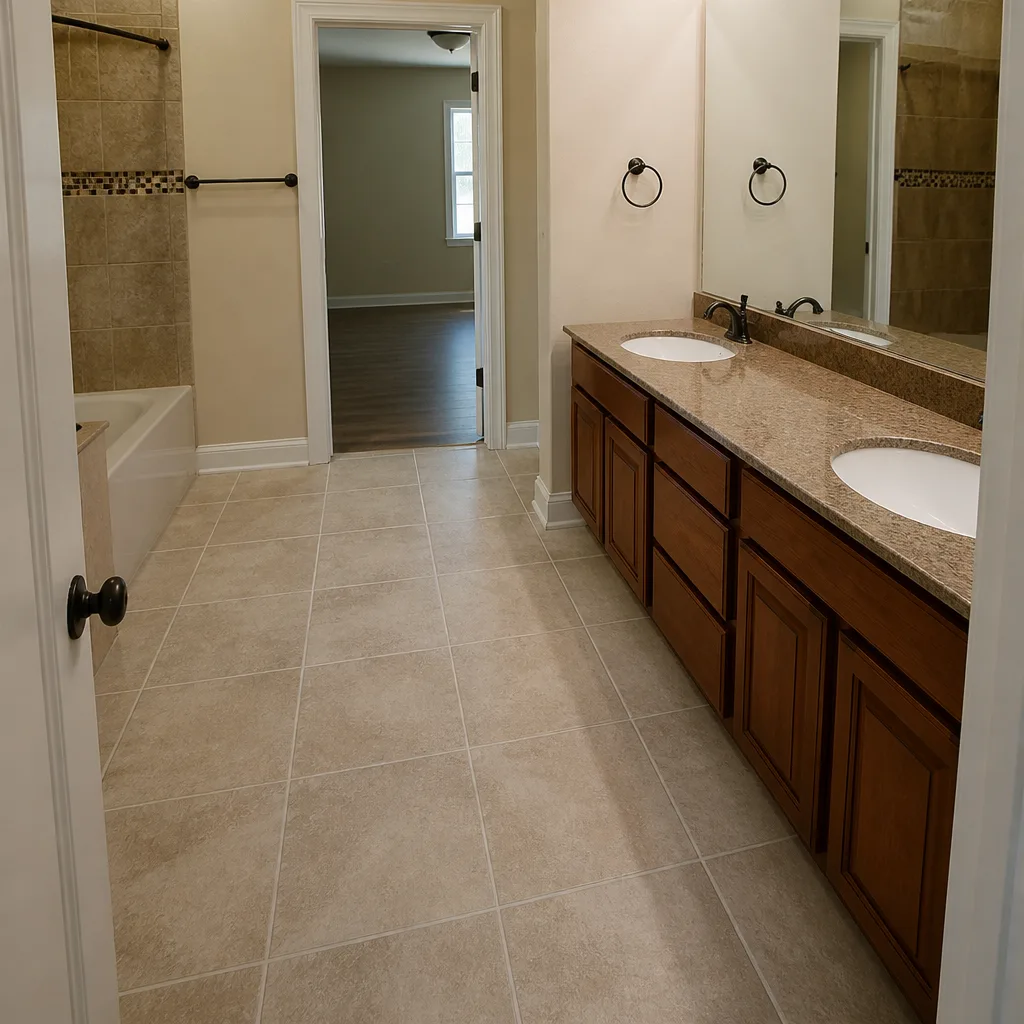
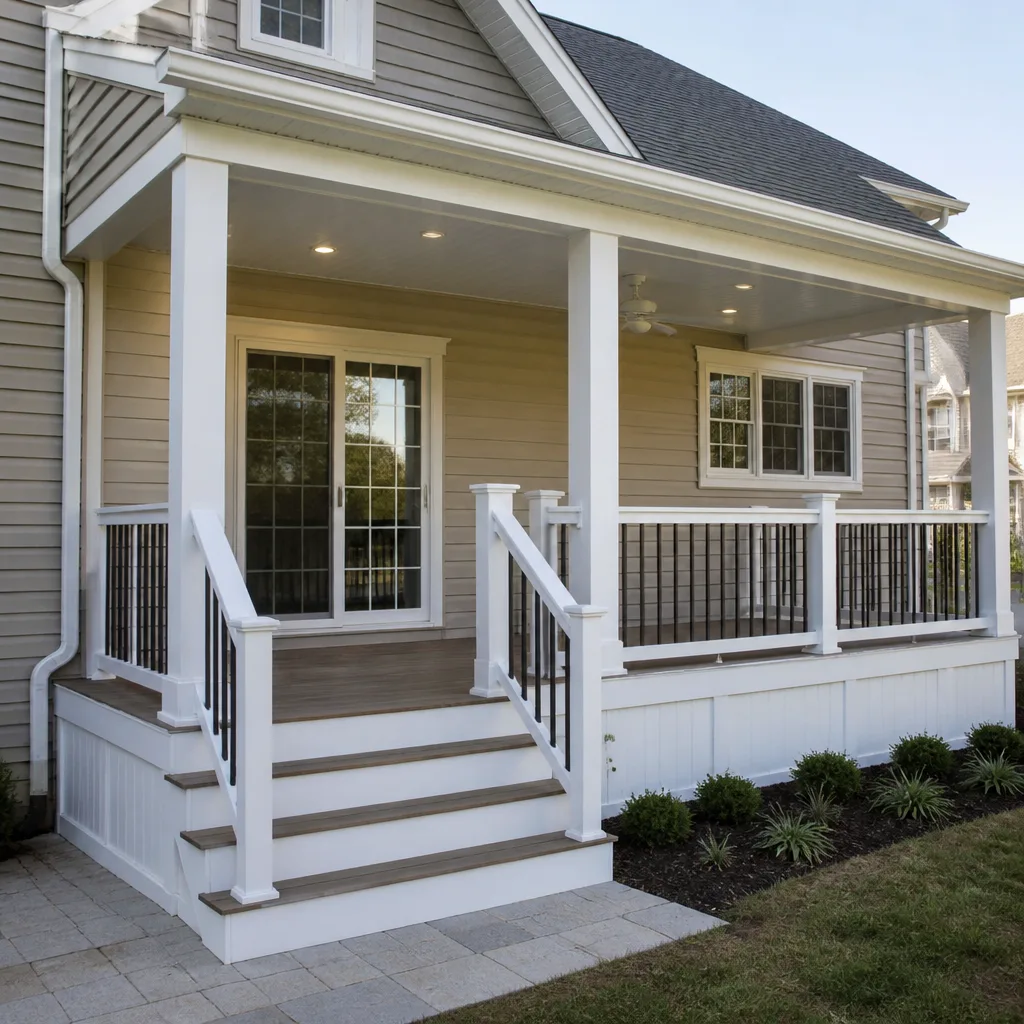
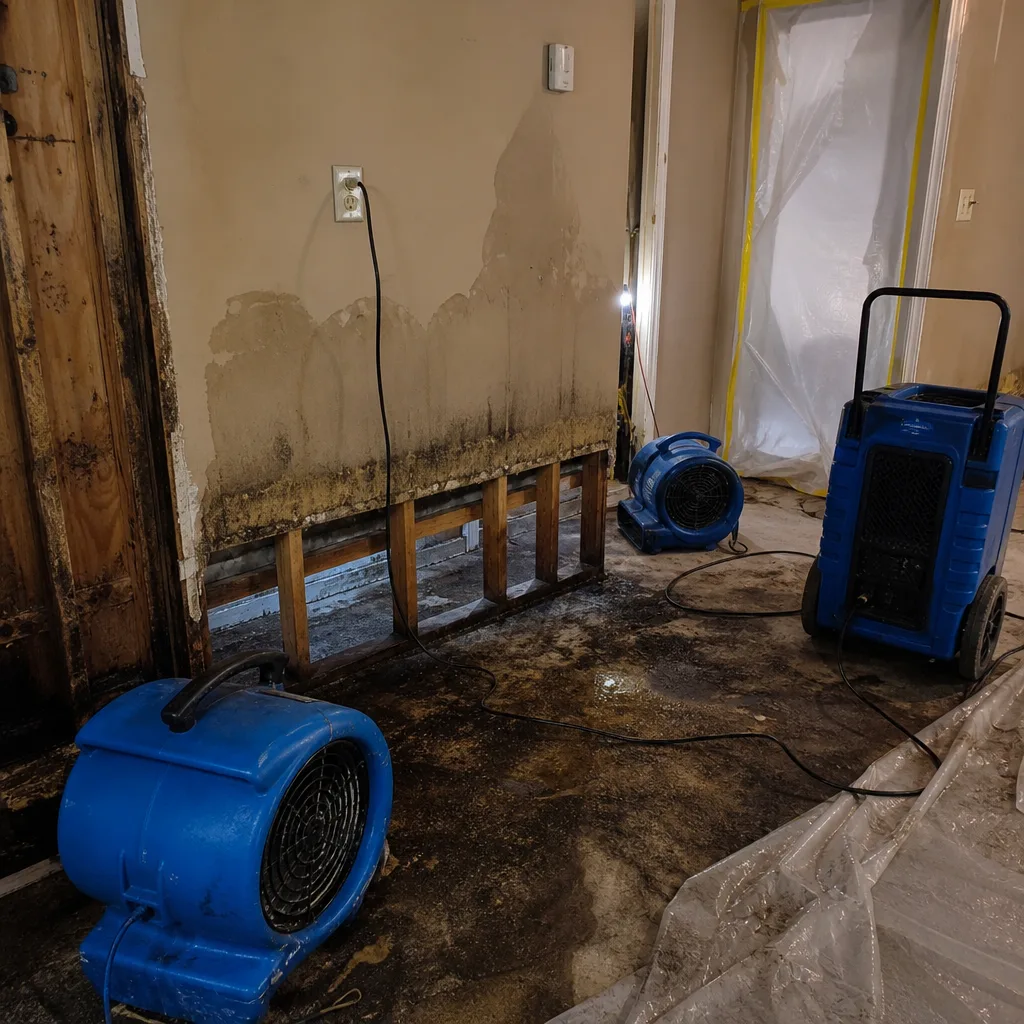 Before
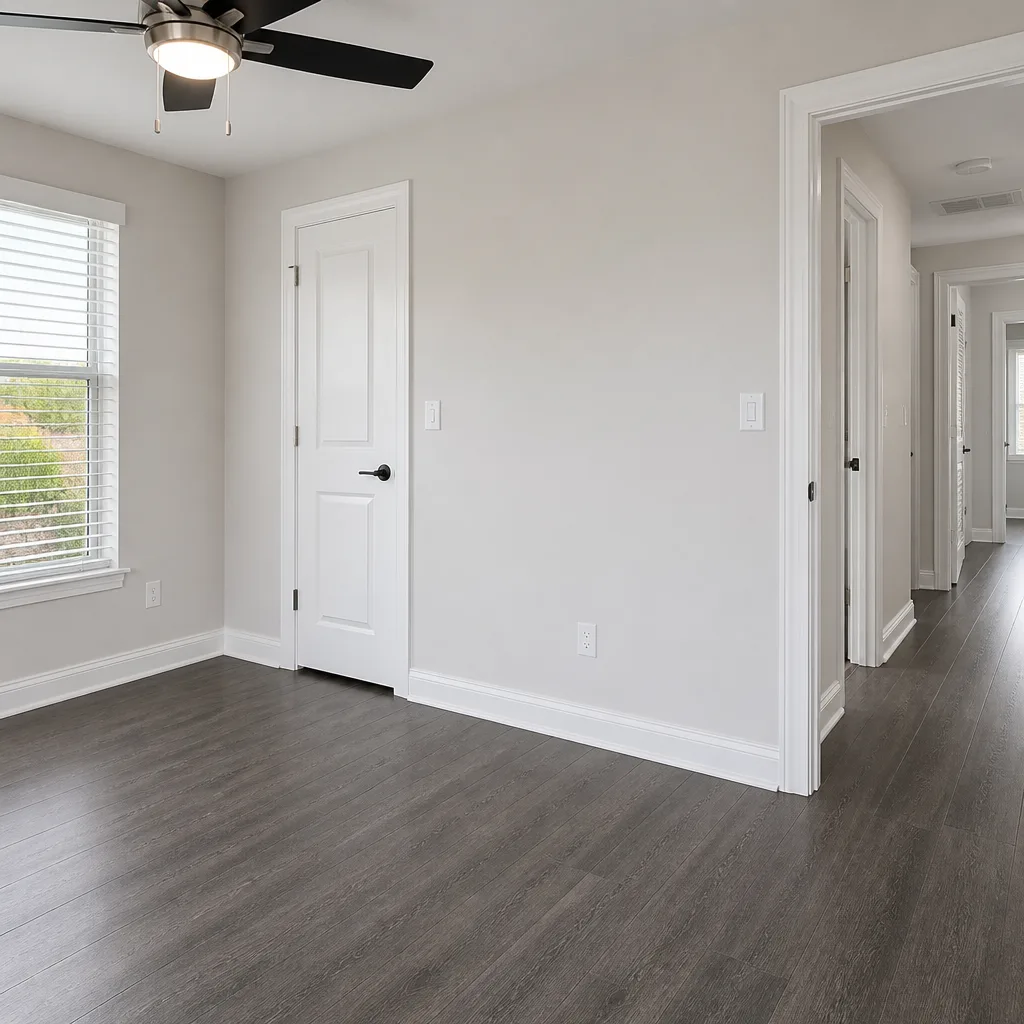 After
After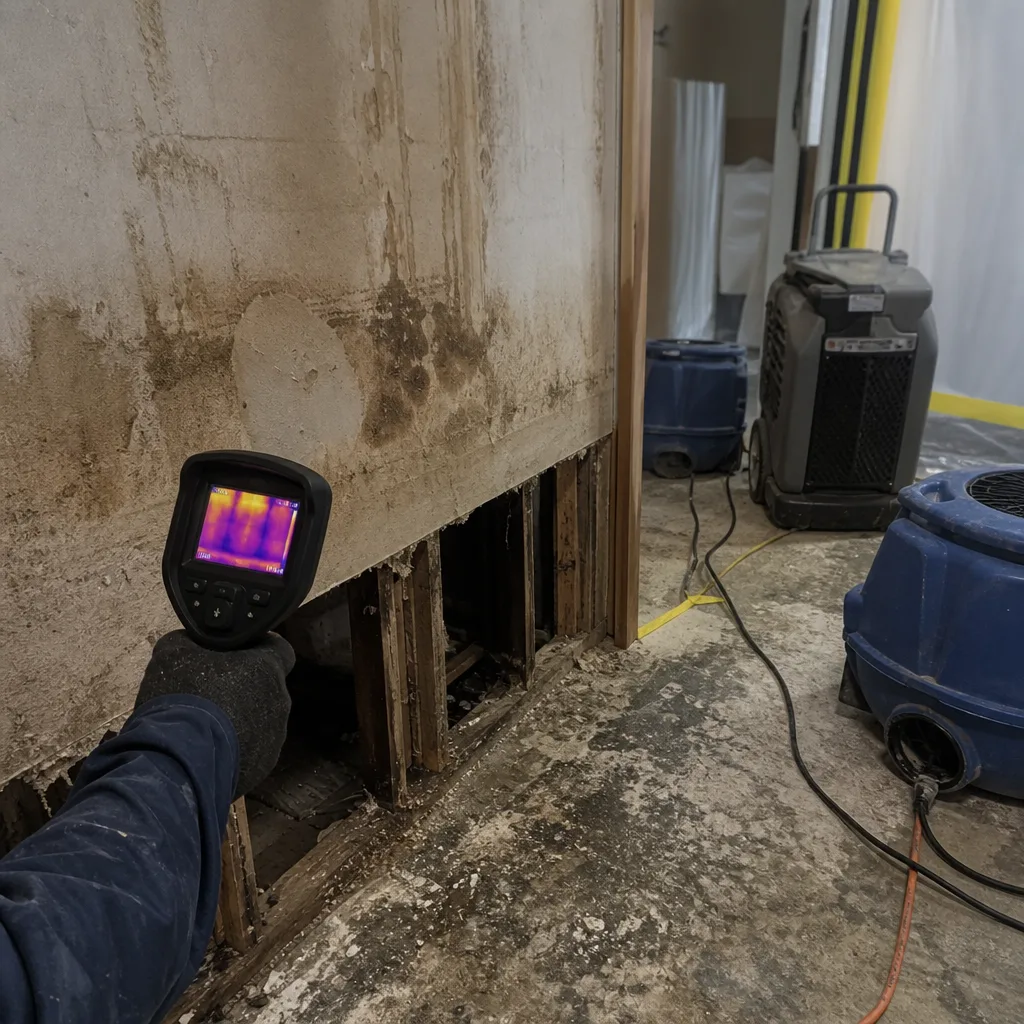 Before
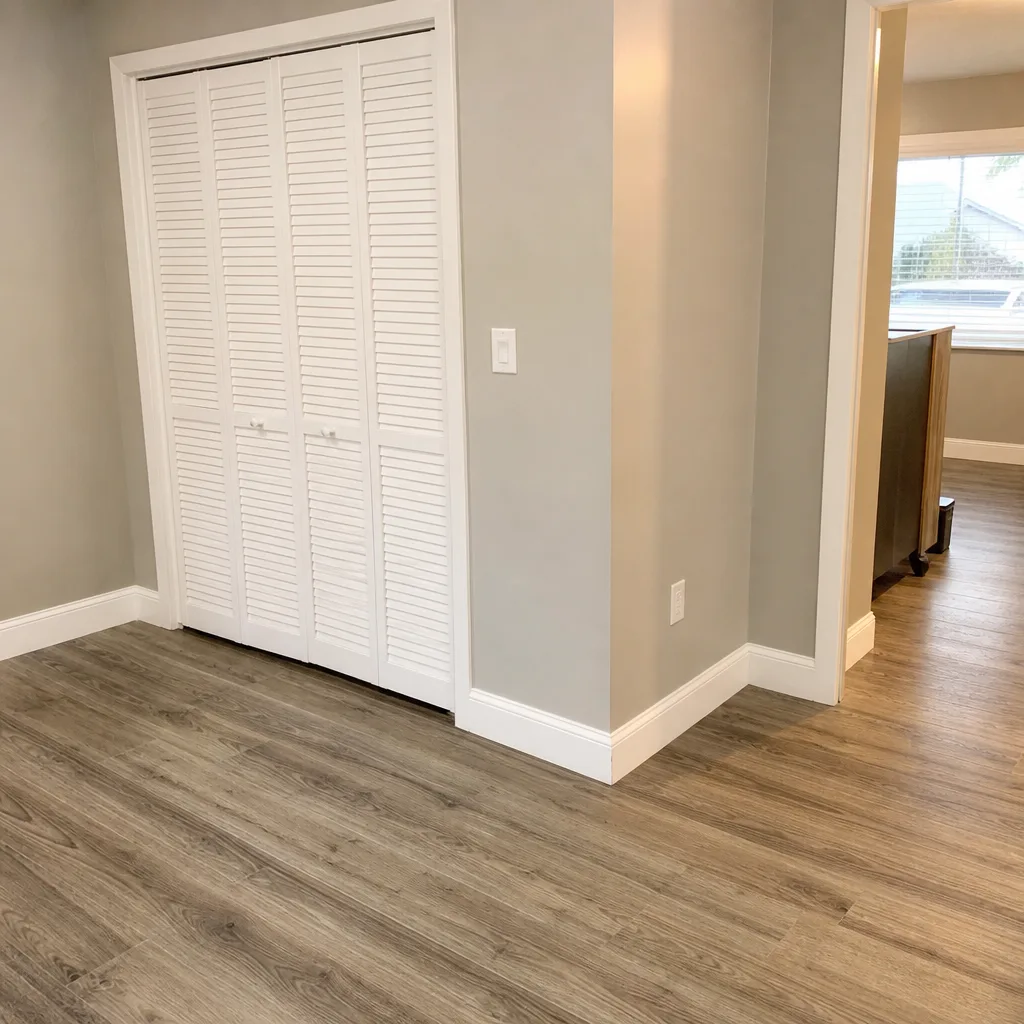 After
After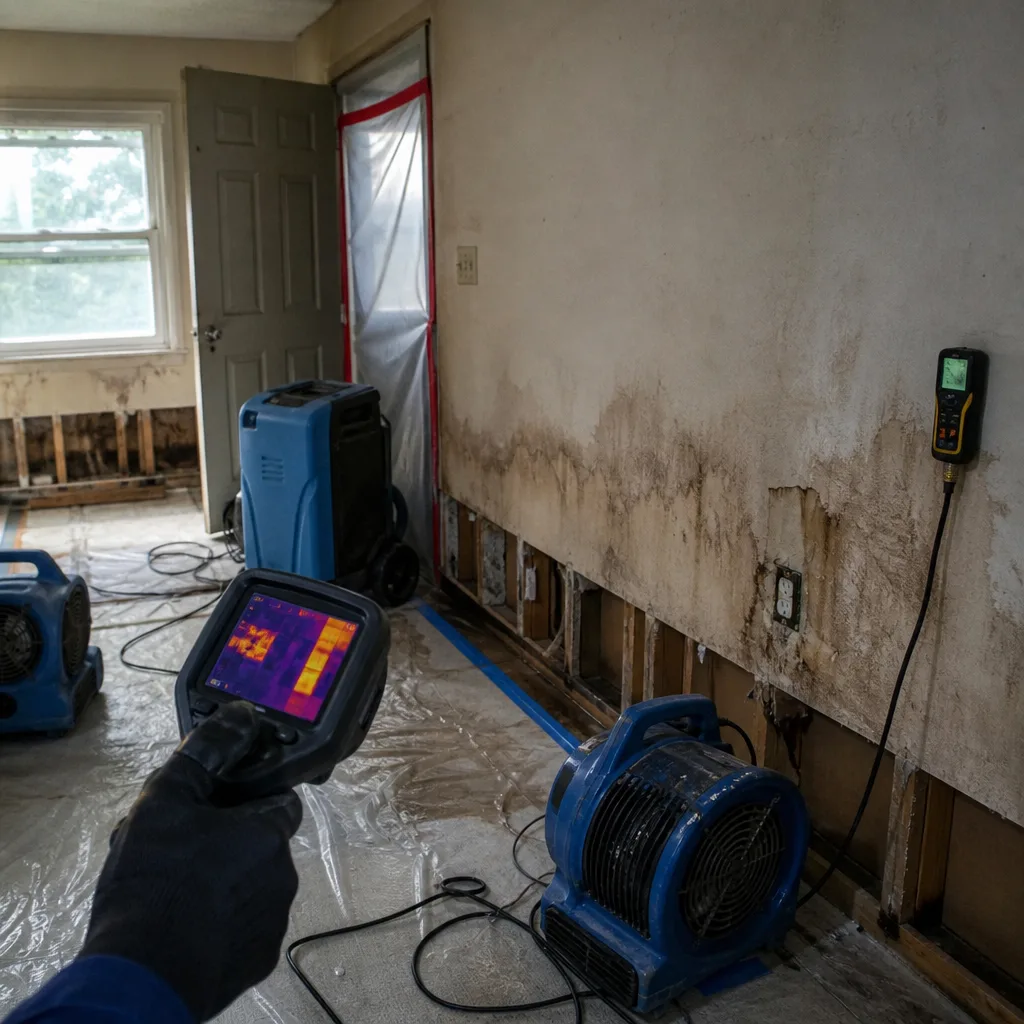 Before
 After
After24/7 Emergency Water Damage Restoration in Miami
Water damage restoration in Miami typically runs $2,800-$6,500 for a standard residential mitigation and dries most single-family homes in 3-5 days, though tropical humidity can stretch that timeline if the envelope isn’t sealed. Call (754) 222-3479 now and a live person will answer, 24 hours a day, no voicemail tree. Crews dispatch from our Miami (South FL) office and usually arrive within 45 minutes across the metro area.
The first hour determines whether you’re looking at mitigation or full mold remediation. Miami’s ambient relative humidity rarely drops below 70%, and water inside a CBS wall cavity can trigger active mold colonies in 24-48 hours. We start with a free visual inspection, moisture mapping, and a written price before any equipment runs. Haven Standard, Clause 1.
Understanding Water Damage Restoration Severity in Miami Properties
Water damage in Miami isn’t graded just by what you see. We classify by Category 1, 2, or 3 water, map moisture with thermal imaging and non-penetrating meters, then build a psychrometric drying plan - that is, we calculate exactly how much moisture the air can hold at a given temperature, and how many air changes per hour our equipment must produce to hit target equilibrium moisture content in wood framing and drywall.
Category 1 is clean supply-line water. In Miami, it rarely stays Category 1 for long. Stucco cracks in pre-1992 CBS homes wick groundwater, roof runoff, or wind-driven rain into block cavities, picking up contaminants from soil, rodent activity, or prior mold. Category 2, gray water, requires antimicrobial treatment and removal of porous materials. Category 3, black water - sewage intrusion or storm surge - demands full gutting of affected finishes and HEPA-contained remediation.
The housing stock split matters here. Pre-Hurricane Andrew homes in Hialeah, Westchester, and Little Havana often have original flat roofs with aged membranes, no impact-rated openings, and weaker roof-to-wall connections that let wind-driven rain re-wet cavities even after initial extraction. Post-1992 construction with sealed stucco, pitched roofs, and impact glass fails differently - usually through door or window seal compromise during storm surge or sustained pressure. Our Water Damage Restoration crews carry both moisture meters and wind-load assessment tools because the same storm can produce completely different water paths across a single ZIP code.
Why Miami Property Owners Choose DryMark Restoration Hollywood
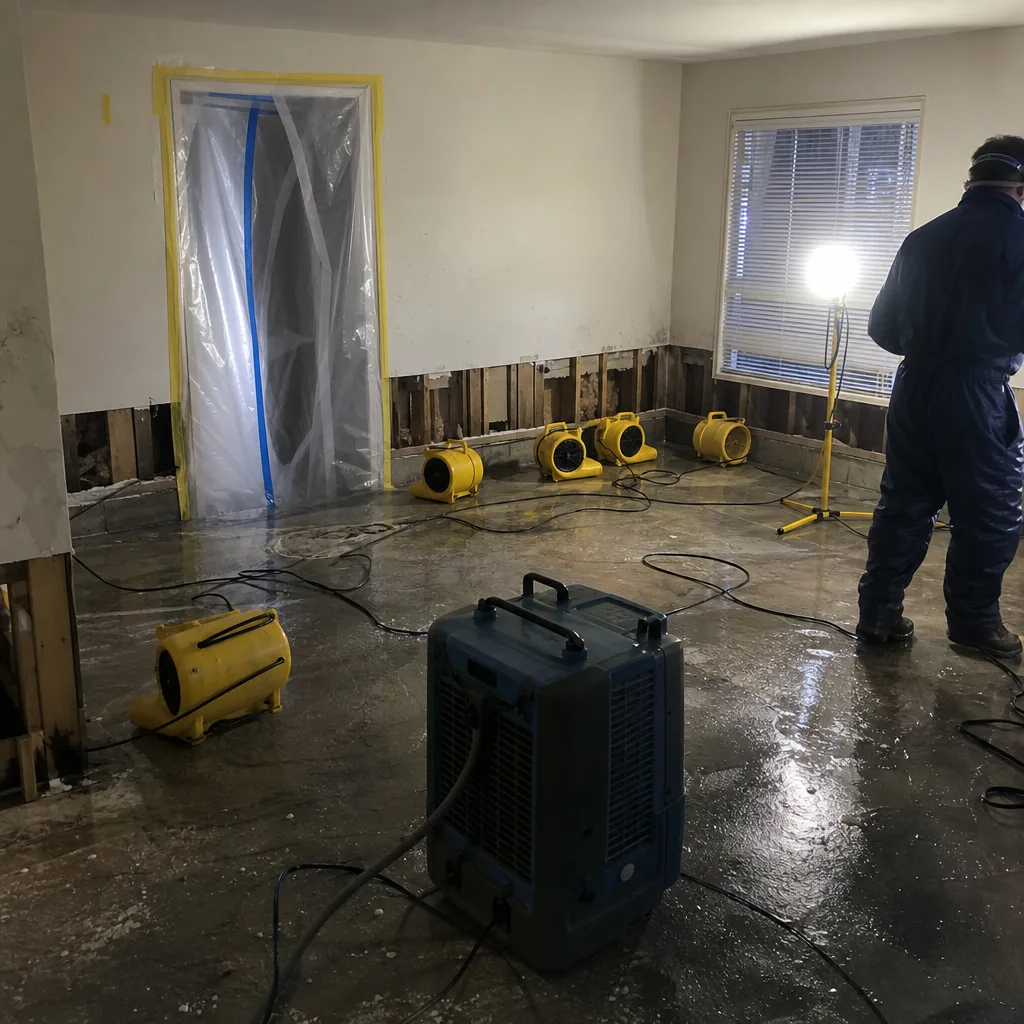
- 45-minute response commitment across Miami-Dade, with crews staged for afternoon thunderstorm season and named-storm dispatch.
- 24/7 live answer - a real person, never an automated system, on every call to (754) 222-3479.
- IICRC-certified crews holding WRT (Water Damage Restoration Technician), AMRT (Applied Microbial Remediation Technician), and FSRT (Fire & Smoke Restoration Technician) credentials where the job scope requires cross-training.
- Free visual inspection with moisture mapping and a written scope delivered before any work begins.
- Direct insurance billing with documented photo records, daily drying logs, and adjuster coordination - critical for Citizens Property Insurance and surplus-lines carriers with non-standard claims processes.
- One team from extraction to reconstruction, so the crew that wrote the scope finishes the rebuild and honors the 365-Day Done Right Promise under The Haven Standard.
 Before
 After
AfterOur Water Damage Restoration Process
1. Inspection & Assessment
We document moisture readings room by room with thermal imaging, penetrating and non-penetrating meters, and photograph every affected surface. For Miami’s CBS homes, we specifically map stucco crack patterns and check roof-to-wall connections for hidden water paths. You get a written price before work starts, every time.
2. Water Extraction & Stabilization
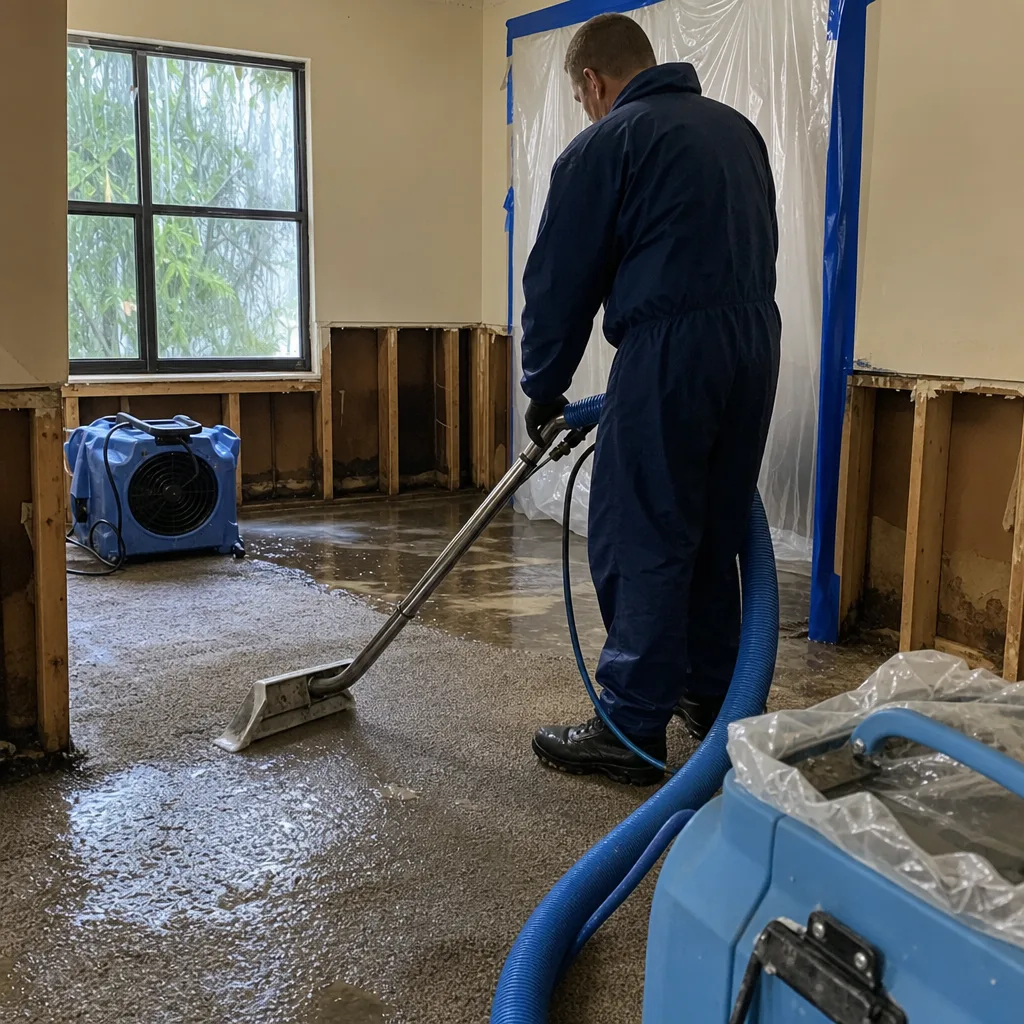
Truck-mounted extraction removes standing water; submersible pumps handle deeper flooding. We deploy weighted extraction tools on saturated carpet and pad. In Miami’s low-lying areas like Miami Beach and Key Biscayne, where king tide flooding can leave residual groundwater pressure, we assess slab moisture separately from ambient humidity.
3. Structural Drying & Dehumidification
We calculate vapor pressure differential - the force that drives moisture from wet materials into dry air - then deploy Dri-Eaz and Phoenix LGR dehumidifiers with Injectidry cavity drying systems for block wall voids. Air movers from XPOWER and B-Air create controlled airflow patterns. Daily moisture logs track progress to IICRC S500 standards.
4. Cleaning & Sanitization
Antimicrobial application per EPA-registered protocols, HEPA air scrubbing for airborne particulate, and surface cleaning of salvageable materials. Category 2 and 3 losses require more aggressive treatment; we document what was treated, what was removed, and why for your claim file.
5. Mold Prevention & Secondary Damage Control
Miami’s 70%+ ambient humidity means drying isn’t complete when surfaces feel dry - it’s complete when moisture content readings hit target for the material class. We run tertiary drying protocols, checking behind baseboards and inside closets where stucco cracks hide chronic infiltration. If mold is present, we shift to containment and AMRT protocols with third-party clearance testing.
6. Repairs & Restoration
Our reconstruction team replaces removed drywall, flooring, trim, and insulation to pre-loss condition. For pre-1992 CBS homes, we often upgrade stucco sealing and flashing as part of the rebuild, documented as betterment or code-upgrade depending on your policy language. The 365-Day Done Right Promise covers everything we touch.
Need Emergency Water Damage Restoration in Miami Now?
Crews minutes away, answering live 24 hours a day. The sooner we start, the less it costs.
Working With Your Insurance Company
Florida’s property insurance market crisis has left a massive share of Miami-Dade homeowners on Citizens Property Insurance or surplus-lines carriers with non-standard claims processes. That means nearly every job involves a disputed or slow-moving claim, and documentation from hour one determines whether your invoice gets paid without a fight.
We photograph every room before touching anything. We log moisture readings daily. We produce line-item scopes that match Xactimate or Symbility pricing databases. We speak directly with adjusters, not through you as intermediary. If your carrier disputes category classification or drying duration, we have the data to defend it.
Bring a competitor’s written estimate and we’ll review it free - Haven Standard, Free Second Opinion.
What We Provide Your Insurer
- Thorough documentation of the loss
- Photos of all damage, room by room
- Moisture readings and drying logs
- A detailed, line-item scope of work
- Direct coordination with your carrier
Built for Miami’s Loss Calendar
May through October brings near-daily afternoon thunderstorms. A 20-minute downpour with 60 mph wind gusts can overwhelm aging flat-roof drains in pre-1992 homes, sending water through ceiling penetrations and into light fixtures. July through September is hurricane season; even a near-miss like Hurricane Irma’s 2017 track across Florida brought sustained tropical-storm winds to Miami that peeled membranes, cracked stucco, and flooded garages through failed door seals.
But the subtler threat runs October through April. King tides - seasonal high tides amplified by sea-level rise - now flood streets in Miami Beach, Brickell, and Coconut Grove on sunny days with no rain. Saltwater intrusion through slab edges corrodes rebar and wicks into block walls. Then there’s the post-hurricane power outage scenario: AC goes down, sealed CBS homes spike to outdoor humidity, and a Category 1 water loss becomes a mold job before the lights return.
We keep extra dehumidification capacity staged from June through November, and we train crews on generator-powered drying for extended-outage events.
Water Damage Restoration Across Miami’s Neighborhoods
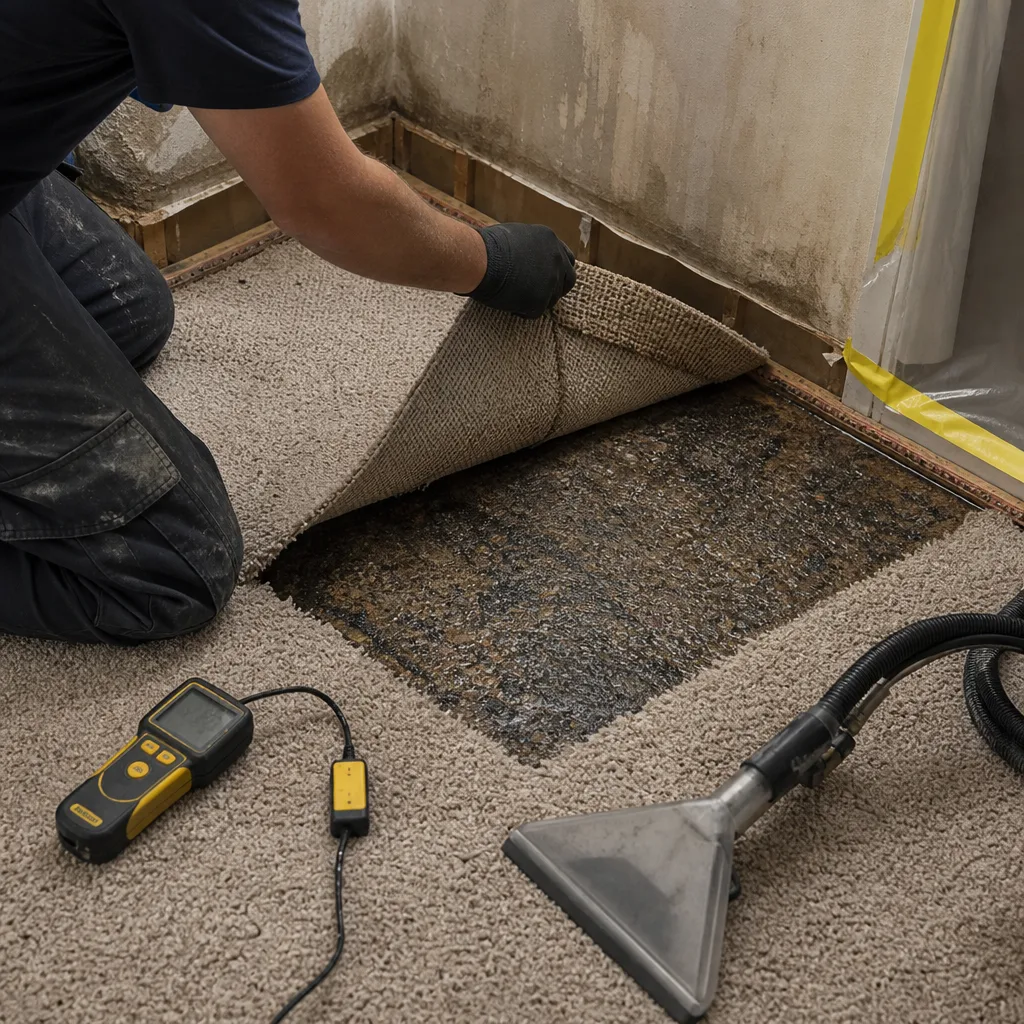
Hialeah and Westchester are dense with 1950s-1980s CBS construction, flat roofs, and original stucco that’s checked and cracked from decades of thermal cycling. We see chronic moisture infiltration behind bathroom vanities and hallway closets where hairline stucco cracks feed block walls for years. Moisture mapping is essential; the visible damage is usually the tip.
Little Havana mixes pre-Andrew CBS duplexes with newer infill, often on zero-lot lines with shared walls. Water travels horizontally through block party walls, affecting two units from one roof leak. We coordinate dual-unit containment and document which damage belongs to which policy.
Miami Beach and Key Biscayne face king tide flooding and saltwater corrosion. Elevated homes on stilts have different drying challenges - airflow beneath the floor, wind-driven spray through soffits - and we adjust equipment placement accordingly. Condos on Collins Avenue or Ocean Drive add HOA coordination and master policy vs. unit-owner coverage disputes to every job.
Coral Gables has more post-1992 construction but also mature tree canopy. Fallen limbs during storms punch through tile roofs, and the delay between limb strike and interior leak can be hours as water migrates through underlayment and battens. We inspect roof decking from inside the attic, document the breach path, and scope both mitigation and structural repair.
Our Miami crews know the building stock by ZIP code because the response protocol changes with it.
Specialized Water Damage Restoration Services We Offer in Miami
Emergency Water Extraction
Standing water in a CBS home doesn’t just threaten floors - it pressurizes against stucco base and slab edges, finding every crack. We extract with truck-mounted systems and weighted tools, then immediately map where water migrated behind finishes. In Miami’s lowest elevations, we also assess whether groundwater is still feeding the slab from outside.
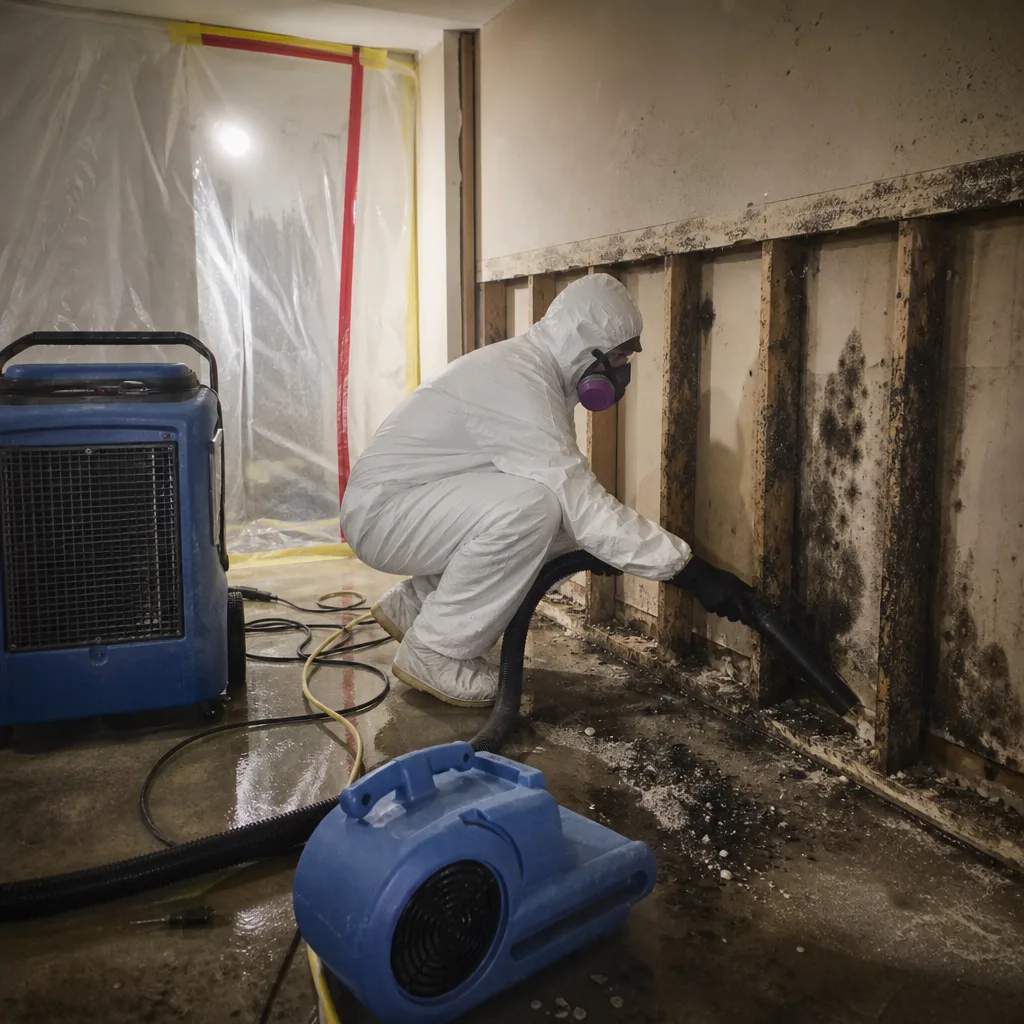
Structural Drying & Dehumidification
This is where tropical humidity fights back. We calculate grain depression targets - the actual moisture difference between incoming and outgoing air - and size Dri-Eaz and Phoenix dehumidifiers accordingly. Injectidry systems dry block wall cavities from the inside out. Without this step, Miami homes “feel dry” while interior block stays wet enough for mold.
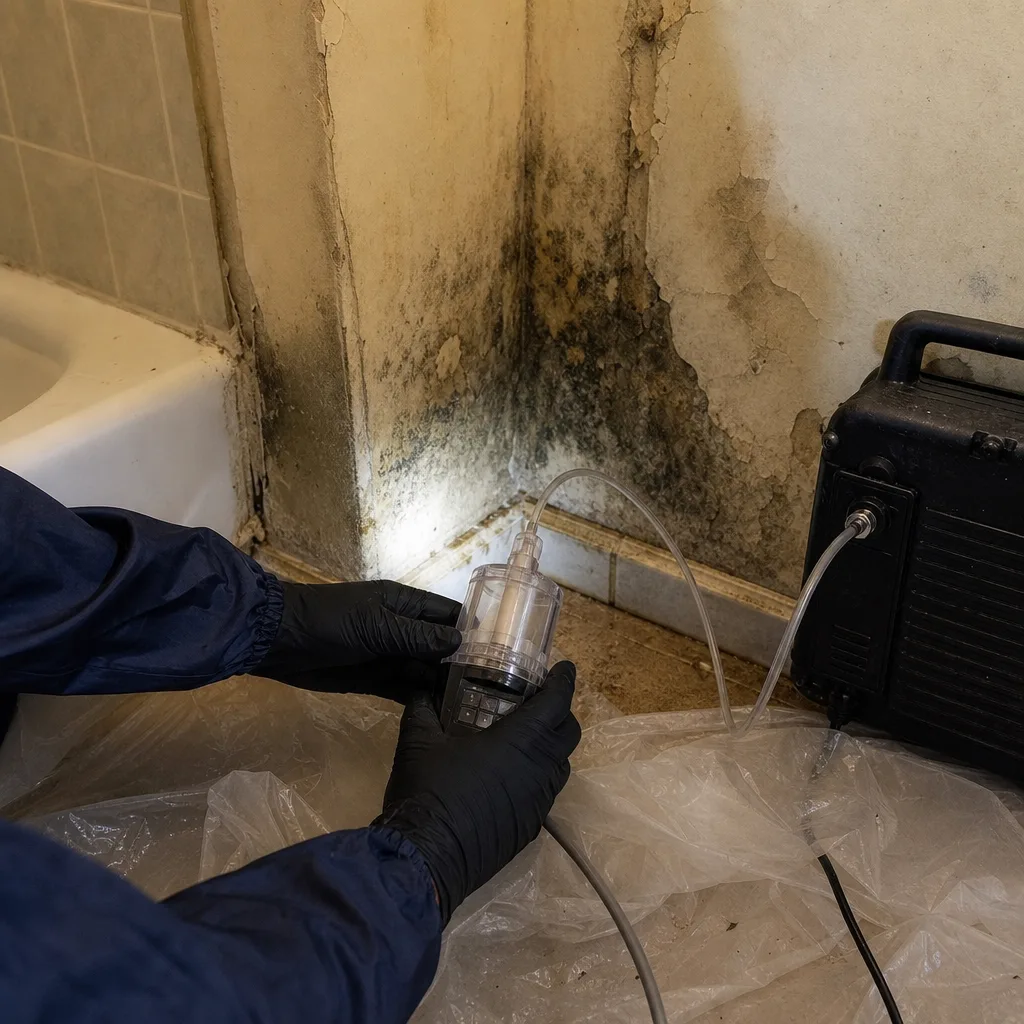
Flood Cleanup
Storm surge, king tide, or backed-up storm drains bring Category 2 or 3 water. We remove porous materials by default, apply antimicrobial to sealed surfaces, and document contamination levels for your adjuster. In flood-prone Miami Beach zones, we’ve developed protocols for elevated homes where water enters through soffits and exits slowly through weep holes.
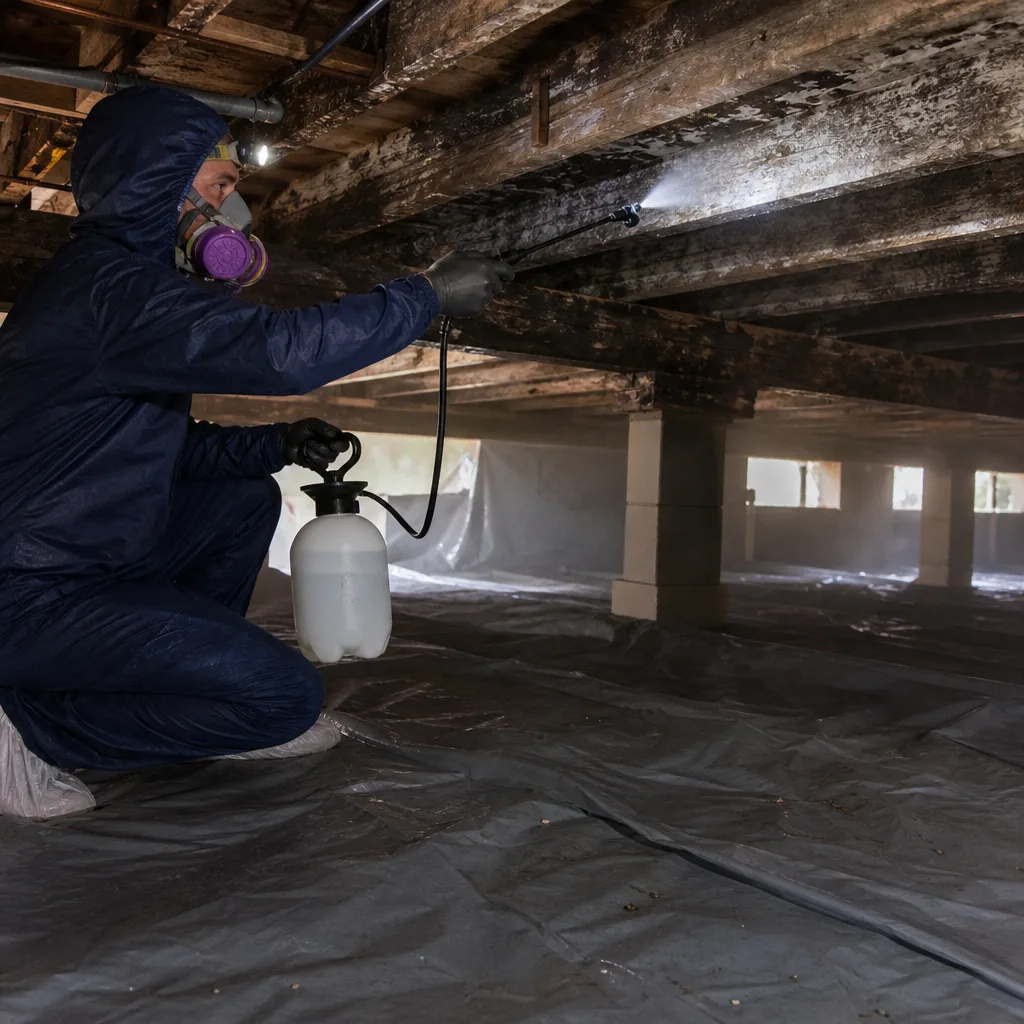
Burst Pipe Restoration
Pipe bursts are less common in Miami’s mild winters but spike during rare cold snaps when uninsulated attic or exterior-wall pipes freeze. The real damage often comes from delayed discovery - a vacation home in Coral Gables with water running for days. We extract, dry, and document the timeline for coverage disputes.
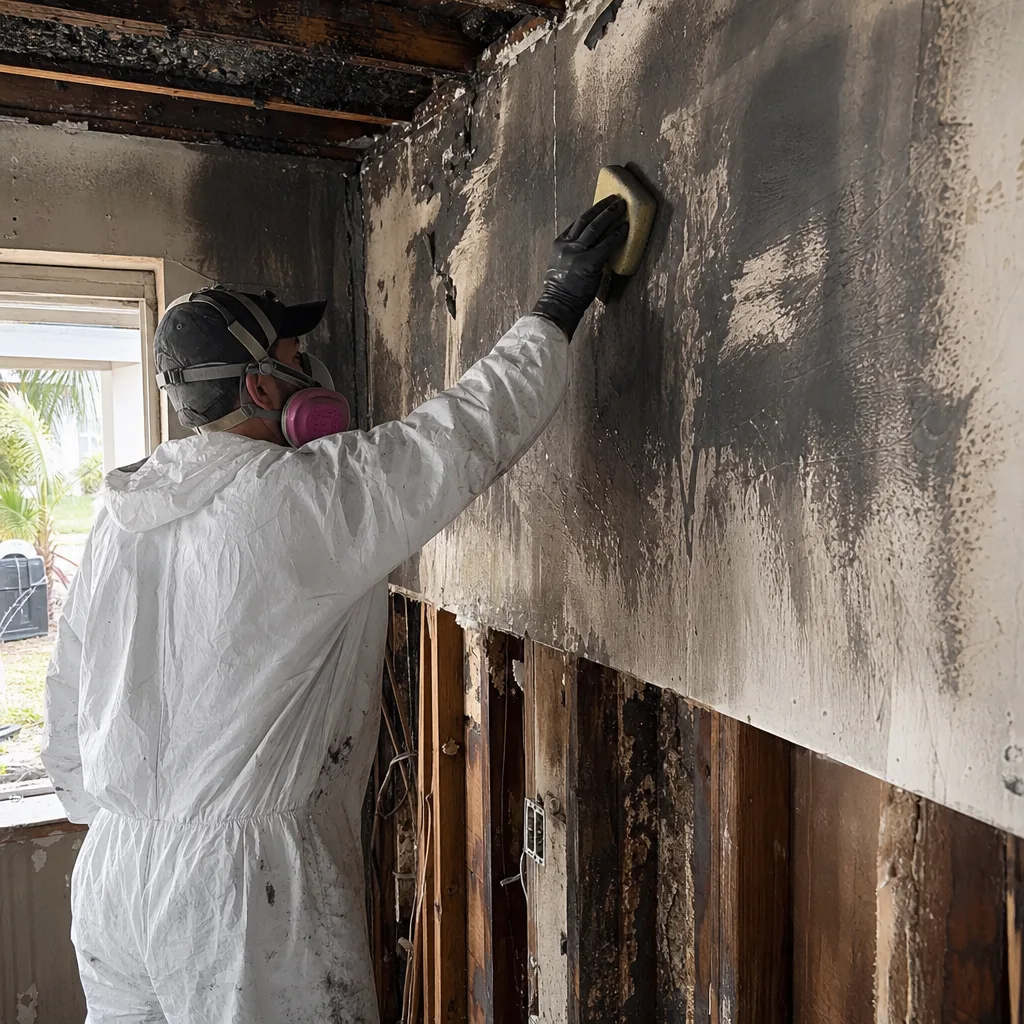
Ceiling & Roof Leak Water Damage
Miami’s afternoon thunderstorms test every roof penetration. Pre-1992 homes with aged membranes or failed flashing see the most failures; post-Andrew homes usually fail at sealant joints or impact-rated window weep channels. We trace the leak path, document roof decking condition, and coordinate repair scope with your roofer or ours.
What happens when you call
- 1
A real person answersNo phone trees - you reach a local pro.
- 2
You get an upfront price rangeHonest numbers before anyone is dispatched.
- 3
A background-checked tech heads outLicensed & insured, dispatched right away.
- 4
You approve before work beginsNothing starts until you say go.
Water Damage Restoration Costs in Miami, FL
Here’s what we see in the Miami market for residential water damage mitigation, based on 12,000+ jobs since 2011:
| Service | Typical Range |
|---|---|
| Emergency water extraction (up to 1,500 sq ft) | $1,200 - $2,400 |
| Structural drying & dehumidification (3-5 days) | $1,800 - $3,600 |
| Category 2/3 flood cleanup with antimicrobial | $3,500 - $7,500 |
| Ceiling/roof leak damage repair (mitigation + rebuild) | $4,000 - $9,000 |
| Full basement water removal (where applicable) | $2,500 - $5,500 |
What moves the price: square footage affected, water category, how long water sat before extraction started, whether mold is already present, and whether the home needs content pack-out. Insurance typically covers sudden and accidental water damage; gradual leaks and maintenance issues usually don’t. We sort coverage questions during the free inspection, not after you’ve committed. Call (754) 222-3479 for an exact quote - estimates are free.
We Also Serve Cities Near Miami
Our Miami (South FL) office dispatches crews throughout the metro area: Miami Beach, where king tide flooding and saltwater intrusion are distinct loss patterns; Coral Gables, with its mature canopy and mixed housing stock; Key Biscayne, facing storm surge and elevated-home drying challenges; and Hialeah, with the highest concentration of pre-1992 CBS homes in the county. Same crews, same documentation standards, same Haven Standard guarantees.
Serving Miami, FL - Our Local Coverage Area
We’re based in the Miami area and know this community well. Use the map below to see our service coverage - if you’re nearby, we can almost certainly help.
Miami Water Damage Restoration Questions, Answered
How fast do I need water extraction after a storm leak in Miami?
Within 4 hours is ideal; within 24 hours is the practical maximum before mold risk becomes unmanageable. Miami’s year-round 70%+ ambient humidity means wet materials don’t get a grace period. Call (754) 222-3479 and we’ll dispatch immediately - our live answer is 24/7.
Does my pre-1992 CBS home in Hialeah dry differently than a newer build?
Yes. Pre-1992 CBS homes often have unsealed stucco, original flat roofs with aged membranes, and no vapor barriers behind interior finishes. Water wicks into block cavities and stays there. We use Injectidry cavity drying and longer dehumidification cycles, and we specifically check for chronic stucco cracks that re-wet the wall during drying.
Why does the water category matter for what you remove?
Category 1 clean water can often dry in place. Category 2 gray water requires removal of porous materials like carpet pad and lower drywall. Category 3 black water demands gutting of all affected finishes and HEPA-contained remediation. In Miami, what starts as Category 1 frequently becomes Category 2 or 3 when stucco cracks introduce soil contaminants or prior mold. We test and document the category before demolition starts.
What documentation do you provide for a Citizens or surplus-lines claim?
Everything: dated photos of every room before and after, daily moisture readings with meter model and calibration date, line-item scope of work with Xactimate pricing, drying logs with equipment placement maps, and direct adjuster communication notes. Citizens and surplus-lines carriers dispute more claims than standard-market insurers; our documentation is built to survive that scrutiny. Haven Standard, Clause 1 applies - written price before work, no exceptions.
What happens if the AC is off for days after a hurricane?
Without air conditioning, a sealed CBS home in Miami reaches outdoor humidity within hours. That turns a contained water damage job into a whole-structure mold risk in 2-3 days. We deploy generator-powered dehumidification for post-storm jobs where power is out, and we adjust drying targets upward to compensate for the humidity load. This is a Miami-specific protocol we developed after Hurricane Irma.
How long does structural drying take in Miami?
3-5 days for most residential jobs, 7-10 days for severe saturation or where mold remediation is layered in. Tropical humidity extends timelines if the building envelope has failed stucco or roof breaches that let new moisture in. We don’t declare drying complete until moisture content readings hit target - not by calendar day.
Can my family stay in the home during drying?
Sometimes, for Category 1 losses in isolated areas with HEPA air scrubbing running. For Category 2/3, whole-home drying, or any mold remediation, we recommend relocation. We document livability status for your insurer if additional living expenses coverage applies. Call (754) 222-3479 and we’ll assess your specific layout.
What certifications do your technicians hold?
IICRC WRT (Water Damage Restoration Technician) at minimum; AMRT (Applied Microbial Remediation Technician) for mold-involved jobs; FSRT (Fire & Smoke Restoration Technician) where fire suppression water mixes with soot. All technicians are background-checked, uniformed, and licensed with license numbers available on request. Equipment is documented to IICRC, RIA, and IFA standards.
Back to Dry Restoration, led by Alicia Brennan, has operated under The Haven Standard since 2011. Every job gets a written price before work starts, a photo record on every visit, and the 365-Day Done Right Promise. We don’t sell urgency. We sell evidence that gets your claim paid.
Written by Alicia Brennan, Owner at Back to Dry Restoration, serving Miami since 2011.
Water Damage Restoration in Nearby Areas