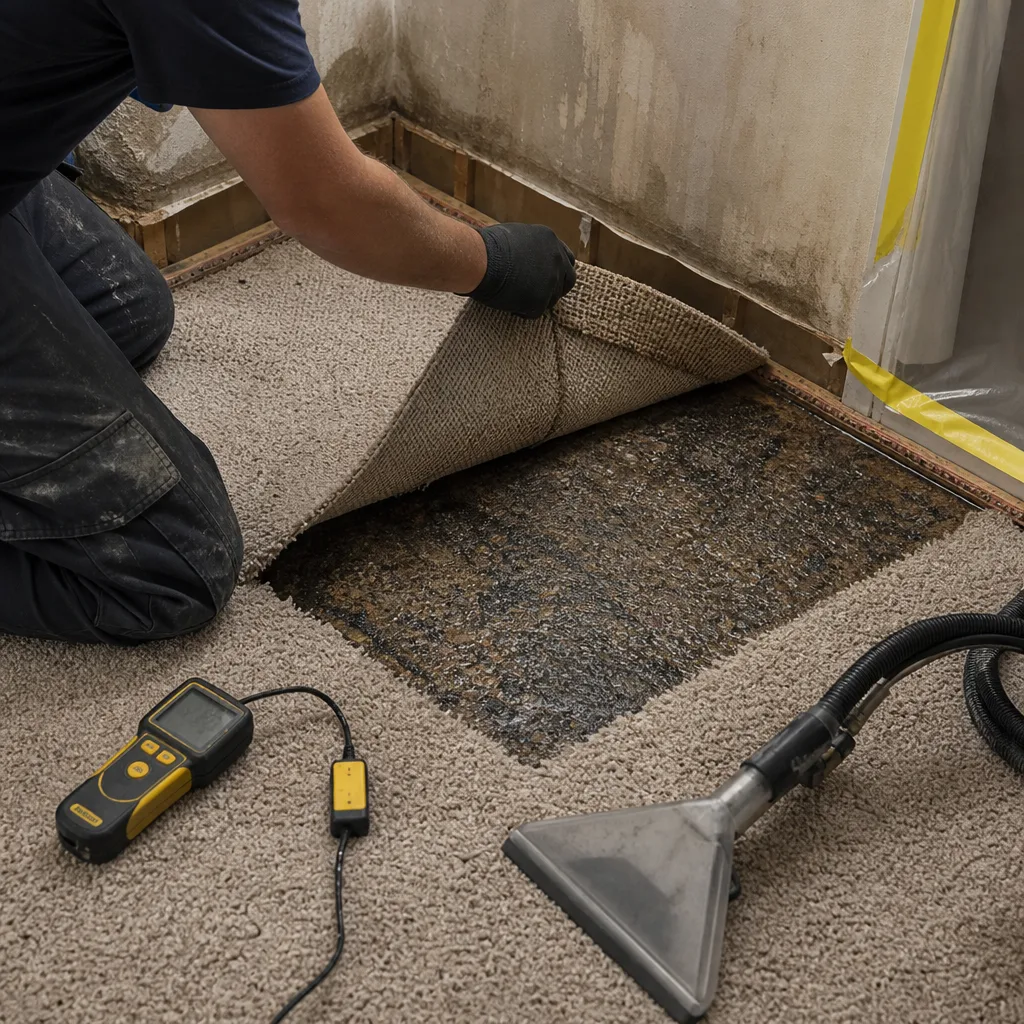
Free visual inspection and a written scope of work before any mitigation begins - photos, moisture readings, and drying logs go in your claim file
The scope we write is the scope we bill. Anything new gets shown to you, in writing, before we touch it.
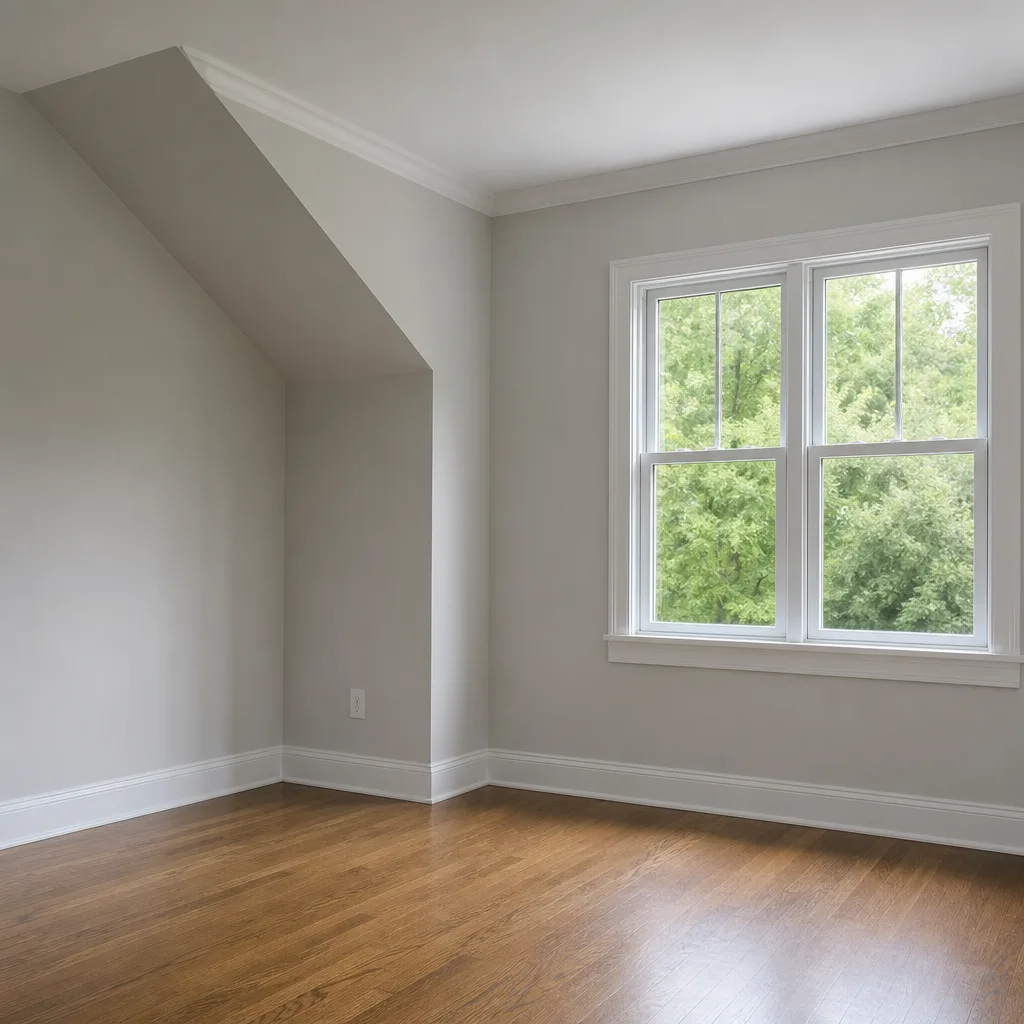
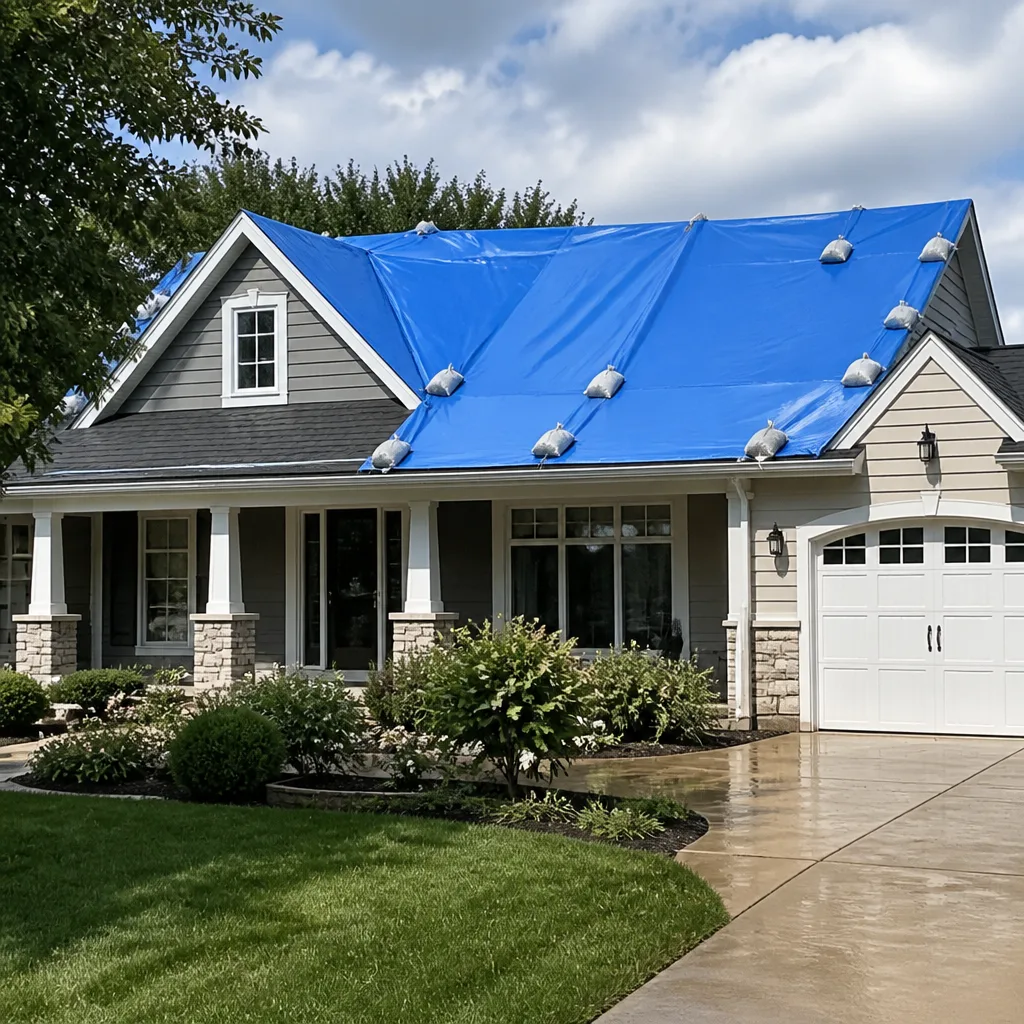
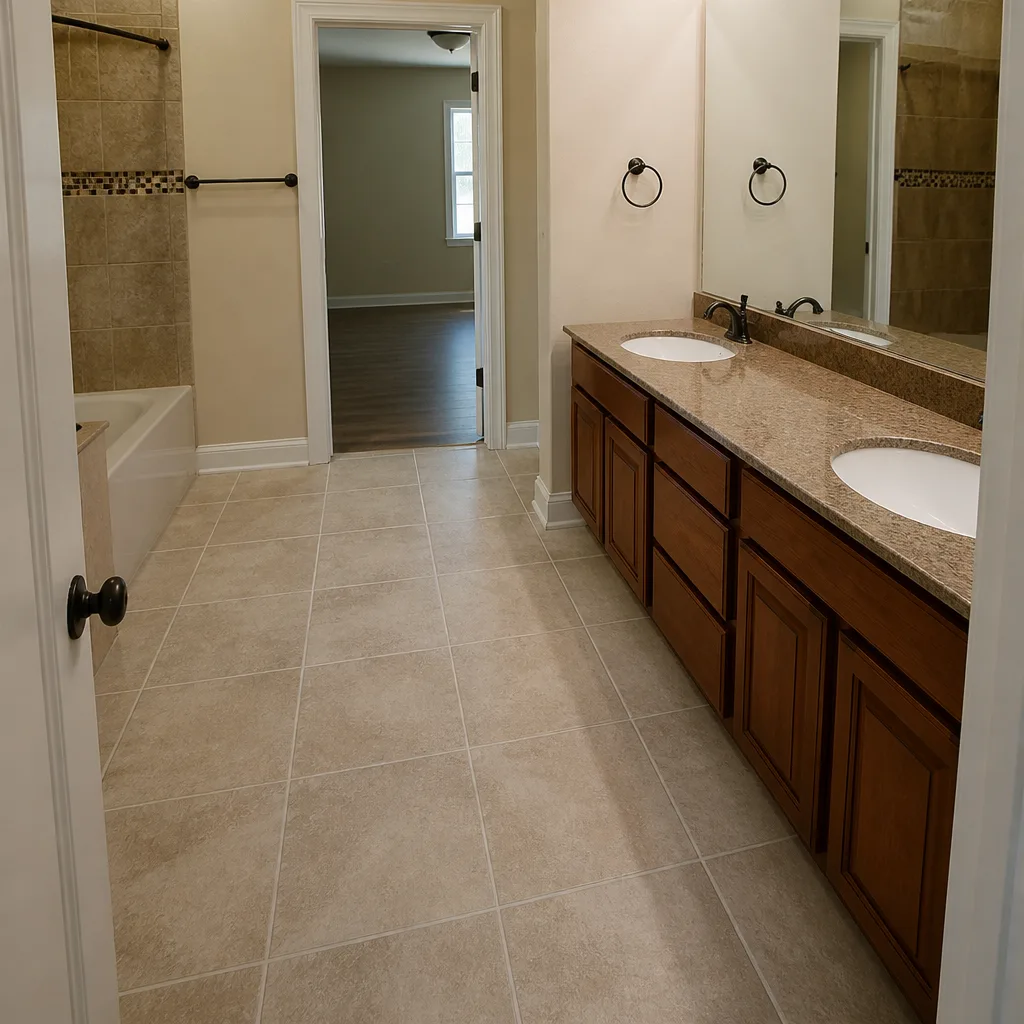
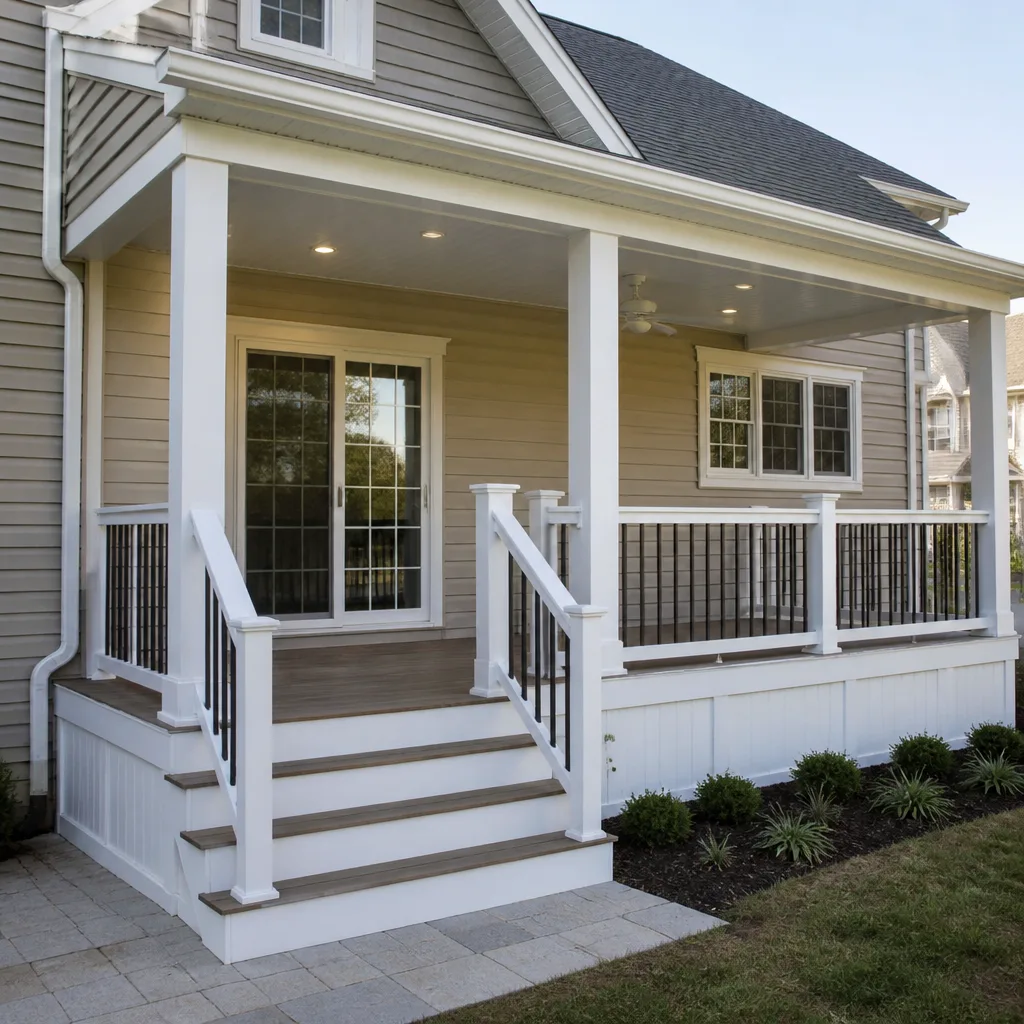
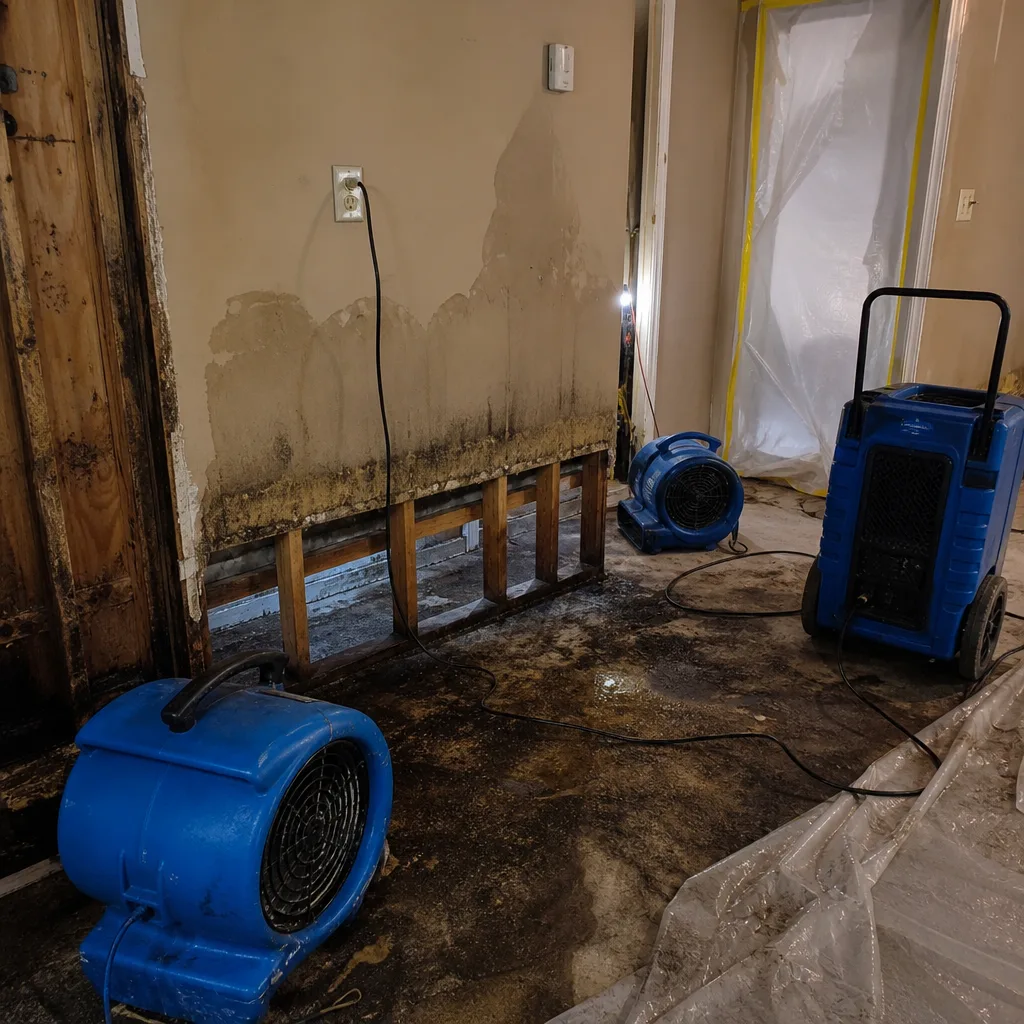 Before
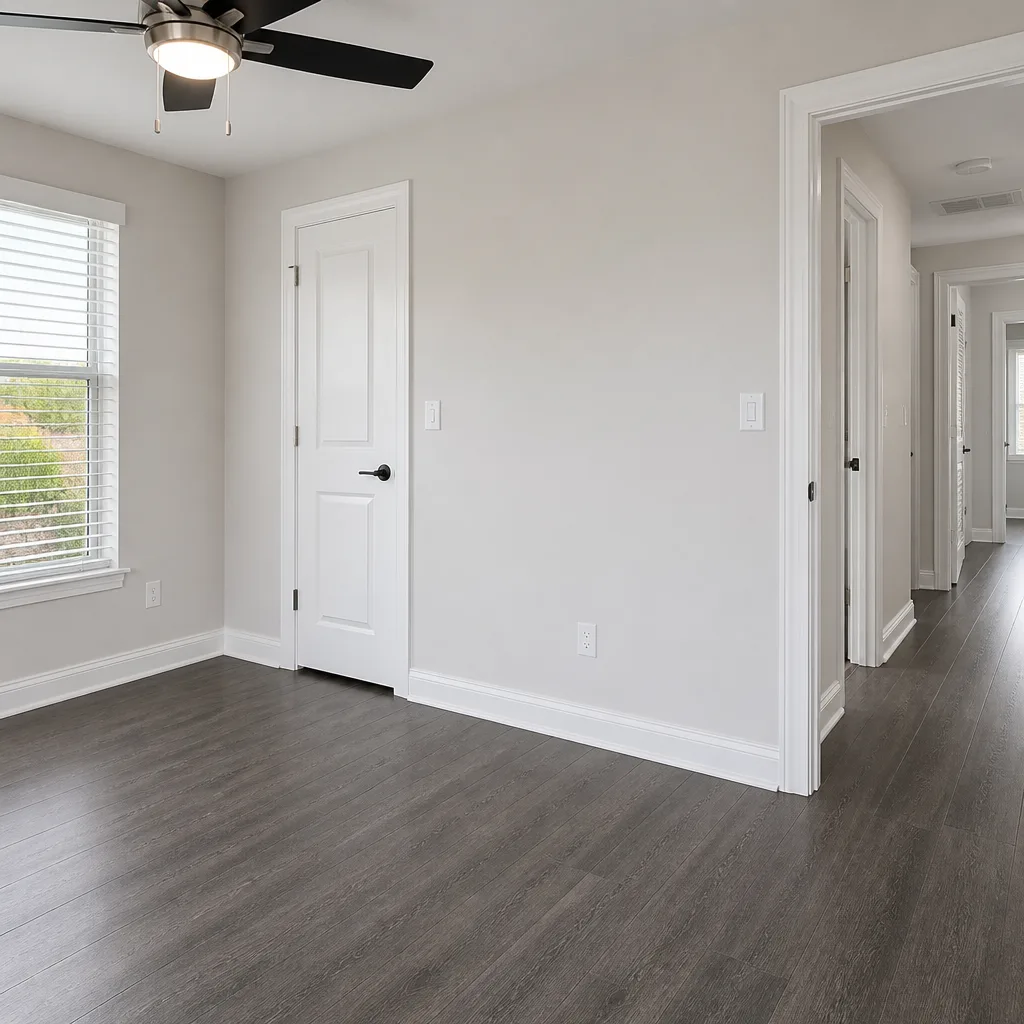 After
After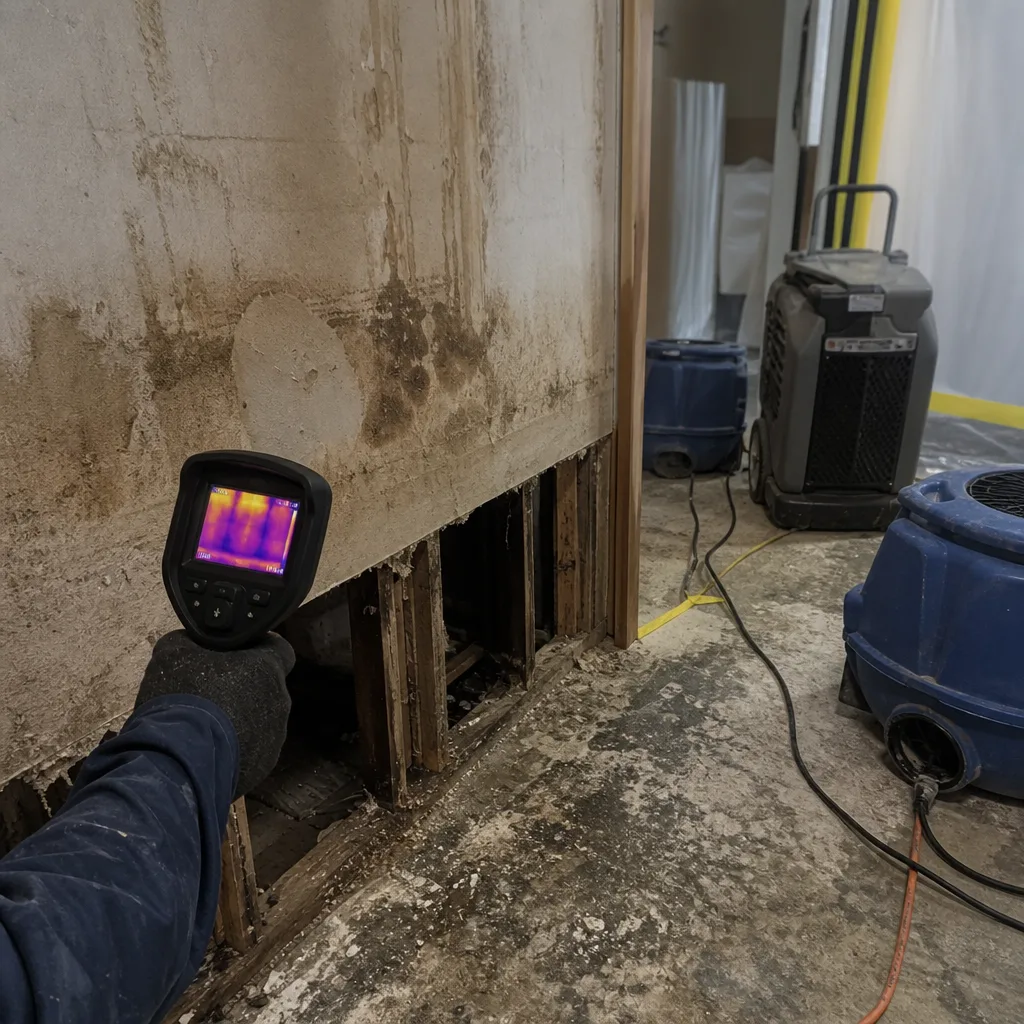 Before
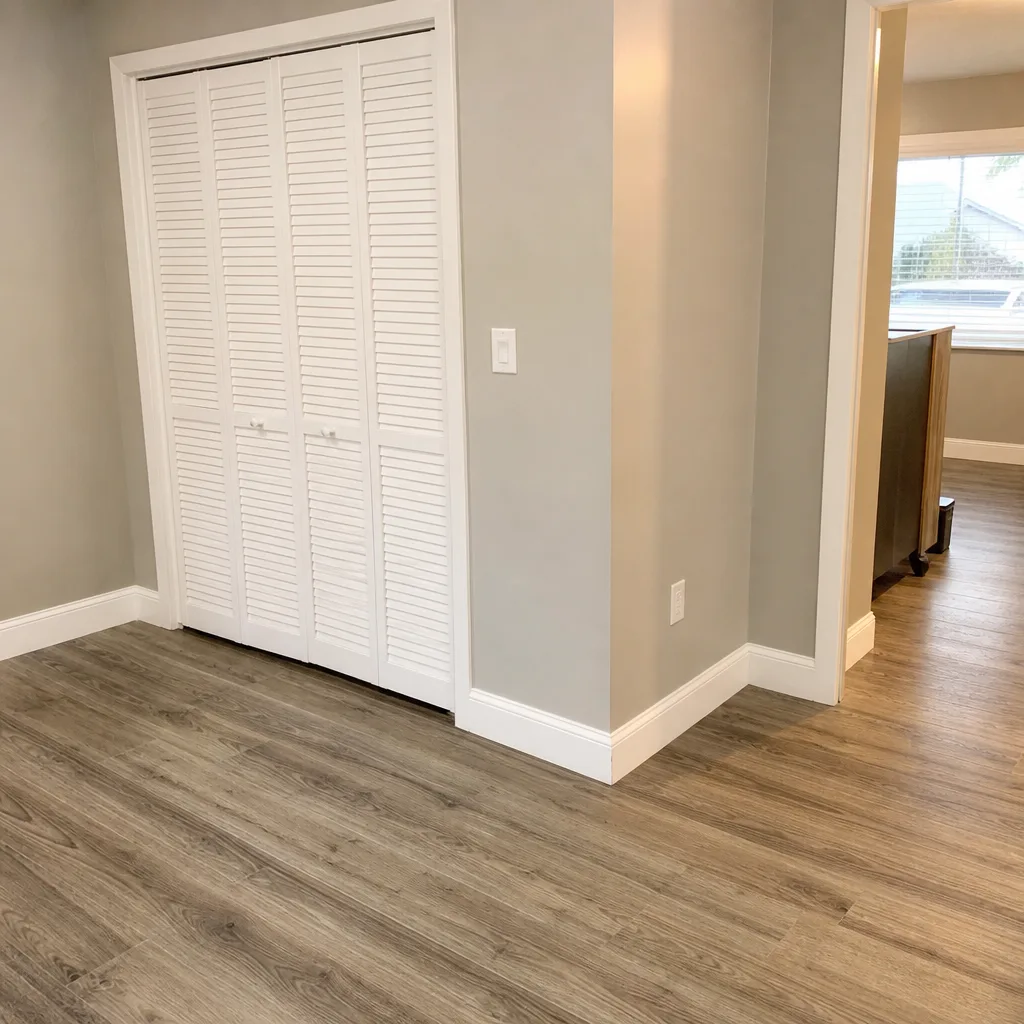 After
After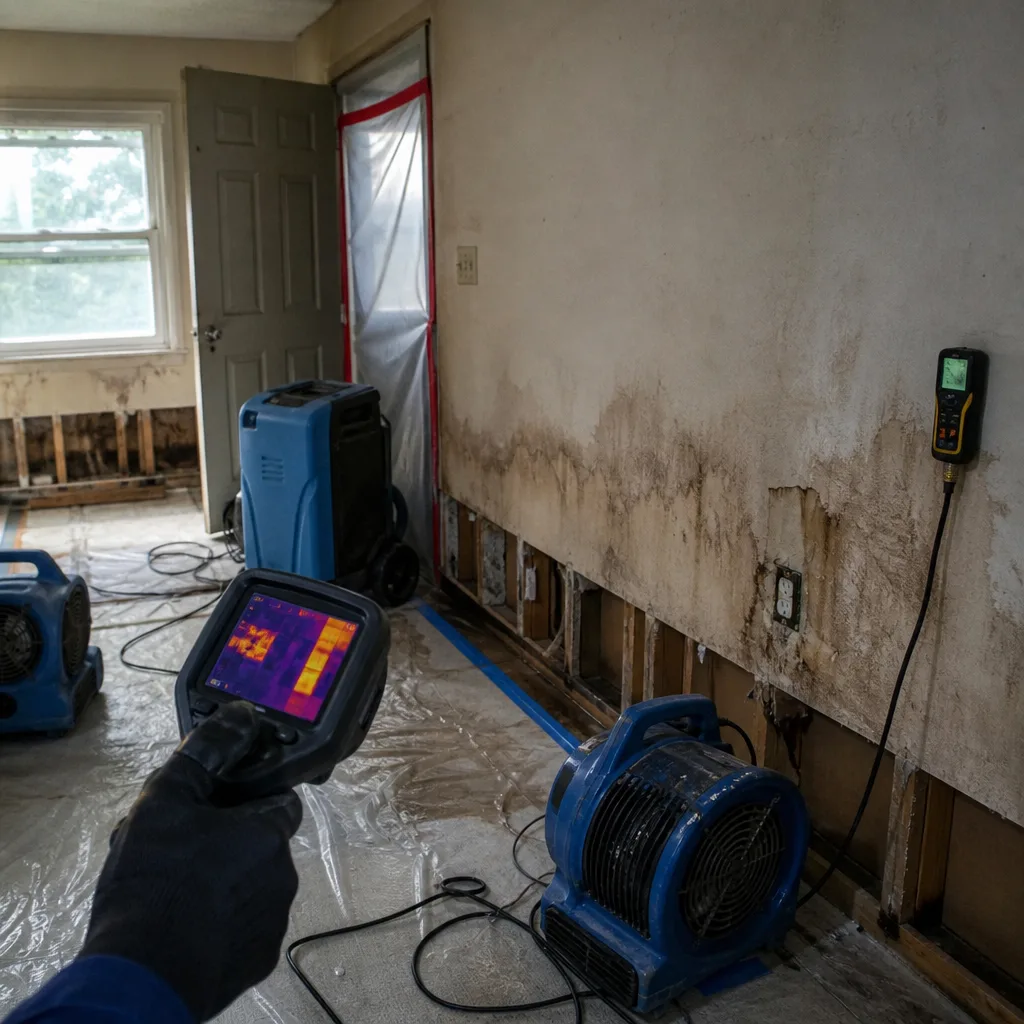 Before
 After
After24/7 Emergency Mold Remediation in Plantation
Mold remediation in Plantation, FL typically costs $1,200-$4,500 for contained residential jobs and $5,000-$12,000+ for whole-home remediation with reconstruction. Most inspections can be scheduled same-day, and crews can begin containment within hours when mold poses an immediate health risk. Call (754) 222-3479 - a live person answers 24 hours a day, 7 days a week, no voicemail trees.
We’re minutes from Plantation’s neighborhoods, with dispatch coordinated from our Miami office. The first hours matter because mold releases spores within 24-48 hours of moisture activation, and in Plantation’s humid climate, that timeline compresses. Our crews arrive with moisture meters, thermal imaging, and containment materials already loaded. We provide a free visual inspection and a written scope before any work begins - Haven Standard, Clause 1.
Understanding Mold Remediation Severity in Plantation Properties
Mold damage in Plantation falls into three severity tiers that dictate containment strategy, equipment deployment, and whether occupants can remain in place.
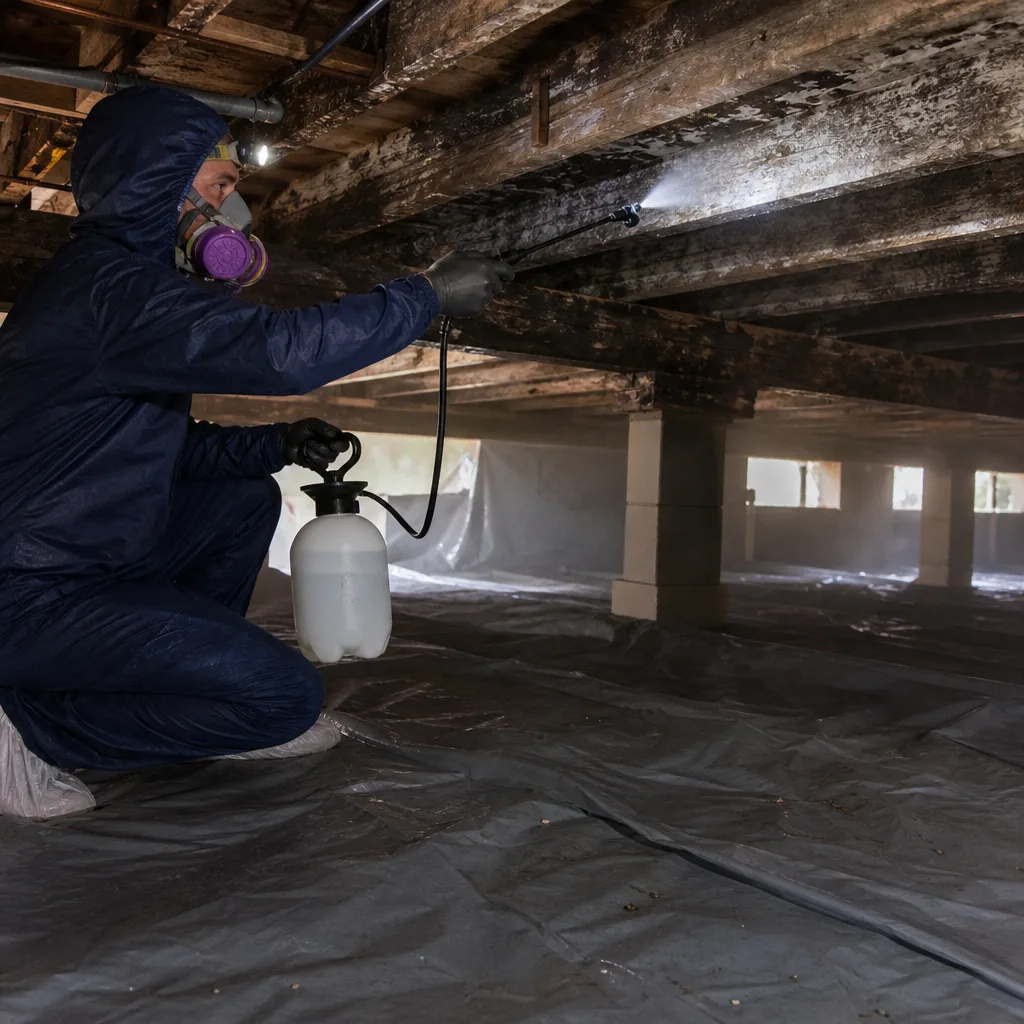
Level 1 - limited growth under 10 square feet, typically behind a single bathroom vanity or along one window jamb in a CBS block home. We set local containment with a single HEPA air scrubber, remove affected drywall, and treat the cavity with antimicrobial. Most Level 1 jobs in Plantation’s 1970s-1980s ranch homes trace to failed window flashing or AC condensate lines, not structural failure.
Level 2 - moderate growth, 10-100 square feet, often spanning multiple rooms. This is where Plantation’s flat-roof housing stock creates problems: a ponding roof breach saturates ceiling drywall across a broad area, and the moisture migrates down wall cavities before visible staining appears. We establish full containment barriers, deploy multiple HEPA scrubbers creating negative air pressure, and run Injectidry systems to pull moisture from sealed wall cavities without tearing out every surface.
Level 3 - extensive growth exceeding 100 square feet or involving HVAC contamination. In Plantation Acres, we see this after septic-drainfield backups convert to Category 3 black-water intrusions that wick through hollow-core doors and into wall systems. Full PPE, critical containment, and possible occupant relocation. Every porous material in the contamination zone comes out.
Plantation’s CBS construction with stucco finish complicates moisture mapping. The block holds moisture deep while surface readings appear dry. We use thermo-hygrometers to measure vapor pressure differential - the force that drives moisture through apparently intact materials - and document psychrometric data daily until readings return to pre-loss condition.
Why Plantation Property Owners Choose DryMark Restoration Hollywood
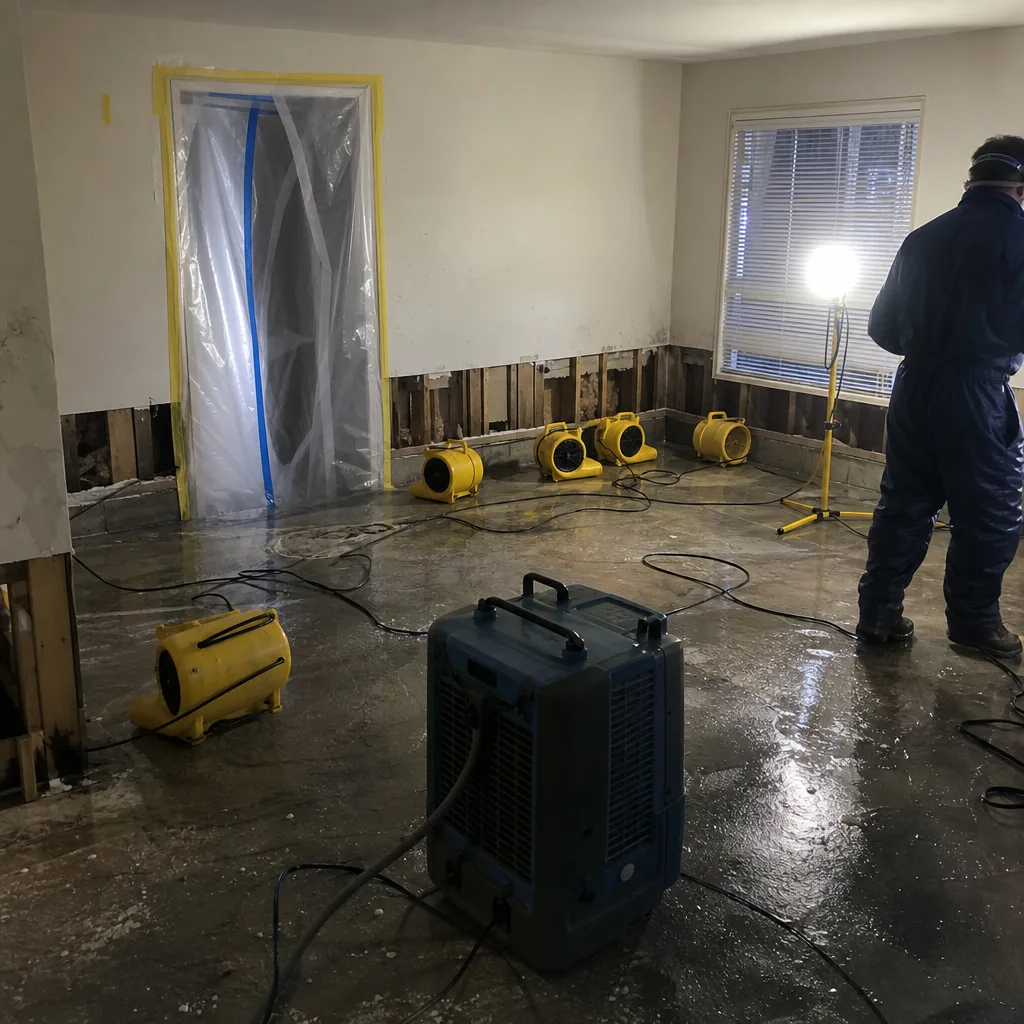
- 45-minute response commitment to Plantation addresses - our crews carry containment materials, HEPA scrubbers, and moisture detection gear on every truck, so assessment begins immediately upon arrival, not after a supply run.
- 24/7 live answer - a real person, never an automated system. When mold is spreading behind your baseboards, you need dispatch, not a callback queue.
- IICRC-certified crews - WRT (Water Damage Restoration Technician), AMRT (Applied Microbial Remediation Technician), and FSRT (Fire & Smoke Restoration Technician) certifications on staff, with license numbers documented on every job file.
- Free visual inspection - we arrive, assess, and deliver a written scope with line-item pricing before any work begins. No charge for the evaluation, no pressure to commit on the spot.
- Direct insurance billing - we photo-document every room, compile moisture logs, and coordinate directly with your adjuster so the claim moves without dispute over “was it pre-existing?”
- One team from containment to reconstruction - the same crew that sets containment and removes contaminated materials returns to hang drywall, match texture, and install finish carpentry. No handoffs between contractors who blame each other for gaps.
 Before
 After
AfterOur Mold Remediation Process
1. Inspection & Assessment
We start with slab-edge moisture mapping, not the ceiling - Plantation’s position in Broward’s canal grid means groundwater wicks up through concrete slabs during wet-season rain events even without a roof breach. Thermal imaging identifies temperature differentials behind stucco and tile; moisture meters quantify readings in wood, drywall, and concrete. We document every finding with photos before touching anything.
2. Containment & Air Filtration
Polyethylene barriers seal the work zone from living spaces. HEPA air scrubbers run continuously, creating negative pressure that prevents spore migration. In Plantation’s compact master-planned homes with open floor plans, this step is critical - one contaminated room can seed the entire HVAC system if containment fails.
3. Moisture Elimination
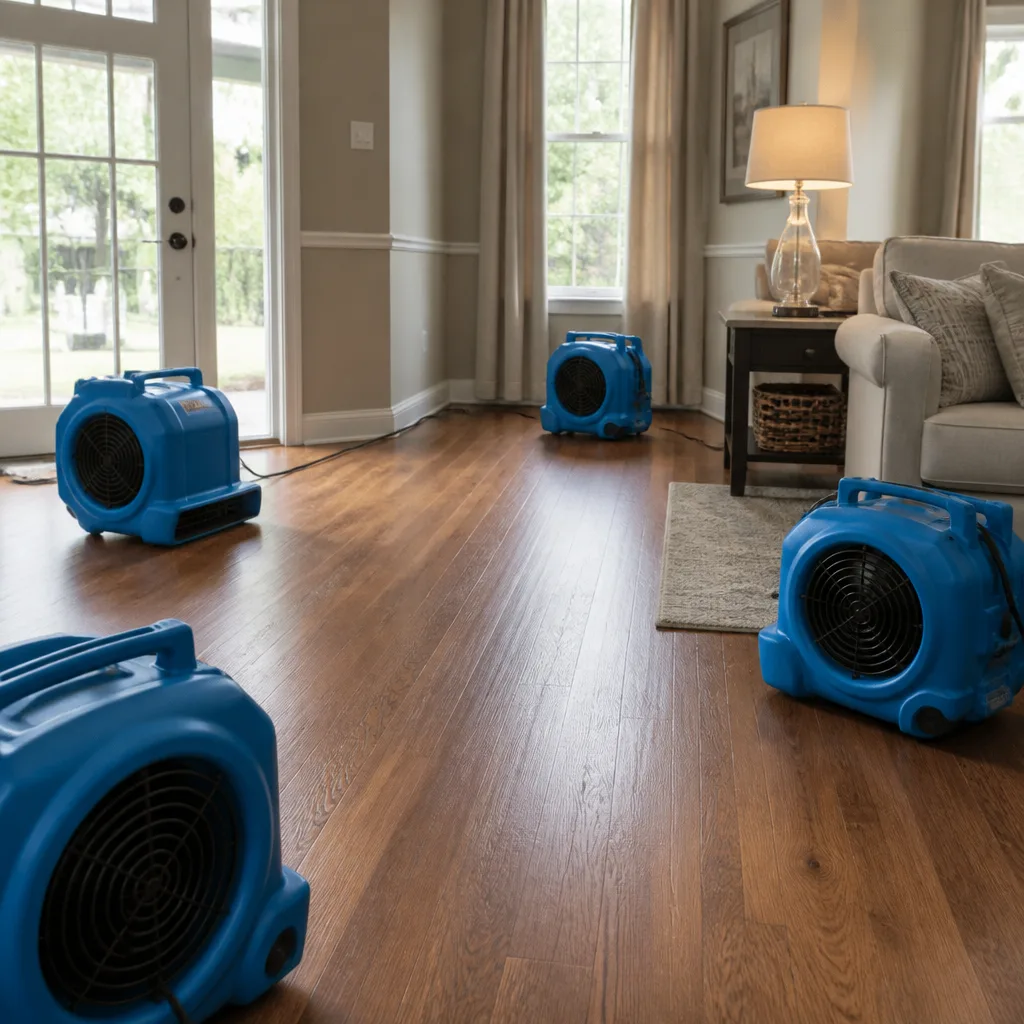
Dehumidifiers from Dri-Eaz and Phoenix pull ambient humidity below 60% relative humidity, the threshold for mold growth cessation. Air movers create controlled airflow across wet surfaces. For wall cavities, Injectidry systems attach to small access holes, forcing dry air through enclosed spaces without full demolition. Daily moisture logs track progress to IICRC standards.
4. Removal & Antimicrobial Treatment
Non-salvageable porous materials - drywall, insulation, carpet pad, baseboard - come out in sealed bags. Hard surfaces receive HEPA vacuuming followed by antimicrobial application. In Plantation Acres septic backups, this step follows Category 3 protocols: full removal of contaminated materials, not surface cleaning.
5. Black Mold & Air Quality Restoration
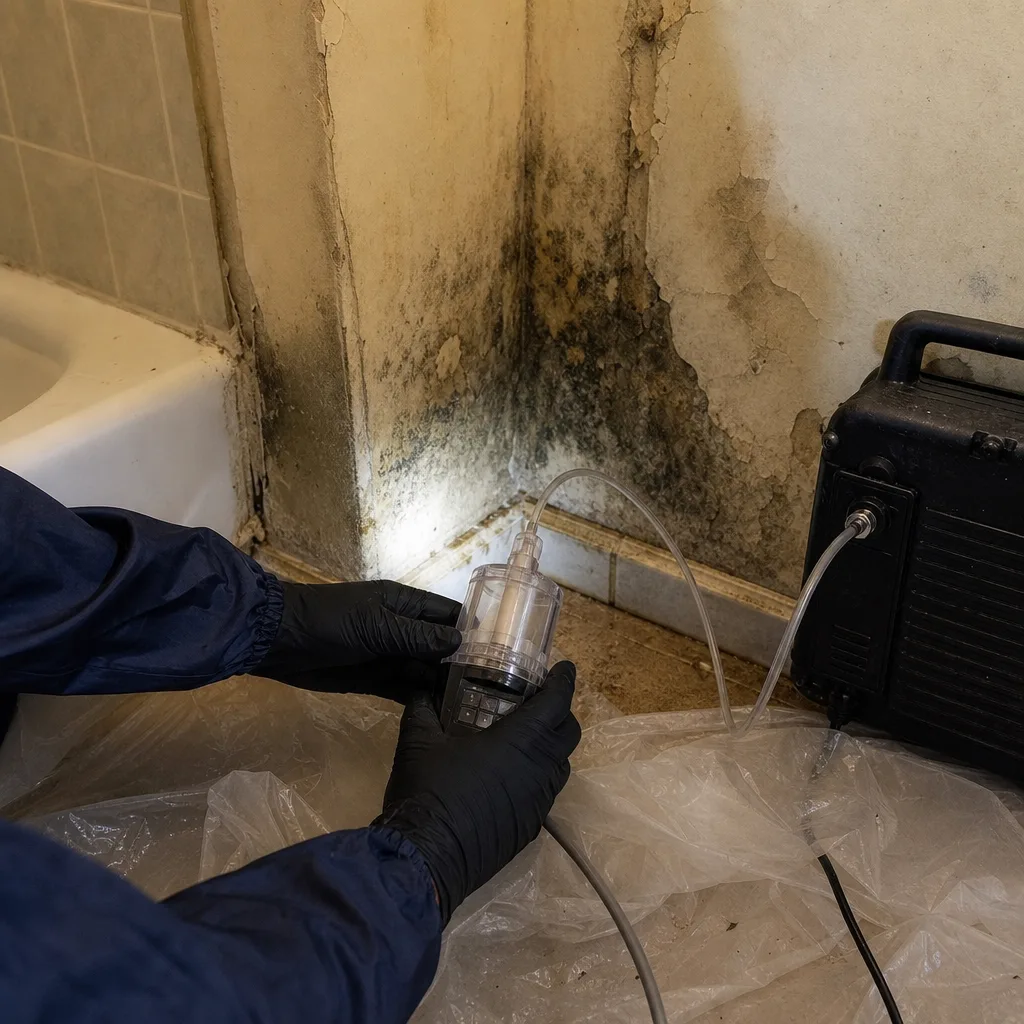
Stachybotrys and other toxigenic species require enhanced PPE and extended HEPA scrubbing. We run post-remediation air sampling to verify spore counts at or below outdoor baseline levels. For homes with occupied basements or crawl spaces, we install permanent dehumidification and vapor barrier systems to prevent recurrence.
6. Repairs & Reconstruction
Our crew hangs new drywall, matches texture to existing finishes, installs baseboard and trim, and repaints. The 365-Day Done Right Promise covers this work - if mold returns to the treated area or repairs fail, we return at no charge. Haven Standard, documented and signed.
Need Emergency Mold Remediation in Plantation Now?
Crews minutes away, answering live 24 hours a day. The sooner we start, the less it costs.
Working With Your Insurance Company
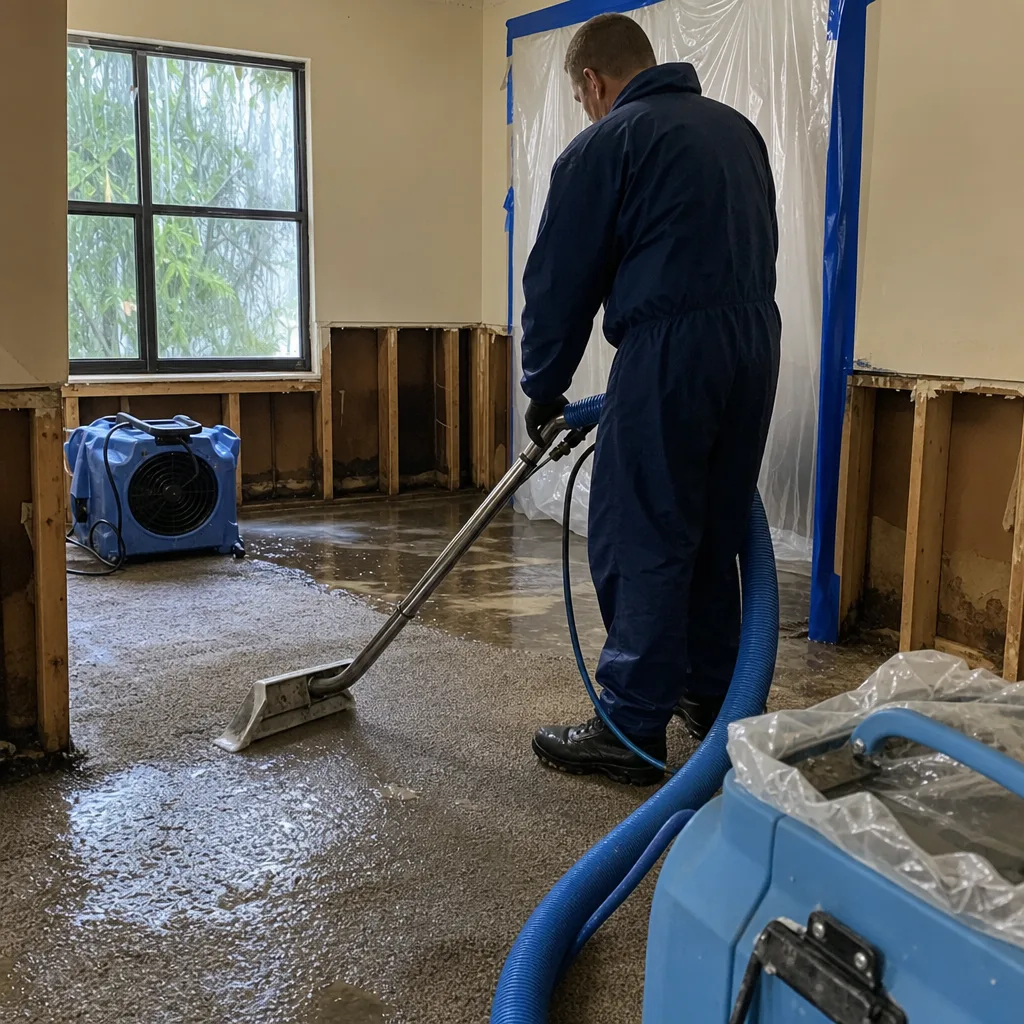
Most mold claims in Plantation originate from covered water losses - burst pipes, roof leaks, or appliance failures - and insurers pay when documentation proves the mold resulted from a sudden, accidental event, not long-term neglect. Our process begins documenting from the first hour: photos of the water source, moisture readings showing migration paths, and a clear timeline establishing when the loss occurred versus when it was discovered.
We write estimates to industry-standard pricing databases used by adjusters nationwide. Direct adjuster communication prevents the back-and-forth that delays payment. When carriers dispute scope - “is that wall really wet?” - we provide the moisture logs and thermal images that answer the question definitively.
What We Provide Your Insurer
- Thorough documentation of the loss
- Photos of all damage, room by room
- Moisture readings and drying logs
- A detailed, line-item scope of work
- Direct coordination with your carrier
Built for Plantation’s Loss Calendar
Plantation’s mold season runs nearly year-round, but the pattern shifts. January through May brings dry-season humidity dips that lull homeowners into turning off dehumidifiers - then a cold-front-driven deluge in March or April hits a house with dormant moisture in the slab, and mold activates in baseboards within days.
June through October is the core risk period. Sixty-two inches of annual rainfall concentrate here, overlapping with hurricane season. Flat and low-slope built-up roofs pond during intense rain; even “non-tropical” events overwhelm aging drainage. The South New River Canal and C-11 canal system, designed to move water east, can backflow during extreme tides or pump failures, pushing groundwater up through slabs from below. We see the highest call volume in July and August, when roof leaks and slab moisture coincide.
November and December bring relief, but also insurance claim deadlines. Homeowners who discovered mold in September finally file after the holidays, and we handle documentation for losses that started months prior.
Mold Remediation Across Plantation’s Neighborhoods
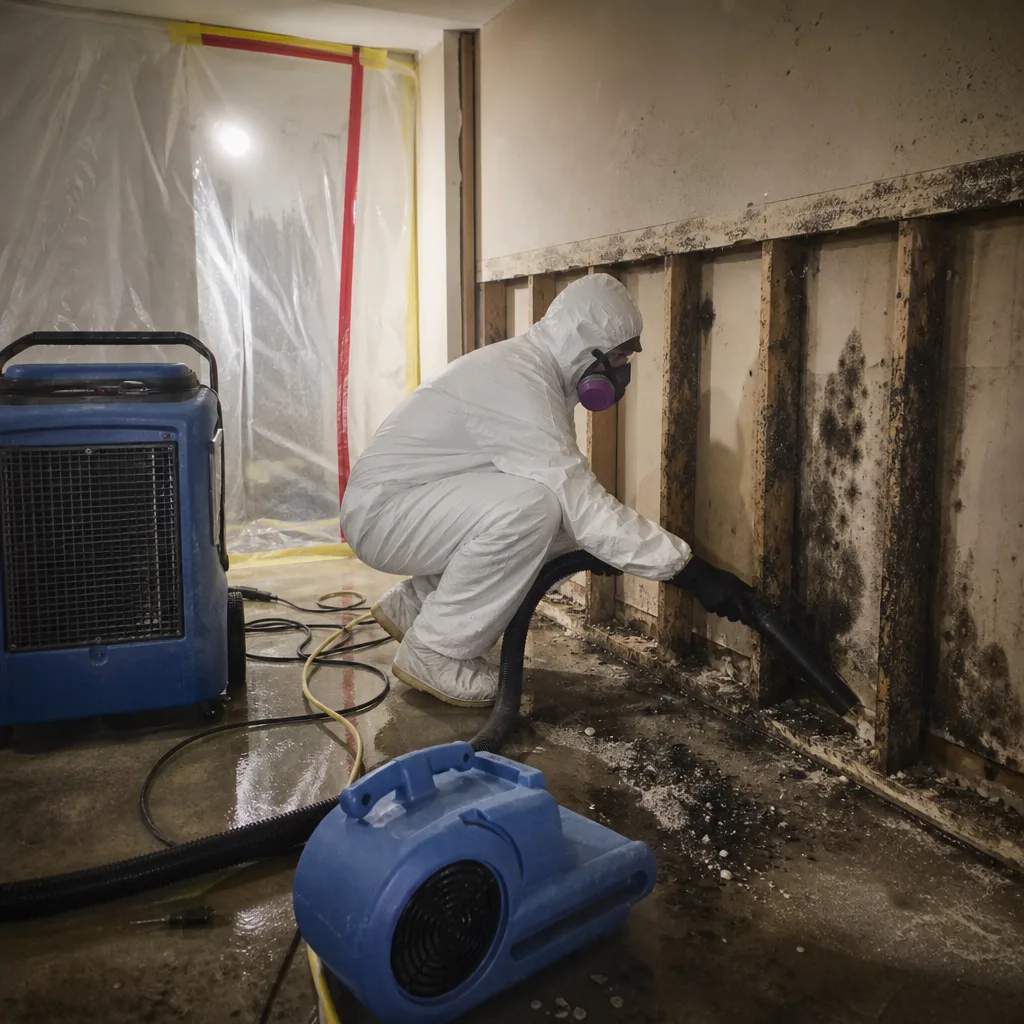
Plantation’s neighborhoods present distinct mold risk profiles, and our response routes and equipment loads adjust accordingly.
Plantation Acres - the large-lot western community with septic systems and private wells. Drainfield backups during water table surges convert Category 1 water losses to Category 3 black-water jobs. We arrive with full PPE, antimicrobial stock for sewage protocols, and the expectation that hollow-core doors and bottom plates will need replacement. The failure mode here - effluent wicking into wall cavities - is essentially absent in city-sewered eastern neighborhoods.
Jacaranda and the South Plantation corridors - master-planned tracts from the 1970s and 1980s with CBS construction and flat roofs. Ponding roof breaches cause broad ceiling failures rather than isolated leak points. We bring enough polyethylene sheeting for large-area containment and multiple air scrubbers. Builder-grade stucco and tile finishes hide moisture; we plan for secondary inspection behind finishes.
Broward Boulevard corridor and Central Plantation - denser development with older HVAC systems and shared wall construction in townhome clusters. Mold here often involves duct contamination requiring full system cleaning or replacement. We coordinate with HVAC contractors and document cross-contamination risks between units.
Westfield area near the C-11 canal - elevated slab moisture risk from canal grid proximity. Our inspections here always include sub-slab relative humidity testing, even when the visible complaint is a roof stain.
Specialized Mold Remediation Services We Offer in Plantation
Mold Inspection & Testing
We don’t guess. Air sampling and surface swabs identify species and spore concentration, telling us whether we’re dealing with allergenic Cladosporium or toxigenic Stachybotrys. In Plantation’s newer master-planned homes, we add slab-edge moisture mapping to standard visual inspection - the up-from-below vector that generic inspectors miss.
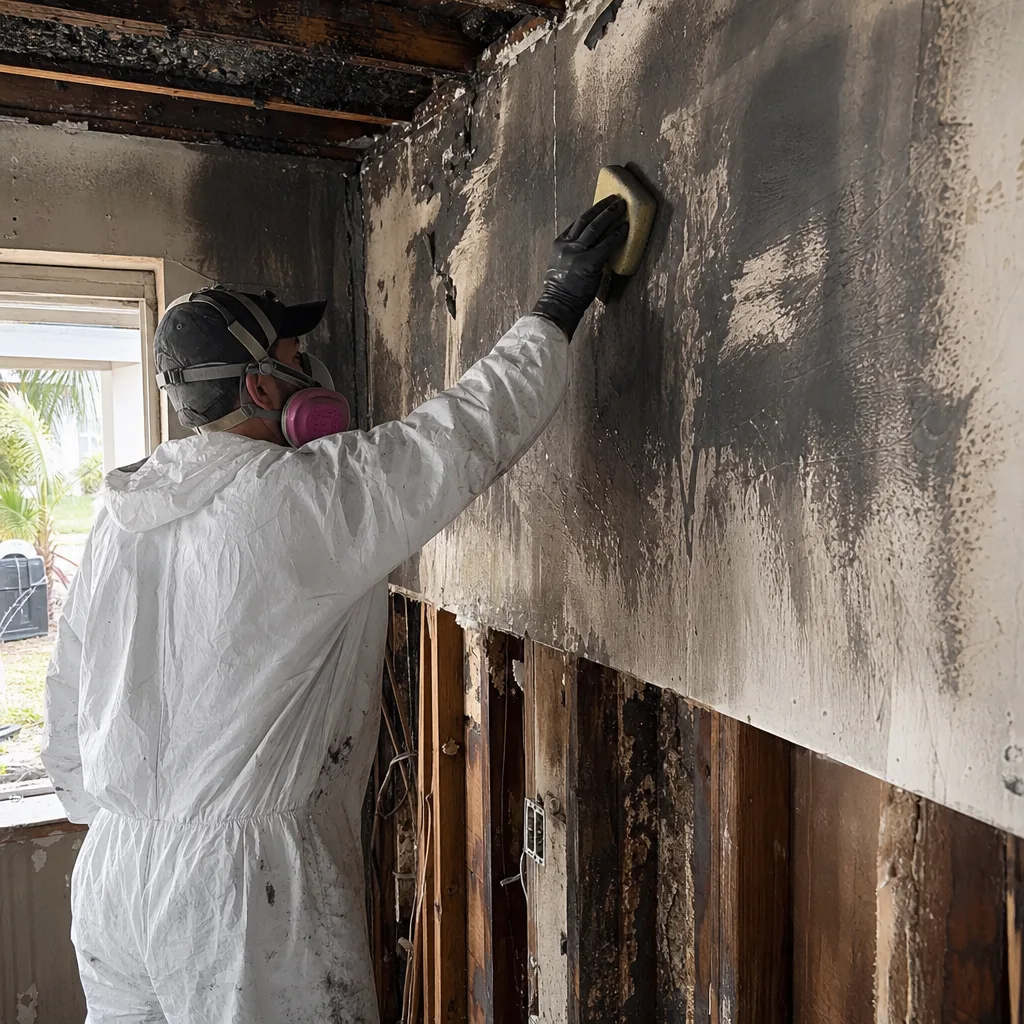
Mold Removal
Physical removal of contaminated materials, not chemical masking. We follow IICRC S520 standards for professional mold remediation, with containment, negative air, and proper disposal. For Plantation’s CBS homes, this often means removing drywall to expose block cavities for drying and treatment.
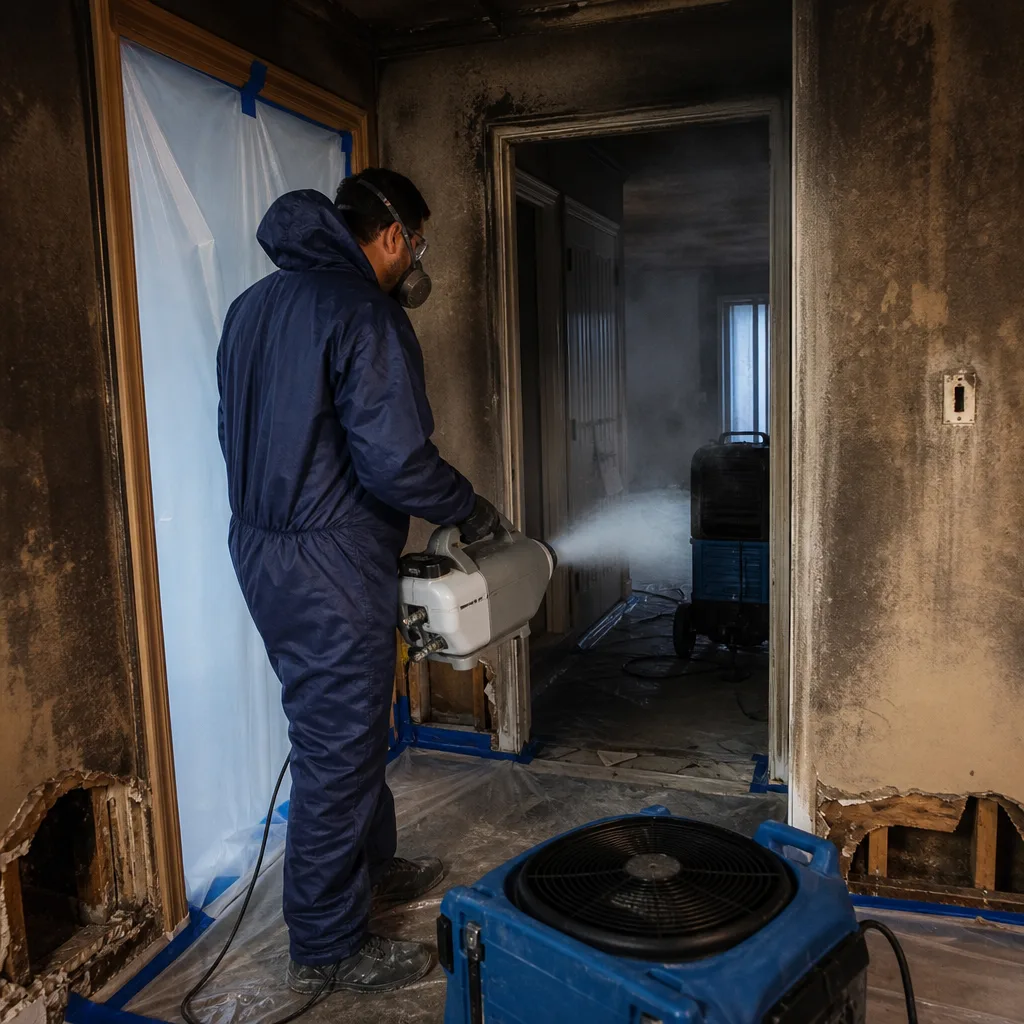
Black Mold Remediation
Stachybotrys chartarum and other toxigenic species require enhanced protocols: full-face respirators, disposable protective suits, and extended HEPA scrubbing periods. We verify clearance with post-remediation air sampling before removing containment. In Plantation’s humid climate, black mold behind water-damaged baseboard is more common than homeowners realize.
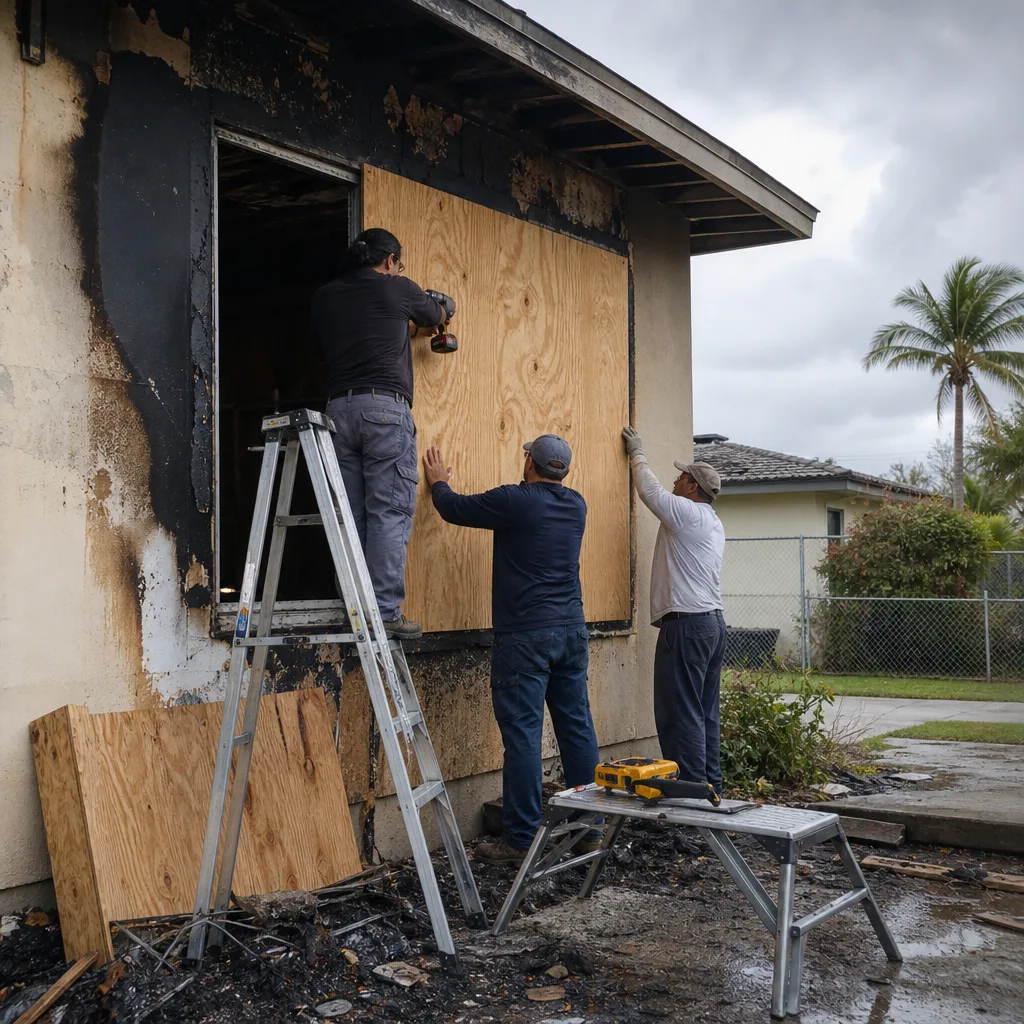
Air Quality Restoration
HEPA scrubbing runs through remediation and continues 24-48 hours after visible removal. We measure particulate counts with laser particle counters and compare to outdoor baseline. For homes with occupied crawl spaces or basements, we design permanent ventilation and dehumidification solutions.
Crawl Space Treatment
Plantation’s few remaining crawl spaces - mostly in pre-1980 builds and some Plantation Acres properties - suffer from ground vapor and poor ventilation. We install vapor barriers, seal vents per modern building science, and add dedicated dehumidification. Moisture readings drive the scope, not visual appearance.
Moisture & Humidity Control
The prevention service that stops recurrence. We install whole-home dehumidifiers, improve bathroom and kitchen ventilation, and seal slab penetrations. In Plantation, where outdoor humidity rarely drops below 70% for six months, mechanical dehumidification isn’t optional - it’s structural maintenance.
What happens when you call
- 1
A real person answersNo phone trees - you reach a local pro.
- 2
You get an upfront price rangeHonest numbers before anyone is dispatched.
- 3
A background-checked tech heads outLicensed & insured, dispatched right away.
- 4
You approve before work beginsNothing starts until you say go.
Mold Remediation Costs in Plantation, FL
| Service | Typical Range in Plantation |
|---|---|
| Visual inspection & moisture mapping | Free - $250 |
| Level 1 remediation (under 10 sq ft) | $1,200 - $2,800 |
| Level 2 remediation (10-100 sq ft) | $3,500 - $7,500 |
| Level 3 remediation (100+ sq ft / HVAC) | $8,000 - $15,000+ |
| Black mold / toxigenic species premium | +25% - 40% for enhanced PPE & clearance testing |
| Crawl space treatment with vapor barrier | $3,500 - $8,000 |
| Whole-home dehumidifier installation | $2,200 - $4,500 |
| Reconstruction (drywall, paint, trim) | $45 - $85 per square foot of affected area |
What moves the price: square footage of contamination, whether the HVAC system is involved, need for occupant relocation, and reconstruction scope. Insurance typically covers mold resulting from sudden water damage, not long-term humidity or maintenance neglect. We review your policy language and document the loss origin to support coverage. Every job gets a written price before work begins - Haven Standard, Clause 1 - and we offer a Free Second Opinion on any competitor’s written estimate.
We Also Serve Cities Near Plantation
Our crews respond throughout central and eastern Broward County, including Plantation and neighboring Mold Remediation service areas: Fort Lauderdale to the east, Margate and Coconut Creek to the north, and Pompano Beach to the northeast. Dispatch is coordinated from our Miami office, with local crews positioned for rapid response across the corridor.
Serving Plantation, FL - Our Local Coverage Area
We’re based in the Plantation area and know this community well. Use the map below to see our service coverage - if you’re nearby, we can almost certainly help.
Plantation Mold Remediation Questions, Answered
What is the biggest mold risk specific to Plantation’s newer master-planned homes?
Builder-grade hollow-core doors and trim that wick moisture from slab or bathroom leaks into wall cavities, while stucco and tile finishes hide the damage until mold blooms behind them. We see this in Jacaranda and South Plantation tracts built 1975-1995 - surface readings look dry, but thermo-hygrometers reveal vapor pressure pushing moisture deep into CBS walls. Call (754) 222-3479 for slab-edge moisture mapping that finds what visual inspections miss.
How does Plantation’s wet season affect mold remediation timing?
June through October compresses every timeline - mold activates within 24 hours of moisture intrusion instead of 48, and slab moisture from canal-grid pressure keeps walls wet even after roof leaks are patched. We schedule more frequent moisture readings during wet-season jobs and often extend dehumidification runs. Starting containment immediately matters more in July than in January. Call (754) 222-3479 for same-day assessment.
Can a septic backup in Plantation Acres turn into a mold problem?
Yes, and it’s worse than standard mold. Septic backups bring Category 3 black water with bacterial and viral contaminants; drying without full removal of porous materials spreads biohazard and creates a mold substrate simultaneously. We responded to exactly this in Plantation Acres after a June downpour - what the homeowner thought was a small bathroom leak was actually a Category 3 intrusion that had wicked under builder-grade hollow-core doors and into the wall cavity of a 2000s home. We set containment, ran antimicrobial treatment throughout, used Injectidry equipment to pull moisture from wall cavities, and reconstructed affected drywall and baseboard after moisture readings returned to pre-loss condition. Call (754) 222-3479 - septic backups require sewage remediation protocols, not standard drying.
Why do Plantation restoration teams sometimes find mold behind builder-grade doors and trim?
Hollow-core interior doors and MDF baseboard installed in master-planned tracts act as wicks - they draw moisture from slab leaks or bathroom overflows and hold it against the bottom plate and drywall edge. The moisture is invisible from the room side until the baseboard swells or mold odor emerges. We remove baseboard and test the bottom plate on every water loss in Plantation’s 1970s-1990s housing stock. Call (754) 222-3479 for inspection that checks what you can’t see.
Does mold remediation in Plantation require different equipment than other Broward cities?
Yes - specifically, more dehumidification capacity and sub-slab moisture detection. Plantation’s flat urban elevation and canal-grid position mean groundwater pushes up through slabs at higher rates than higher-elevation inland cities that drain by gravity. We run more Phoenix and Dri-Eaz dehumidifiers per square foot here, and we carry sub-slab relative humidity probes on every truck. The roof-leak-plus-slab-moisture dual vector is Plantation’s defining challenge. Call (754) 222-3479 for equipment matched to local conditions.
How fast can you get to my Plantation home?
We commit to 45 minutes for active mold emergencies in Plantation - contamination spreading, occupied spaces affected, or health-compromised residents. Standard inspections typically schedule same-day or next-morning. Live dispatch at (754) 222-3479 confirms real-time crew availability.
Will my insurance cover mold remediation?
Usually, when mold results from a sudden, accidental water loss - burst pipe, roof leak, appliance failure - that your policy covers. Long-term humidity damage or maintenance neglect is typically excluded. We document the water source, timeline, and moisture migration path to establish coverage. Direct adjuster coordination and photo documentation on every visit support your claim. Call (754) 222-3479 - we’ll review your situation and policy language at no charge.
Do I have to leave my home during mold remediation?
For Level 1 jobs under 10 square feet in isolated areas, usually not. For Level 2 and 3, or any toxigenic species, we recommend relocation during active remediation - negative air containment reduces but doesn’t eliminate spore exposure, and antimicrobial application requires ventilation downtime. We discuss this during the initial assessment and can coordinate with your insurance for temporary housing when coverage applies. Call (754) 222-3479 to discuss your specific situation.
Every mold job in Plantation starts with a free visual inspection and ends with a written warranty. We don’t sell reassurance. We deliver documentation - moisture logs, photo records, line-item scopes, and the 365-Day Done Right Promise backed by The Haven Standard. That’s how restoration invoices become payable claims, and how homeowners know the work was done right.
Call (754) 222-3479 now. A live person will answer, schedule your free inspection, and deliver a written price before any work begins. Haven Standard, Clause 1. No exceptions.
Written by Alicia Brennan, Owner at Back to Dry Restoration, serving Plantation since 2011.
Mold Remediation in Nearby Areas