
Last updated September 23, 2026
Free visual inspection and a written scope of work before any mitigation begins - photos, moisture readings, and drying logs go in your claim file
The scope we write is the scope we bill. Anything new gets shown to you, in writing, before we touch it.
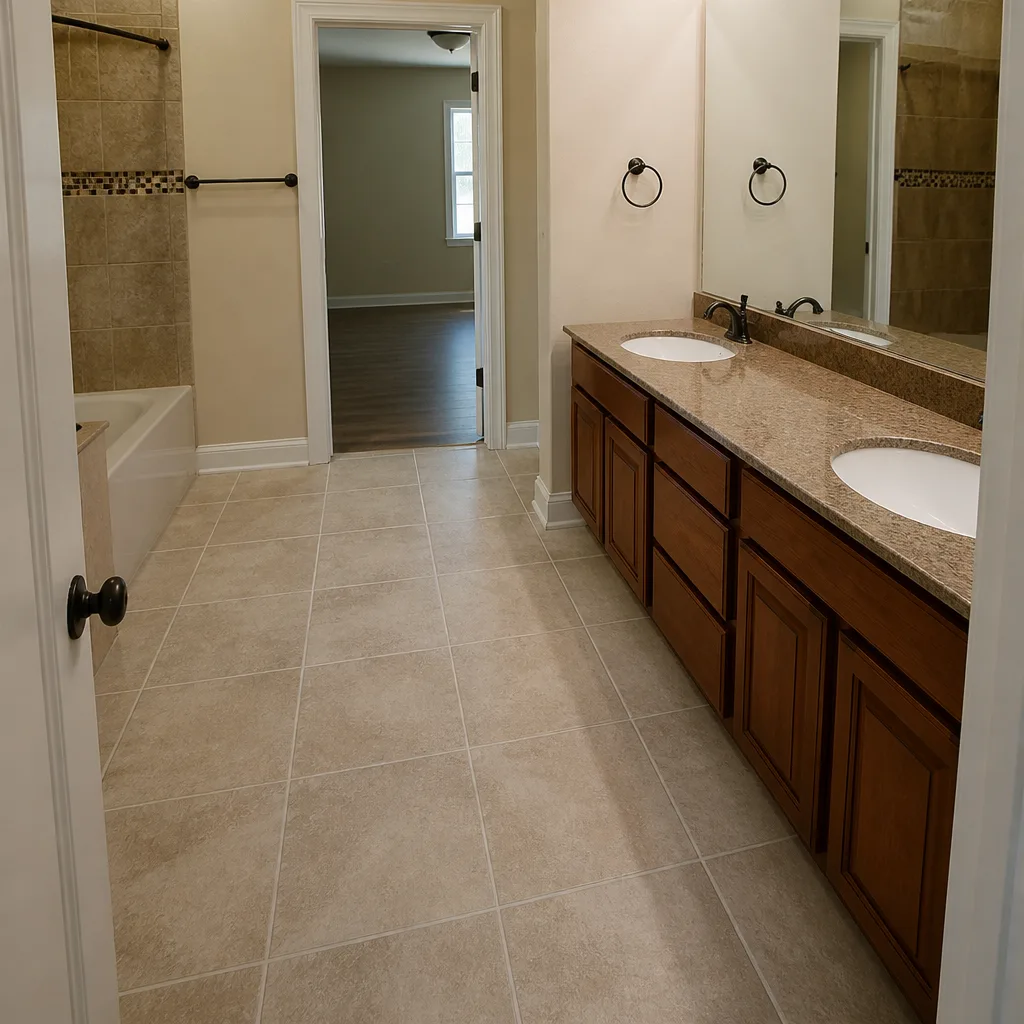
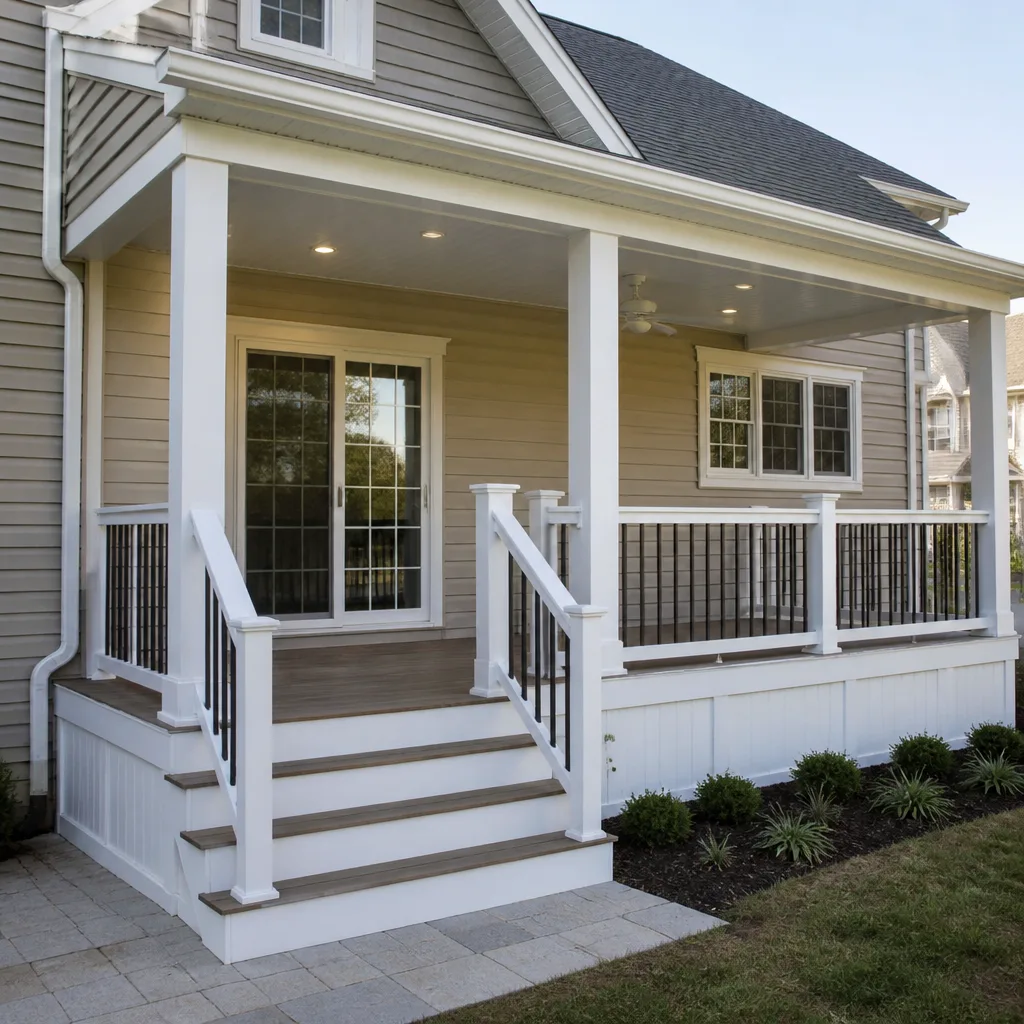
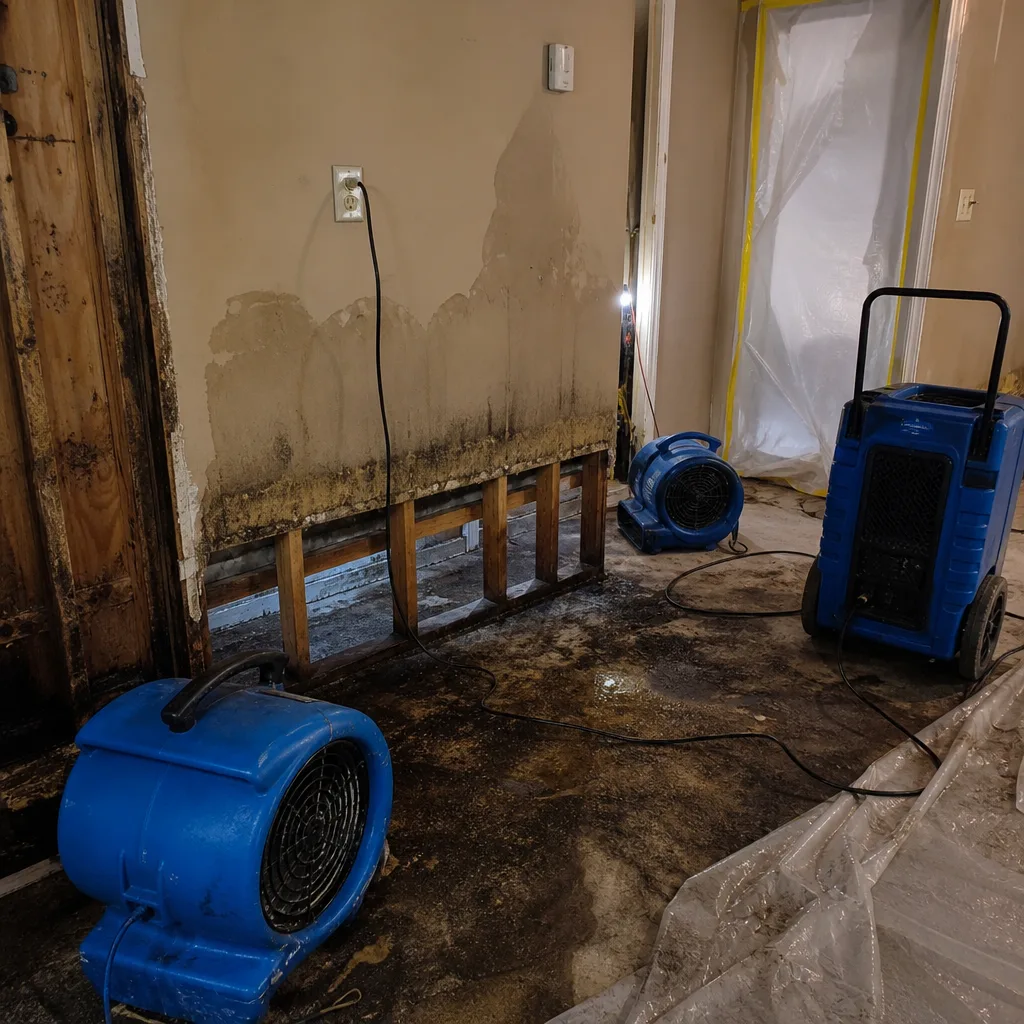 Before
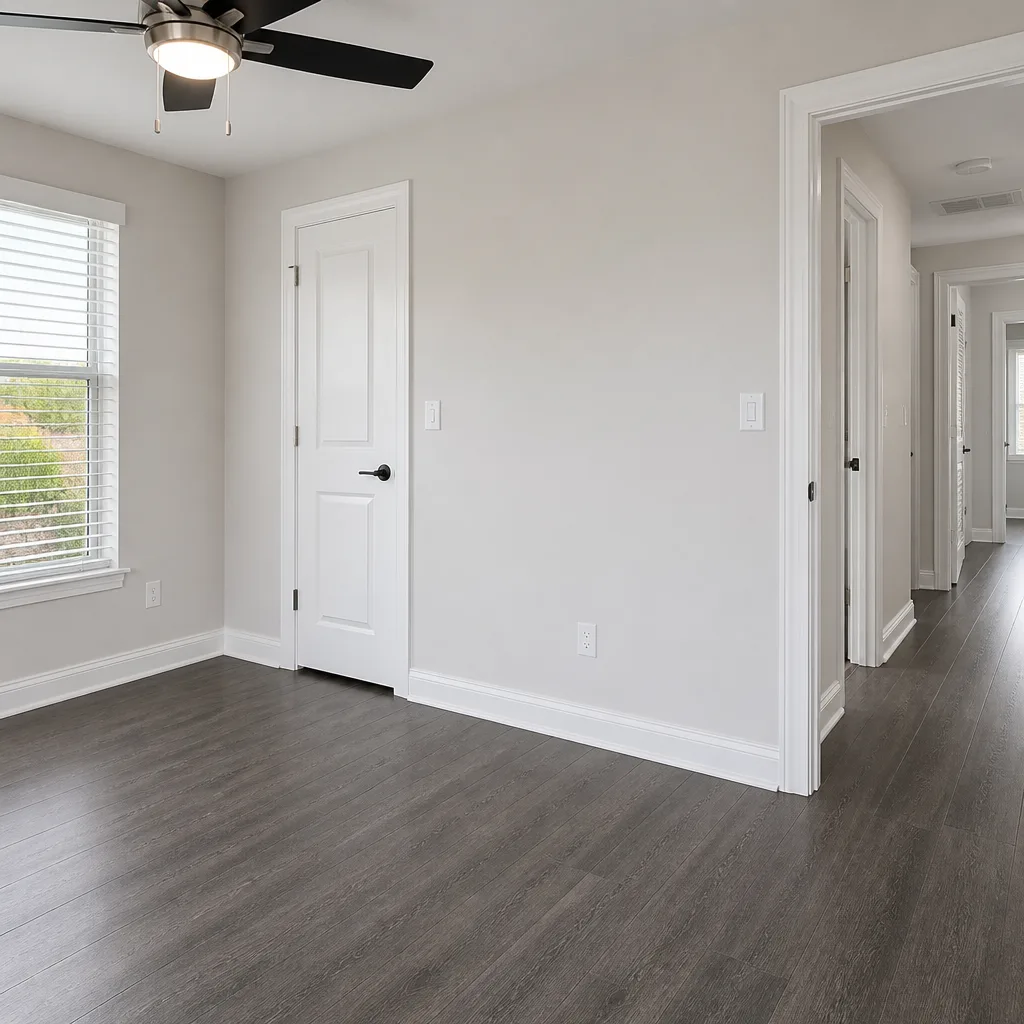 After
After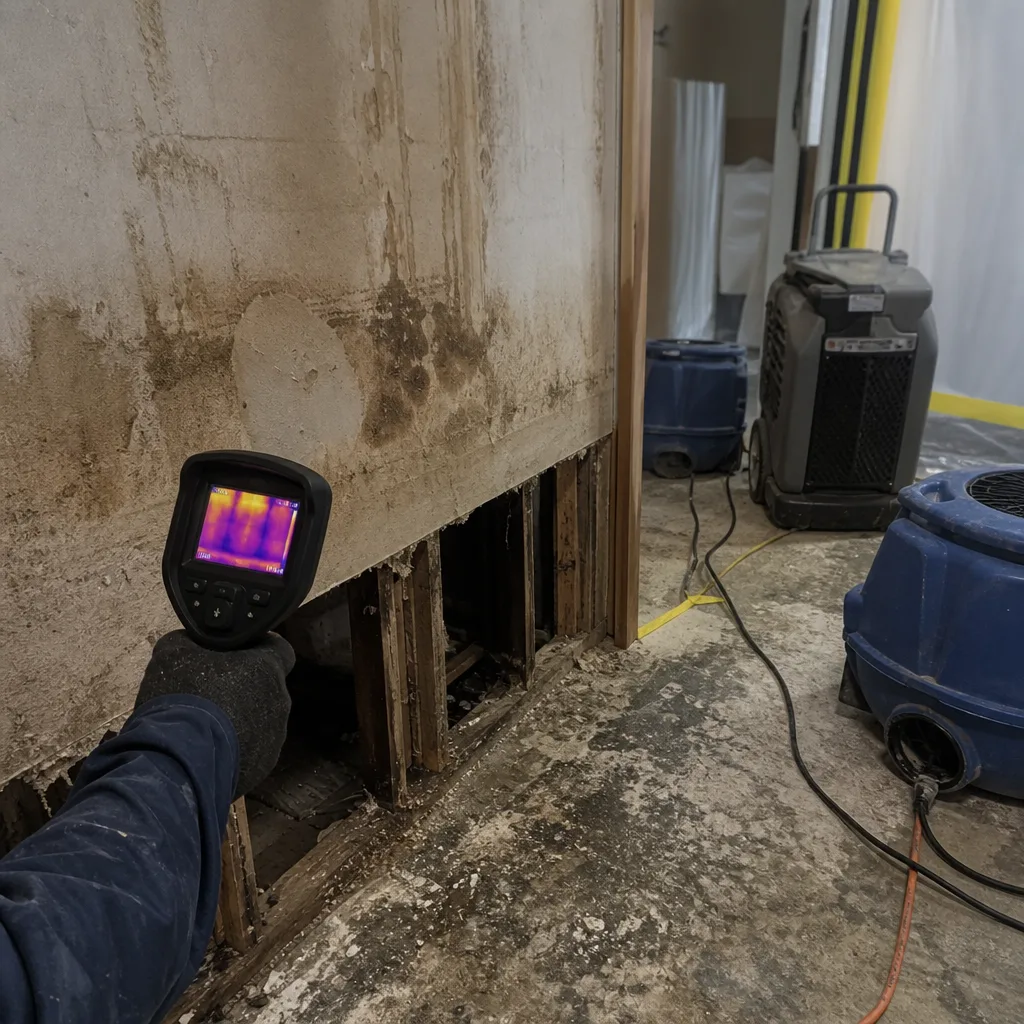 Before
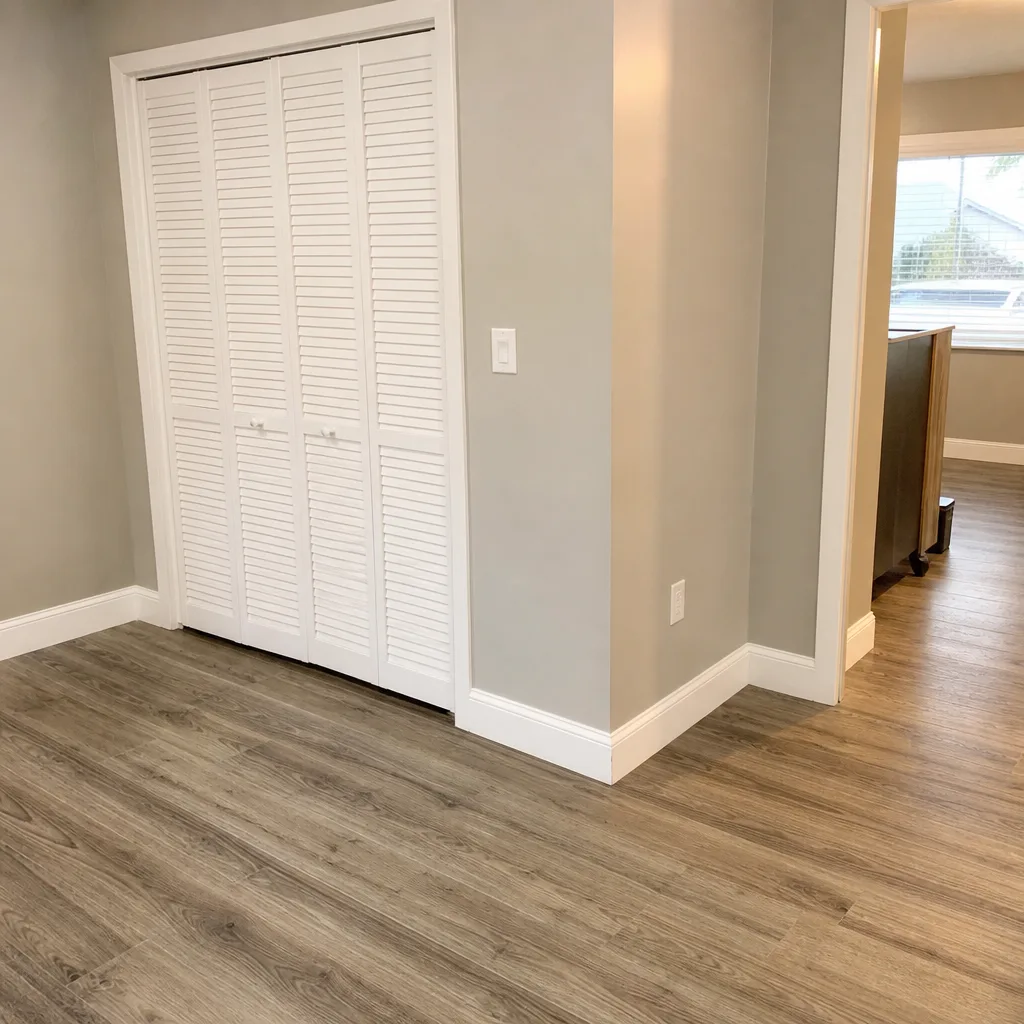 After
After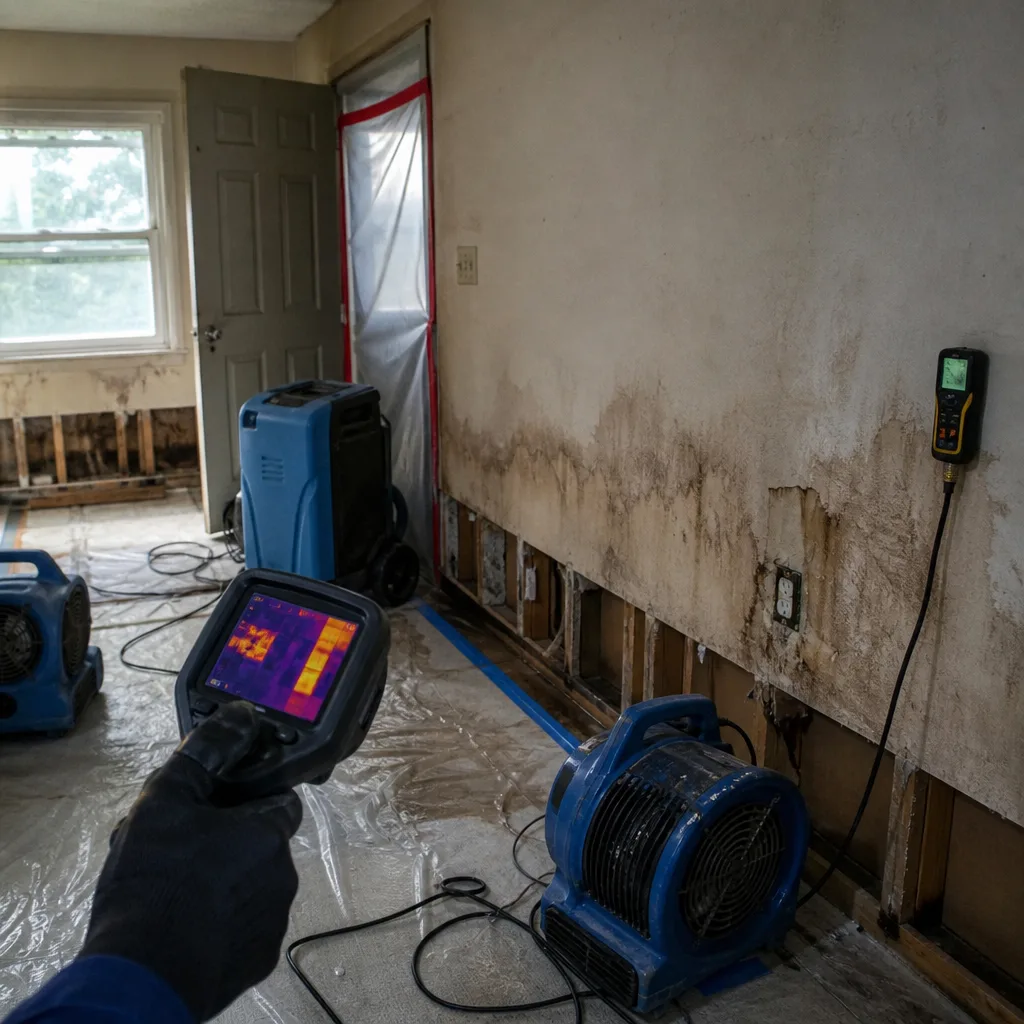 Before
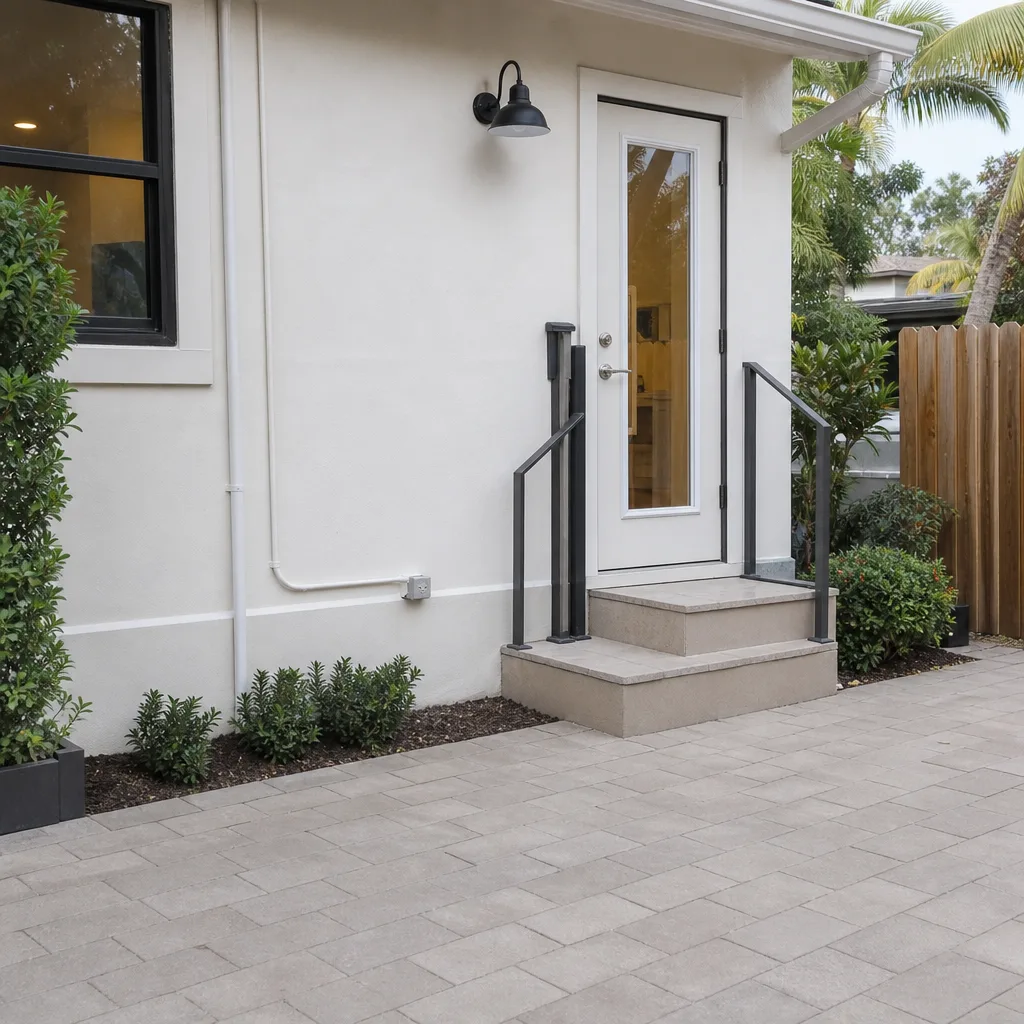 After
AfterThe Complete Guide to Damage Restoration in Hollywood
Broward County receives more than 61 inches of rain annually, yet the majority of disputed restoration claims in Hollywood fail not because of damage severity but because no one recorded a baseline moisture reading before equipment was placed. We’ve reviewed thousands of claim files since 2011, and the pattern is consistent: the homeowner who documents first gets paid fully; the homeowner who waits gets partial payment at best. This guide maps every stage of restoration to the specific document, reading, or photo that protects your property and your claim. You’ll learn what Hollywood’s 75%+ relative humidity does to moisture meters, how to read an invoice line by line, and what a complete claim file actually looks like from a Broward County insurer’s desk.
Quick Answer
Damage restoration in Hollywood encompasses water mitigation, mold remediation, fire cleanup, and reconstruction, with costs ranging from $1,200 for minor water extraction to $45,000+ for full fire rebuilds - see our Damage Restoration Cost Breakdown: The Hollywood Homeowner’s Reference for 2026 for detailed pricing by project type. The critical factor determining insurance payout is documentation within the first 72 hours - baseline moisture readings, dated photos, and written scopes that most contractors skip. In Hollywood’s climate, uncalibrated readings taken without humidity compensation can overstate or understate damage by 30% or more.
Table of Contents
- The 72-Hour Documentation Window
- How Hollywood’s Humidity Distorts Moisture Readings
- Mitigation, Remediation, and Reconstruction: Three Different Licenses
- How to Read a Restoration Invoice Line by Line
- What a Complete Claim File Looks Like
- Professional Equipment and Why It Matters
- Hollywood Neighborhoods and Their Common Damage Profiles
- Restoration Costs in Hollywood: Real Pricing
 Before
 After
AfterThe 72-Hour Documentation Window
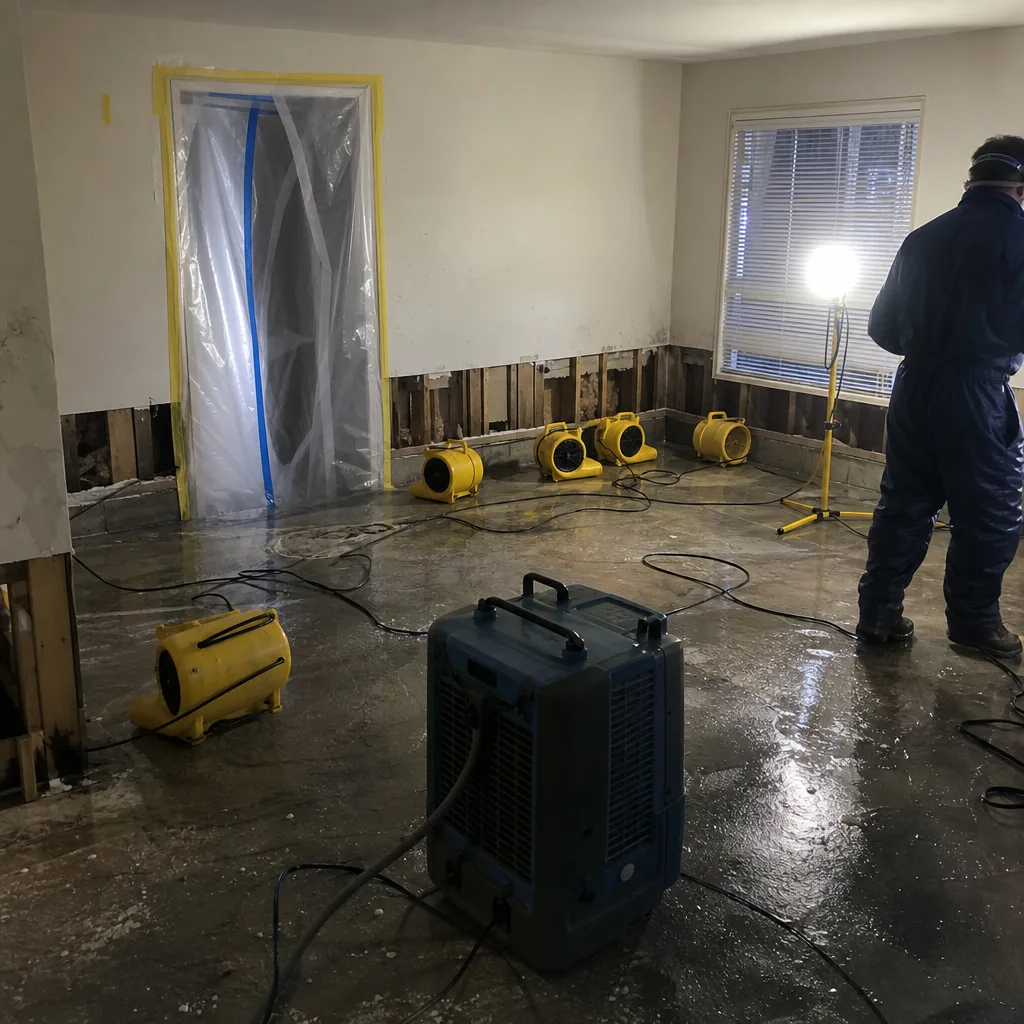
The first 72 hours after water intrusion, fire suppression, or storm damage are when your claim file is either built or broken. We’ve seen $40,000 claims reduced to $8,000 because a contractor started drying before photographing the pre-loss condition. The Haven Standard requires six specific documents within this window, and we deliver them on every job.
Here’s what must exist before any drying equipment activates:
- Pre-loss photo record: Dated, geotagged images of every affected room from multiple angles, including serial numbers on appliances and visible mold prior to disturbance. These establish causation for the insurer.
- Baseline moisture readings: Pin and pinless meter readings on affected materials plus unaffected controls in the same structure. Without controls, an insurer can argue the wood was “already wet.”
- Psychrometric data: Temperature, relative humidity, and specific humidity readings at the start, recorded on a daily drying log. This proves the drying environment was controlled, not just a fan running.
- Material classification inventory: Every wet material identified by trade name - OSB subfloor versus plywood, paper-faced drywall versus fiberglass-faced, engineered hardwood versus solid oak. Each has different drying standards per IICRC S500.
- Written scope of work: A line-item description of what will be done, in what order, with what equipment, for what price. Haven Standard, Clause 1: written price before work begins, every time, no exceptions.
- Insurance notification with claim number: Documentation that the carrier was notified, by whom, and when. This starts the statutory clock on response times in Florida.
In Hollywood specifically, we’ve found that homes near the Hollywood Lakes district - built 1920s to 1950s with plaster and lath construction - require longer baseline documentation because plaster behaves differently than drywall under moisture meters. A pin meter reading of 18% on plaster might indicate saturation, while the same reading on drywall is within normal range. Contractors unfamiliar with Hollywood’s housing stock misclassify this regularly, leading to either unnecessary demolition or insufficient drying.
The daily drying log continues this documentation through the job. Each visit gets new moisture readings, new photos showing progress, and equipment adjustments logged by serial number. When we submit these to Broward County insurers, the claim processes without dispute because the evidence chain is unbroken.
How Hollywood’s Humidity Distorts Moisture Readings
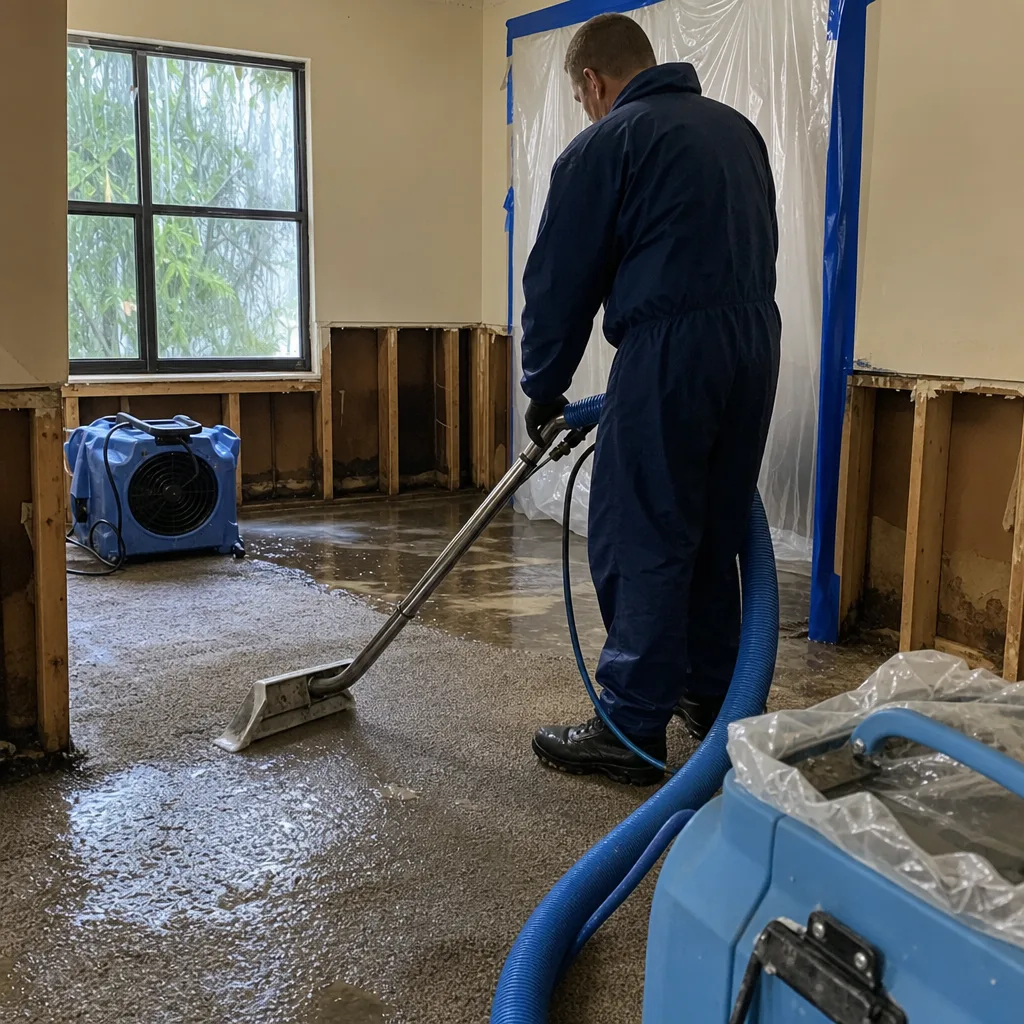
Hollywood’s average relative humidity hovers at 75% year-round, spiking to 85%+ during summer afternoons and dropping only briefly after cold fronts. This isn’t a footnote - it’s a technical factor that renders uncorrected moisture meter readings unreliable by margins large enough to sink a claim.
Here’s the mechanism. Pinless moisture meters emit electromagnetic signals that measure conductivity in materials. High ambient humidity increases surface moisture on materials that aren’t actually wet inside. A pin meter, which penetrates the surface, is less susceptible but still affected if the operator doesn’t allow for equilibration time. We’ve tested this directly: the same section of oak flooring in a Hollywood garage read 14.2% with a pinless meter at 78% ambient RH, then 9.8% after dehumidification dropped ambient RH to 45%. The wood hadn’t changed; the meter’s electromagnetic field had.
Calibrated baseline comparisons solve this. We take readings from an unaffected area of the same material in the same structure - what IICRC calls a “control” or “dry standard” - then compare affected areas to that baseline rather than to generic manufacturer tables. A generic table might list 12% as normal for oak, but if your Hollywood home’s control oak reads 9% because of your HVAC habits, then 12% represents meaningful elevation, not normal variation.
Vapor pressure differential is another critical measurement in Hollywood’s climate. This is the difference between the vapor pressure in the affected material and the vapor pressure in the surrounding air. When the differential is positive, moisture moves from material to air and can be removed by dehumidification. When it’s negative or near zero, as often happens in Hollywood’s humid summer air, drying stalls regardless of how many air movers are running. We measure this with thermo-hygrometers and adjust equipment accordingly - sometimes adding heat, sometimes sealed containment with desiccant dehumidification rather than standard refrigerant units.
Our crews document vapor pressure differential on every daily log. Insurers rarely ask for it specifically, but when they do challenge whether drying was properly executed, this data proves the environment was actively managed, not just equipment was present.
Mitigation, Remediation, and Reconstruction: Three Different Licenses
Florida law draws sharp lines between these three activities, and contractors who blur them create liability for homeowners. We’ve reviewed competitor invoices that billed reconstruction rates for mitigation work, or worse, performed mold remediation without the required license - leaving the homeowner with an unenforceable warranty and potential health liability.
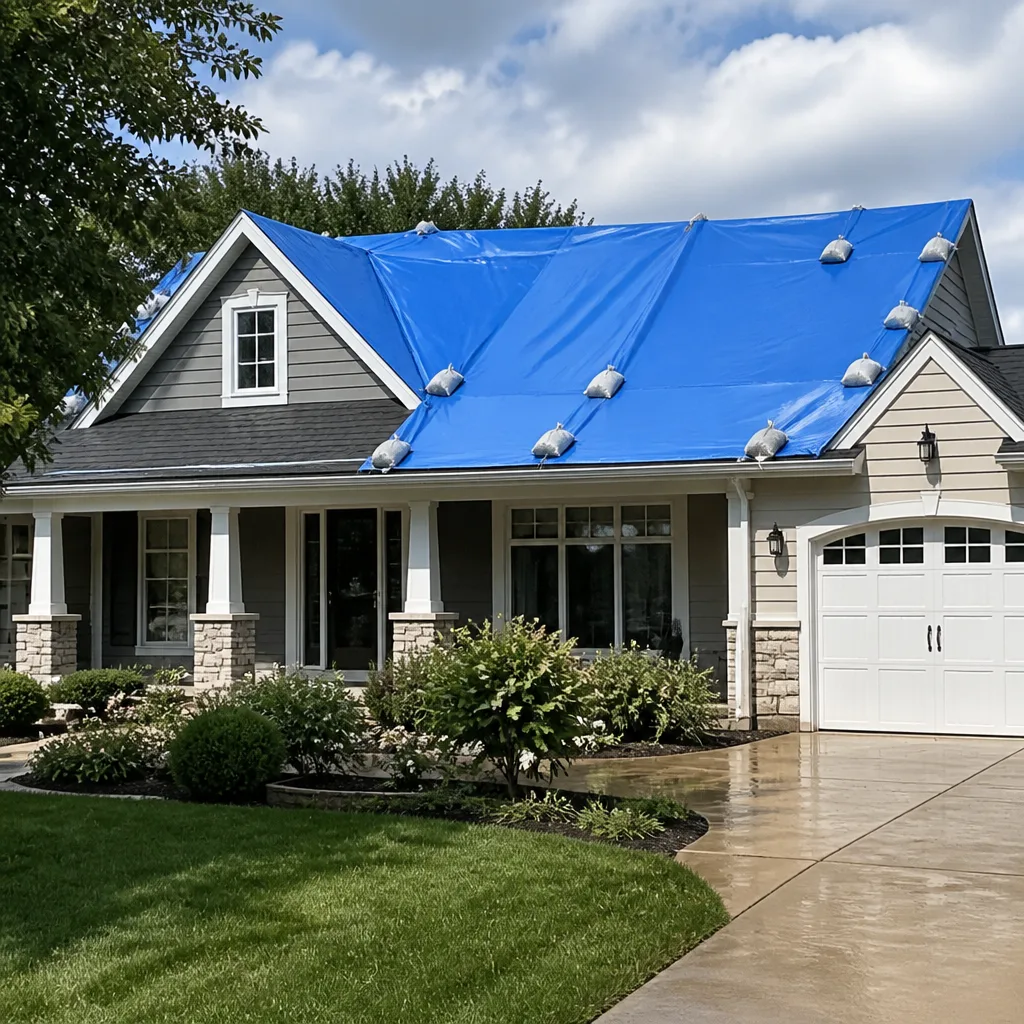
Mitigation is emergency stabilization: water extraction, drying, board-up, tarping. In Florida, a licensed Mold Remediator or a General Contractor can perform mitigation, but water-specific mitigation doesn’t require the mold license unless microbial growth is present. The key document is the drying log proving the structure was returned to pre-loss moisture content.
Remediation is the controlled removal of contaminated materials - mold, sewage, fire residue - with containment, negative air pressure, and clearance testing. Florida requires a Mold Remediator license for this work, and the license number must appear on all contracts and permits. Remediation ends with a post-remediation verification (PRV) by an independent Mold Assessor, not the same contractor who did the removal. This separation is Florida law, not optional best practice.
Reconstruction is the rebuild after mitigation and remediation are complete: drywall, flooring, painting, electrical, plumbing. This requires a Florida General Contractor license or appropriate specialty licenses. The critical document here is the written scope with line-item pricing - Haven Standard, Clause 1 applies with full force because reconstruction involves material selections, finish grades, and permits and code requirements that mitigation doesn’t.
We’ve seen Hollywood homeowners caught between contractors when one company performs mitigation, another performs remediation, and neither will take responsibility for the transition. Our approach: we hold the appropriate licenses for all three phases, but we still document each phase separately with its own written scope, photos, and sign-offs. This prevents the “scope creep” where a mitigation contractor starts removing drywall that should wait for a remediation protocol, or a reconstruction contractor discovers mold that should have been addressed earlier.
For Hollywood properties in the historic districts near Young Circle or along the Intracoastal, reconstruction triggers additional review. The Hollywood Historic Preservation Board requires certificates of appropriateness for exterior alterations in designated districts, and some interior work affecting structural elements needs staff review. We coordinate these submissions as part of our reconstruction documentation, not as an afterthought that delays permit issuance.
How to Read a Restoration Invoice Line by Line
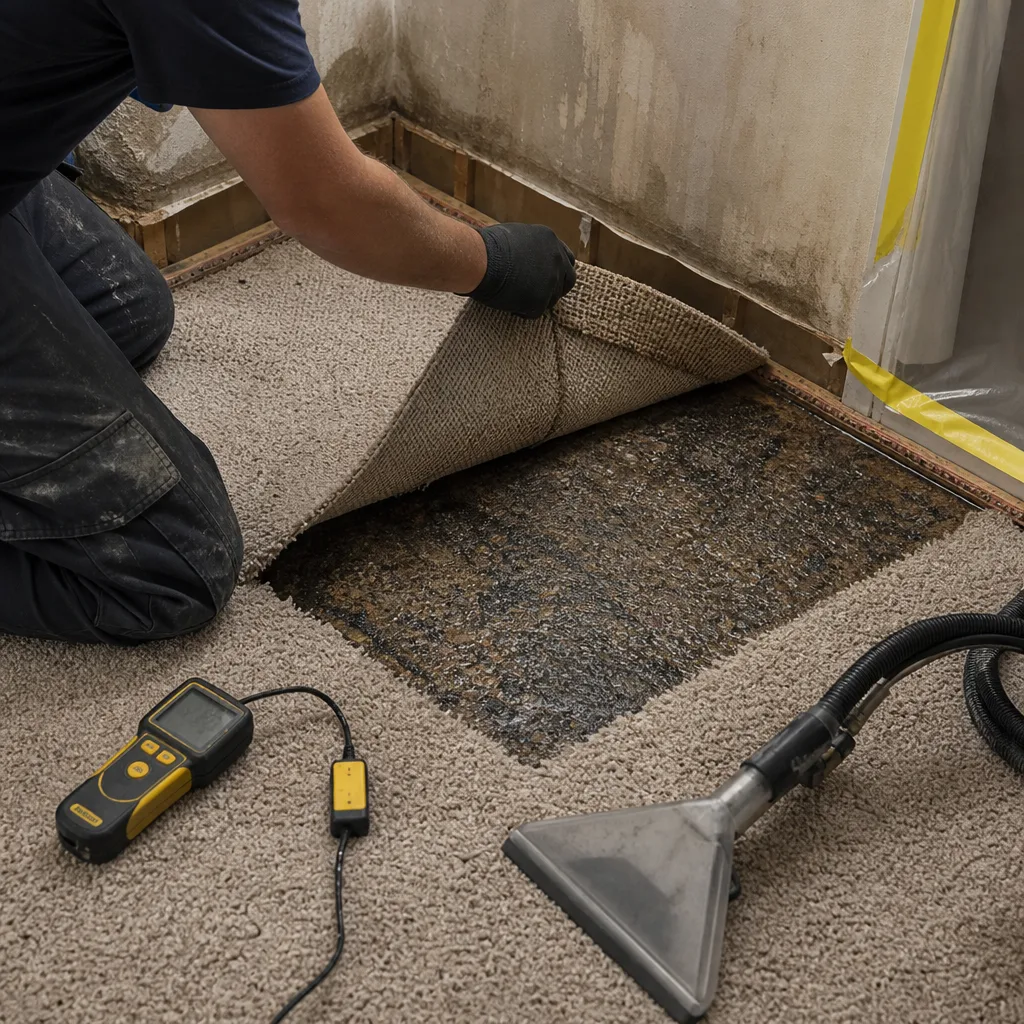
Restoration invoices run long - 40 to 200 line items isn’t unusual for a significant water loss. Most homeowners scan the total and pay, or dispute the total without understanding what’s inflated. Here’s how to read each section with the specificity an adjuster applies.
Equipment charges: Each dehumidifier, air mover, and air scrubber should list a daily rate, quantity, and dates deployed. Check that dates match the drying log. A Phoenix 200 MAX dehumidifier at $85/day for 5 days should appear on logs for all five days. We’ve found competitor invoices billing equipment that was removed earlier than stated, or billing “phantom” units never placed.
Labor by task code: IICRC task codes standardize labor descriptions - WTR for water damage, FRS for fire/smoke, etc. Each code should correspond to a specific activity with start/stop times. “WTR-DRY” means structural drying labor; it should not appear for days when only monitoring occurred. Time entries should match photo timestamps.
Material classifications: Every removed or installed material should specify grade and manufacturer. “Drywall” isn’t sufficient; “1/2″ USG Sheetrock Brand Firecode X, Type X” is what permits and warranties require. This matters for Hollywood homes with specific code requirements - fire-rated drywall in attached garages, moisture-resistant green board in bathrooms before 2018 code changes.
Containment and engineering controls: Negative air machines, HEPA filtration, temporary barriers. These should list CFM ratings and filter change dates. For mold remediation in Hollywood, containment is where corners get cut - plastic sheeting instead of proper barriers, or negative air machines without documented pressure differentials.
Testing and verification: Moisture readings, airborne mold spore counts, clearance samples. Each test should reference a standard (IICRC S500, S520, etc.) and show pass/fail criteria. We include the full lab report in our documentation package, not just a “pass” summary.
Overhead and profit (O&P): Standard in insurance work, typically 10% overhead plus 10% profit on trades where the contractor coordinates multiple subcontractors. This should apply only to reconstruction, not mitigation, per most carrier guidelines. We flag this explicitly so there’s no confusion.
The red flags we see most often in Hollywood: equipment billed beyond documented removal dates, labor rates for unlicensed technicians, and “administrative fees” with no corresponding service. Our invoices include a photo record keyed to line items - photo 47 shows the drywall removed in line item 23 - so every charge is verifiable.
What a Complete Claim File Looks Like
From a Broward County insurer’s perspective, a complete claim file tells a story with evidence at every turn. Most contractors deliver fragments: some photos, an invoice, maybe a drying log with gaps. The Haven Standard defines completeness, and we’ve refined it through 12,000+ restorations.
Here’s what the file contains, in order:
- Initial loss report: Date, time, cause, weather conditions if relevant. For Hollywood storm damage, this includes National Weather Service data showing rainfall intensity during the loss period.
- Pre-loss condition documentation: Photos, video walkthrough if available, recent maintenance records. This establishes that the damage resulted from the claimed event, not pre-existing conditions.
- Emergency response record: Who arrived when, what they found, what immediate actions were taken. Our crews document arrival time with GPS-stamped photos.
- Baseline assessment: Moisture readings, material classifications, scope of affected area in square feet. This is where Hollywood’s humidity makes calibration critical - we note the ambient conditions and control readings explicitly.
- Written scope and price: Haven Standard, Clause 1. Signed by homeowner before work begins. No exceptions.
- Daily drying logs or progress reports: For water and mold jobs, every visit with readings, photos, equipment adjustments. For fire jobs, cleaning progress by room with residue test results.
- Change orders: Any scope modification with homeowner signature, reason for change, and price impact. We avoid these through thorough initial assessment, but when hidden damage emerges, we document before proceeding.
- Final verification: Post-mitigation moisture readings meeting dry standard, or post-remediation clearance testing by independent assessor, or post-reconstruction permit sign-off.
- Warranty documentation: Our 365-Day Done Right Promise, signed and dated, with specific coverage terms. Not a verbal assurance - a document with an address.
- Final invoice with photo key: Every line item referenceable to specific photos in the record.
What most contractors actually deliver: an invoice, some photos on a USB drive with no organization, and a verbal “call us if you have problems.” That delivery fails under insurer scrutiny and leaves the homeowner without recourse if mold recurs or repairs fail.
We deliver the complete file electronically within 48 hours of job completion, with a physical backup on request. For insurance claims, we submit directly to the adjuster with a cover letter indexing each document. This is the documentation-first approach that Back to Dry was built on - Alicia Brennan founded the company in 2011 after seeing too many homeowners lose legitimate claims to paper gaps.
Professional Equipment and Why It Matters
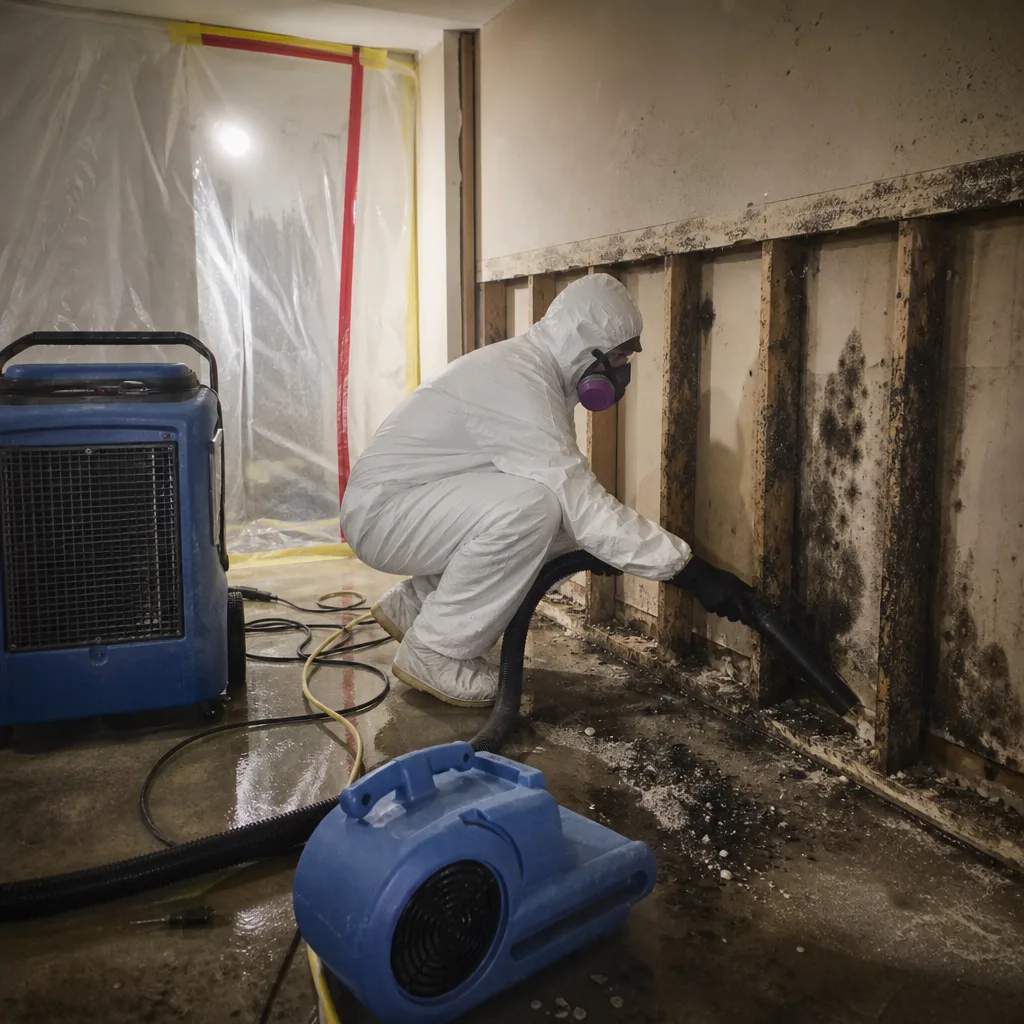
The equipment deployed on your job determines whether drying succeeds and whether the documentation holds up. We use professional-grade systems from Dri-Eaz, Phoenix, XPOWER, and Injectidry - not because brand names impress, but because these manufacturers publish performance specifications that insurers recognize and that our technicians can reference in dispute resolution.
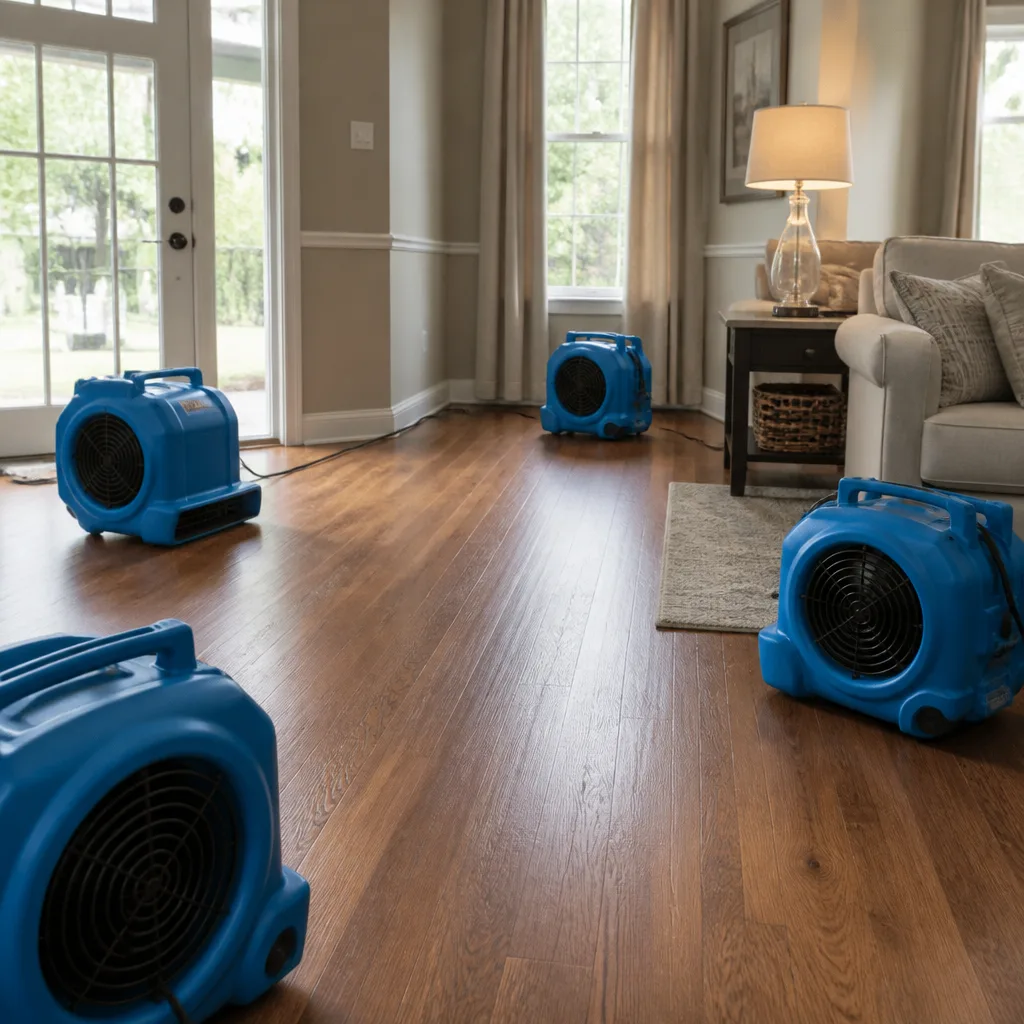
Phoenix 200 HT LGR dehumidifiers pull 30% more water vapor at 80°F/60% RH than conventional refrigerant units, which matters in Hollywood where conditions often sit at that threshold. We log serial numbers and runtime hours for each unit, producing a water removal calculation that matches the psychrometric data.
Injectidry’s interstitial drying systems allow us to dry hardwood floors and wall cavities without removal, when conditions permit. This preserves original materials in Hollywood’s mid-century homes where matching replacements are unavailable. We document the decision to attempt interstitial drying versus removal with moisture gradient readings - the difference between surface and core moisture content - so the homeowner understands why we chose one approach over another.
XPOWER air movers are specified by CFM and amperage draw, which we factor into electrical load calculations for homes with older service panels. In Hollywood’s 1950s ranch homes near Emerald Hills, we’ve tripped breakers with insufficient load planning; now we calculate and document the electrical plan as part of equipment placement.
Air scrubbers with HEPA filtration are standard on mold and fire jobs, with filter pressure drop documented to prove they were functioning throughout the work period. A saturated filter doesn’t protect occupants or technicians, and insurers increasingly ask for this documentation.
The equipment list isn’t marketing. It’s evidence. When we state that four Phoenix units ran for 72 hours to achieve dry standard, the serial numbers, hour meters, and psychrometric logs prove it. That’s what turns a restoration invoice into a payable claim.
Hollywood Neighborhoods and Their Common Damage Profiles
Hollywood’s geography creates distinct damage patterns by area. Understanding these helps homeowners anticipate risks, recognize damage restoration warning signs, and verify that a contractor’s assessment matches local conditions.
Hollywood Beach and Coastal Condos: Salt air corrosion of galvanized plumbing, wind-driven rain through aging window seals, and elevator pit flooding during king tides. We’ve replaced entire riser systems in coastal buildings where pinhole leaks went undetected behind drywall until multiple units showed damage. The documentation challenge: proving the leak duration to assign causation between building maintenance and unit owner responsibility.
Hollywood Lakes (Historic District): Original clay tile roofs with degraded underlayment, plaster and lath walls that hold moisture differently than modern construction, and raised foundations with crawl spaces that flood during heavy rain. Our crews carry specialized moisture meters for plaster and document the unique drying curve these structures require.
Emerald Hills and Interior Subdivisions: 1950s-1970s slab-on-grade homes with original copper plumbing reaching end of life. Slab leaks here often manifest as warm spots on tile or unexplained water pooling, with the actual leak location 10-20 feet from visible damage due to water migration under slab. We use thermal imaging and document the correlation between thermal anomalies and moisture readings before any concrete is opened.
Downtown Hollywood and Mixed-Use: Older commercial buildings with flat roofs, shared walls complicating containment, and fire suppression systems that can discharge accidentally. The documentation complexity multiplies with multiple insurers and property managers involved.
West Hollywood and Newer Developments: Engineered lumber construction that wicks water faster than solid timber, and stucco exteriors with installation-era moisture barriers that fail at penetrations. We’ve documented systemic window leaks in 2000s-era construction where the moisture barrier was omitted at rough openings.
Each neighborhood requires adjusted documentation protocols. What works for a Hollywood Beach condo claim fails for a Hollywood Lakes historic home. Our crews are assigned by area familiarity, not just availability.
Restoration Costs in Hollywood: Real Pricing
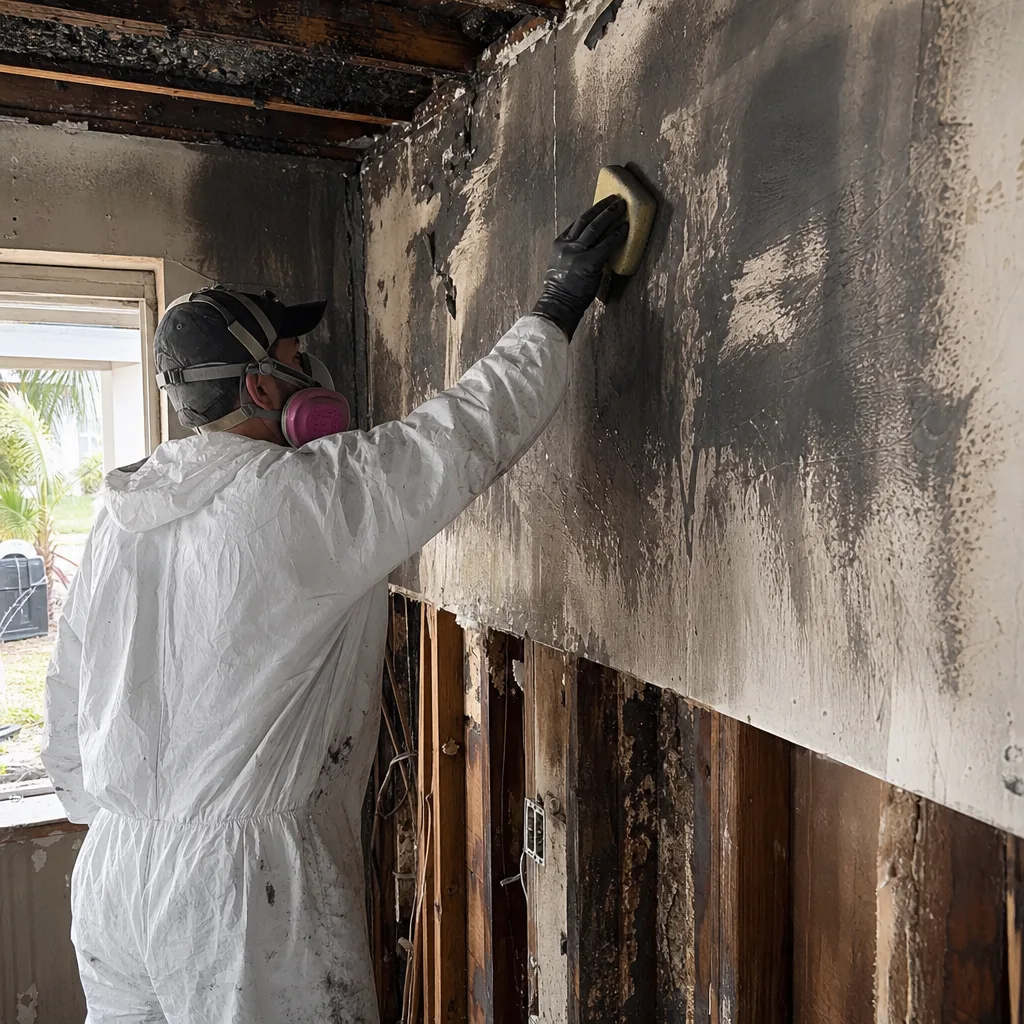
We publish pricing ranges because Haven Standard, Clause 1 exists to end the “call for a quote” habit that leaves homeowners comparing incomparable numbers. For more guides & resources on navigating restoration and insurance claims, see our blog. These ranges reflect our actual 2023-2024 Hollywood jobs, adjusted for current material costs. Every job still gets a written specific price before work begins.
| Service Category | Typical Range | What Drives Cost |
|---|---|---|
| Water extraction only (no structural drying) | $800 - $1,800 | Gallons extracted, accessibility, contamination category |
| Structural drying ( Category 1 clean water) | $2,400 - $5,500 | Affected square footage, dehumidification days, material types |
| Category 2/3 gray/black water mitigation | $4,500 - $12,000 | Contamination level, required PPE, disposal regulations |
| Mold remediation, localized (<10 sq ft visible) | $1,200 - $2,800 | Containment complexity, HVAC involvement, clearance testing |
| Mold remediation, whole-room or systemic | $5,500 - $18,000 | Square footage, hidden growth in cavities, post-remediation rebuild |
| Fire & smoke damage, contents and structure | $8,500 - $35,000 | Soot type (protein vs. synthetic), odor penetration, contents volume |
| Sewage backup cleanup | $3,500 - $9,500 | Category 3 classification, porous material replacement, antimicrobial treatment |
| Reconstruction, per room (drywall, paint, flooring) | $4,500 - $12,000 | Finish grade, permit requirements, matching existing materials |
| Full reconstruction, significant fire/water loss | $25,000 - $85,000+ | Structural involvement, code upgrade triggers, design services |
These ranges assume standard Hollywood construction - drywall, standard flooring, no historic preservation requirements. Hollywood Lakes historic properties or coastal condos with high-end finishes run higher due to material matching and specialized labor.
Insurance typically covers sudden and accidental losses, not gradual damage or maintenance failures. We document causation explicitly to support coverage determinations, and we offer free second opinions on any competitor’s written estimate - bring their scope and we’ll review it against what we find.
Common Mistakes to Avoid
- Starting cleanup before photographing: In Hollywood’s humid climate, mold can appear within 48 hours, but that doesn’t justify skipping pre-loss documentation. We’ve seen insurers deny claims because the homeowner “mitigated” the evidence before the adjuster saw it.
- Accepting a verbal estimate: Florida doesn’t require written estimates for emergency mitigation, but without one, you have no enforceable scope. Haven Standard, Clause 1 exists because we’ve repaired too many jobs where the verbal “about $3,000” became $9,000 with no documentation of why.
- Using the same contractor for remediation and post-remediation verification: Florida law requires separation; more importantly, it’s a conflict of interest. We use independent Mold Assessors for clearance testing, even when it complicates scheduling.
- Ignoring vapor pressure in equipment selection: A contractor who places standard refrigerant dehumidifiers in a Hollywood garage in July without measuring vapor pressure differential is wasting your money and risking secondary damage.
- Not requesting daily logs during active drying: You should receive documentation every 24 hours, not a summary at the end. Gaps in the log create gaps in your claim.
- Assuming reconstruction is covered because mitigation was: Insurance policies often cap or exclude reconstruction, or apply different deductibles. We verify coverage for each phase before work begins, documented in writing.
- Neglecting permit requirements for reconstruction: Hollywood requires permits for electrical, plumbing, and structural work. Unpermitted reconstruction can void insurance, complicate resale, and create safety hazards. We pull permits as standard practice, not as an upsell.
When to Call a Professional
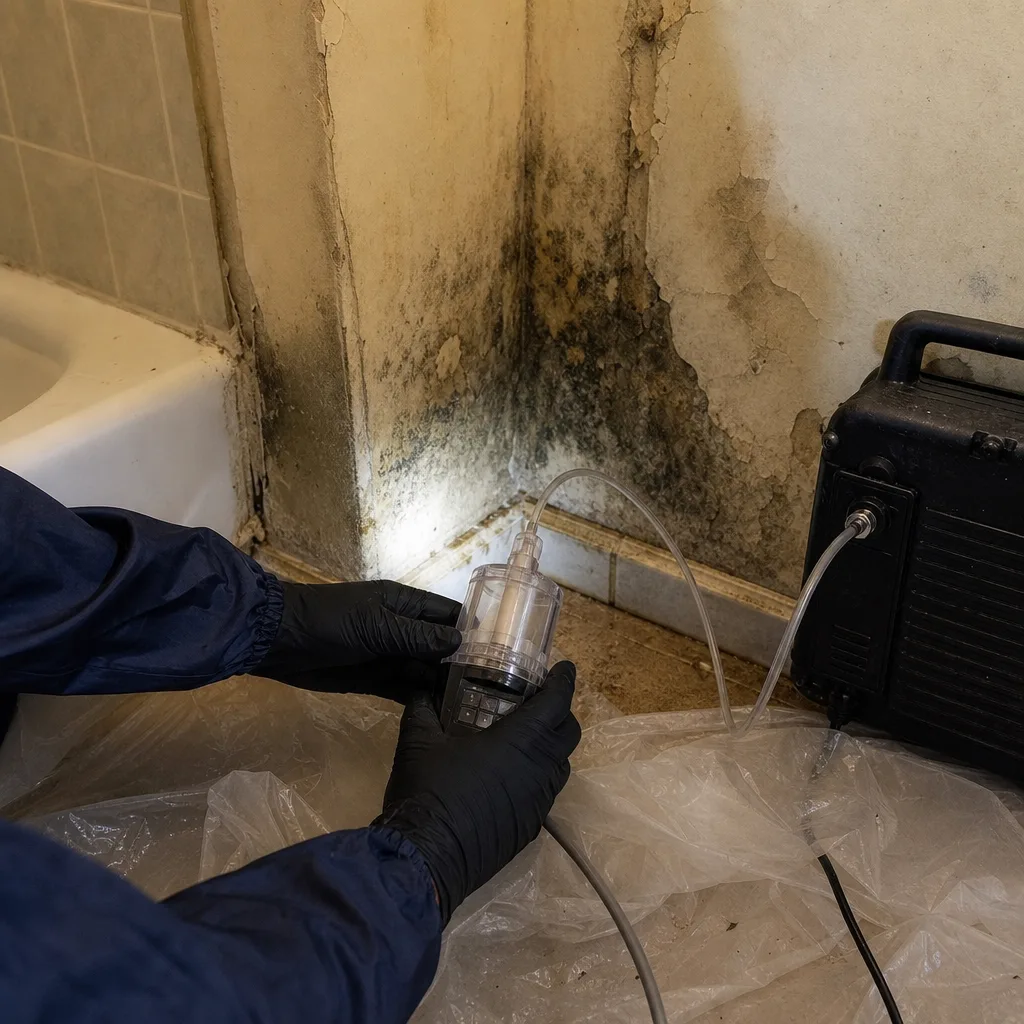
Call immediately when water has affected finished surfaces, when you smell mold or see it covering more than a small patch, when fire damage involves anything beyond minor smoke residue, or when sewage is present. These situations involve contamination, structural risk, or insurance documentation requirements that exceed DIY capacity. For fire and smoke damage in Hollywood, even small fires can leave protein residues that require specialized cleaning chemistry and thermal fogging equipment.
DryMark Restoration Hollywood offers free estimates in Hollywood - call (754) 222-3479. Our live dispatch answers 24 hours a day, 7 days a week with no voicemail trees. We’ll schedule a documented assessment, deliver a written price before any work begins, and build the claim file that gets you paid.
Frequently Asked Questions
Water damage restoration in Hollywood typically ranges from $2,400 for clean-water structural drying to $12,000+ for contaminated water with material replacement. Category 1 clean water losses in standard drywall construction average $3,500-$5,500 for complete mitigation. Call (754) 222-3479 for a written specific estimate - assessments are free.
Insurance covers sudden and accidental damage, not gradual leaks or maintenance failures. The key factor is documentation proving the loss event and its immediate effects - which is why our pre-loss photo record and baseline moisture readings are critical. We coordinate directly with adjusters and provide the documented claim file that supports full payment. Call (754) 222-3479 to discuss your specific policy and loss.
Our live dispatch answers immediately, and emergency crews are typically on-site within 60-90 minutes for water and sewage losses in Hollywood. Fire and storm damage may involve additional safety clearance time. For reconstruction - the rebuild phase - we schedule after complete scoping and permit approval, not as emergency dispatch. Call (754) 222-3479 to confirm current response times.
More than 10 square feet of visible mold, mold in HVAC systems, or mold resulting from Category 2 or 3 water damage requires licensed remediation per Florida law. “Cleaning” without containment and negative air pressure spreads spores and violates IICRC S520. We assess with moisture meters and air sampling, then deliver a written remediation protocol with price before work begins. Call (754) 222-3479 for evaluation.
We deal directly with adjusters as part of our standard service, submitting the documented photo record, drying logs, and line-item invoice that adjusters need. You remain the policyholder and must authorize work and payment direction, but we handle the technical documentation and negotiation of scope. This is part of our documentation-first approach - Alicia Brennan founded Back to Dry in 2011 specifically to close the documentation gap that costs homeowners their claims.
Mitigation is emergency stabilization - drying, cleaning, removing damaged materials. Reconstruction is the rebuild - new drywall, flooring, fixtures. They require different Florida licenses, different insurance coverage categories, and different pricing structures. Mitigation is priced by equipment days and labor hours; reconstruction by material costs and trade labor. We provide separate written scopes for each phase so you understand exactly what you’re paying for. Haven Standard, Clause 1 applies to both.
Hollywood’s 75%+ average relative humidity extends drying time by 20-40% compared to drier climates, and requires dehumidifiers with higher grain depression capacity. Uncorrected readings in humid conditions can mislead contractors into premature equipment removal, leaving trapped moisture that causes mold. We compensate with calibrated baseline comparisons and vapor pressure monitoring, documented on daily logs. Typical Hollywood drying takes 3-5 days for standard construction, 5-7 days for dense materials or plaster.
The Bottom Line
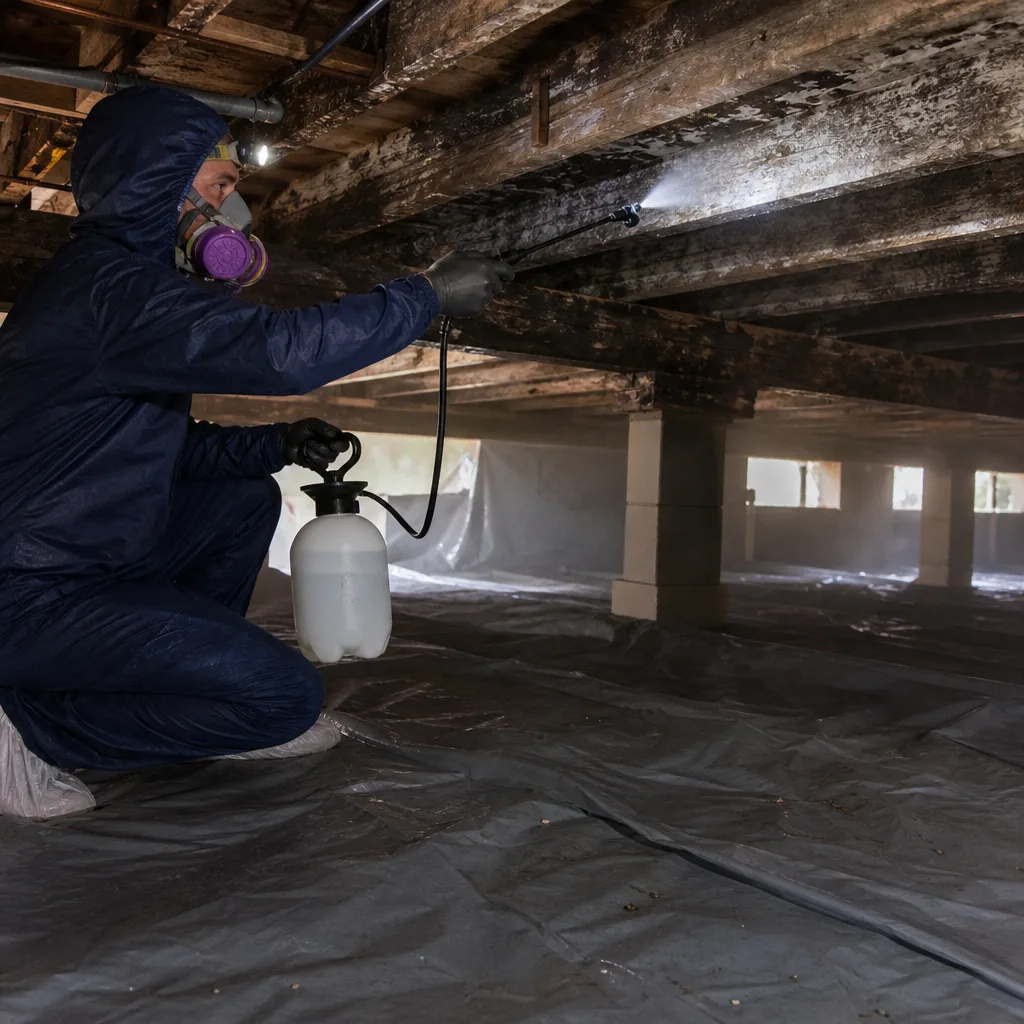
Restoration in Hollywood succeeds or fails on documentation, not dramatic equipment or reassuring promises. The 72-hour window after loss is when your claim file is built - with baseline moisture readings, dated photos, written scopes, and daily logs that prove the work was necessary and properly executed. Hollywood’s humidity makes technical precision essential; generic approaches produce generic results, and generic results get disputed by insurers. Demand a written price before work begins, daily documentation during the job, and a complete file at completion. That’s the Haven Standard, and it’s how we’ve completed 12,000+ restorations since 2011 with the documentation that gets homeowners paid.
Written by Alicia Brennan, Owner at DryMark Restoration Hollywood, serving Hollywood since 2011.