
Last updated September 23, 2026
Free visual inspection and a written scope of work before any mitigation begins - photos, moisture readings, and drying logs go in your claim file
The scope we write is the scope we bill. Anything new gets shown to you, in writing, before we touch it.
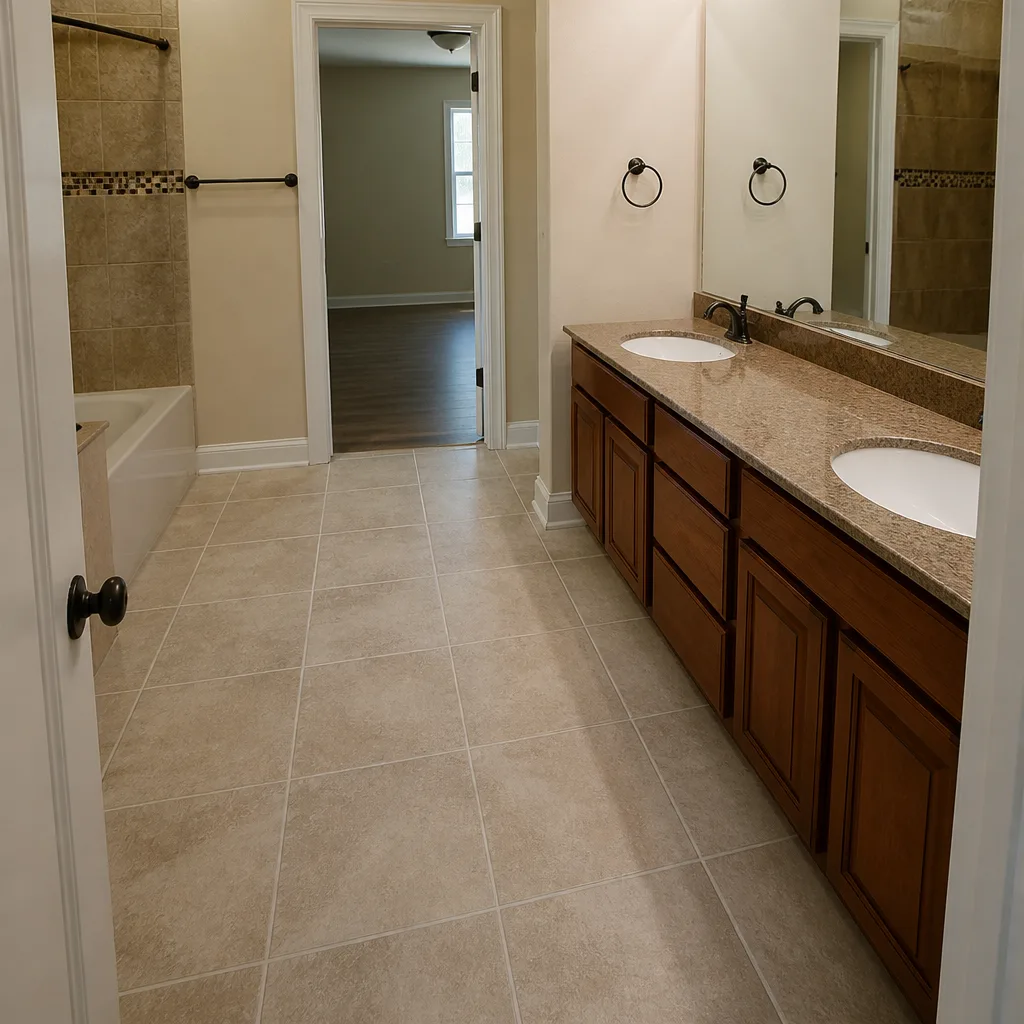
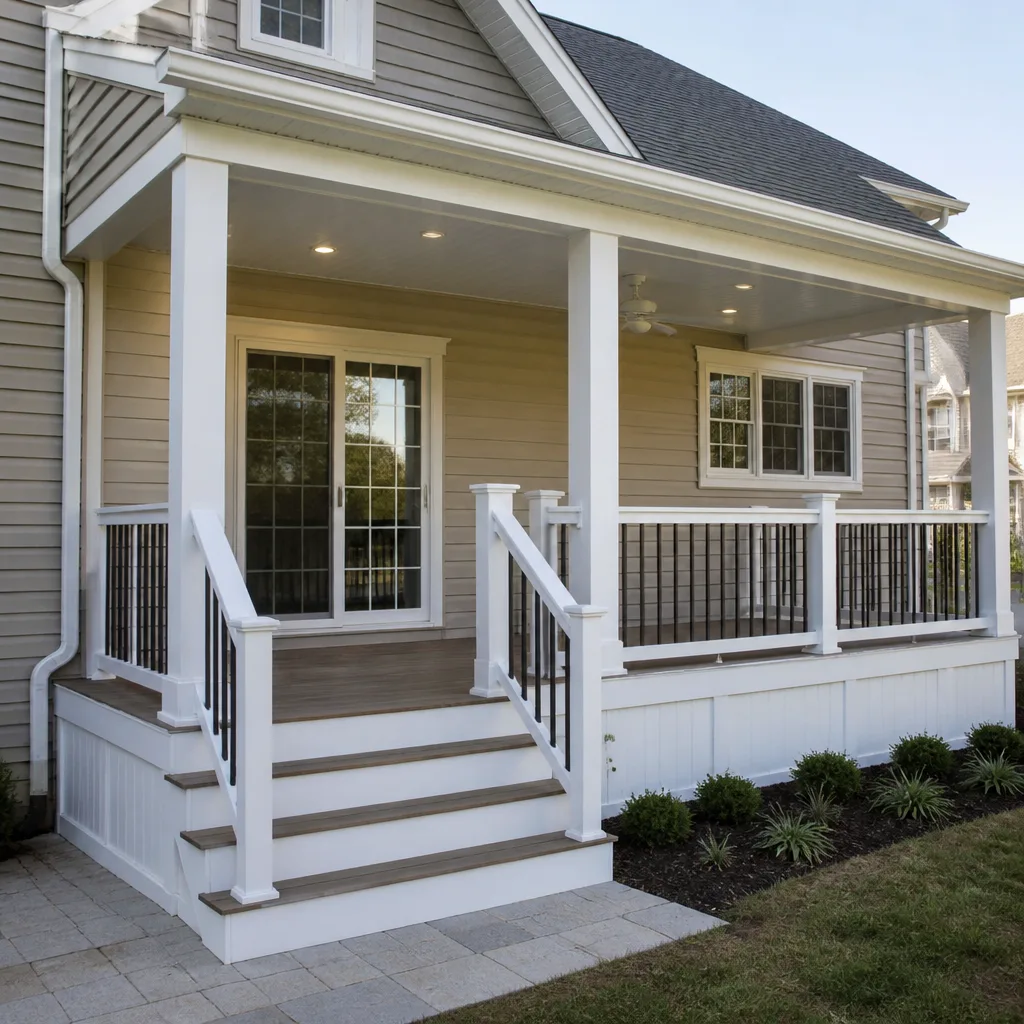
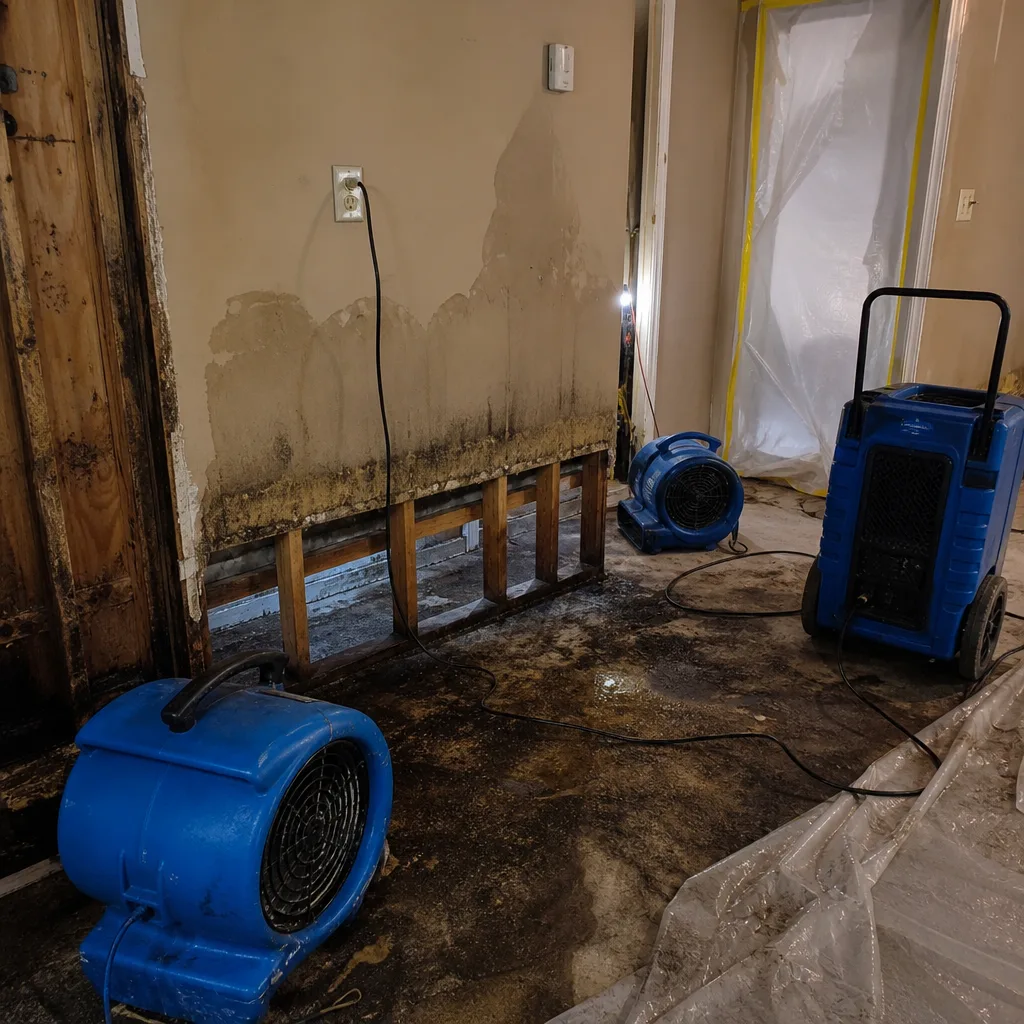 Before
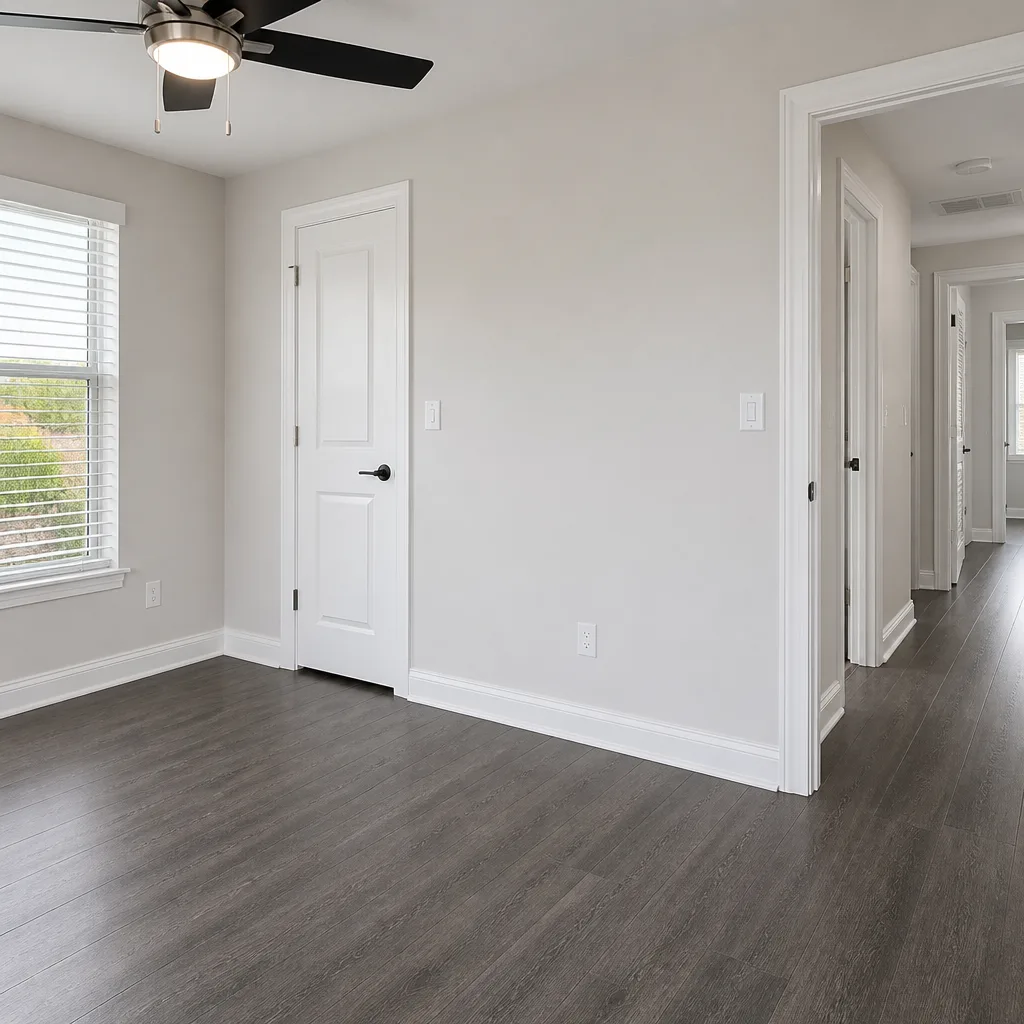 After
After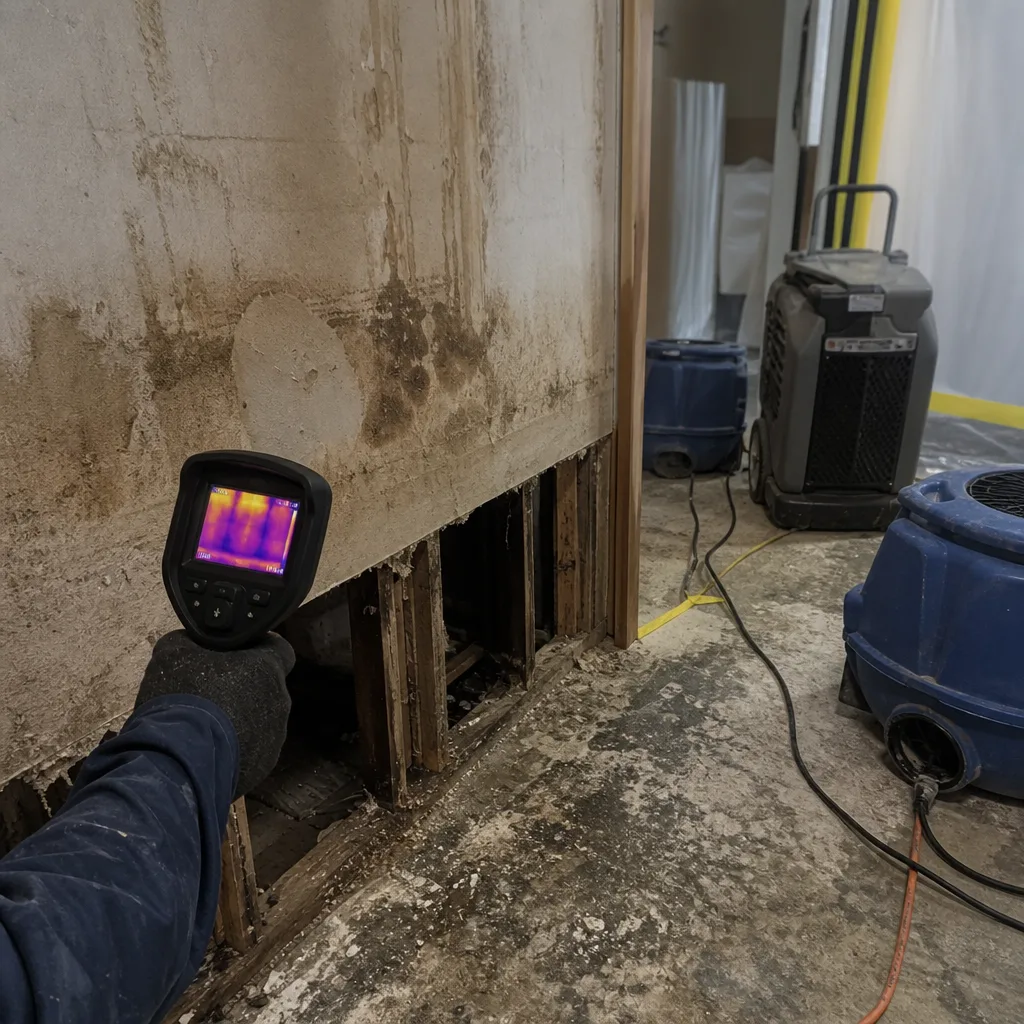 Before
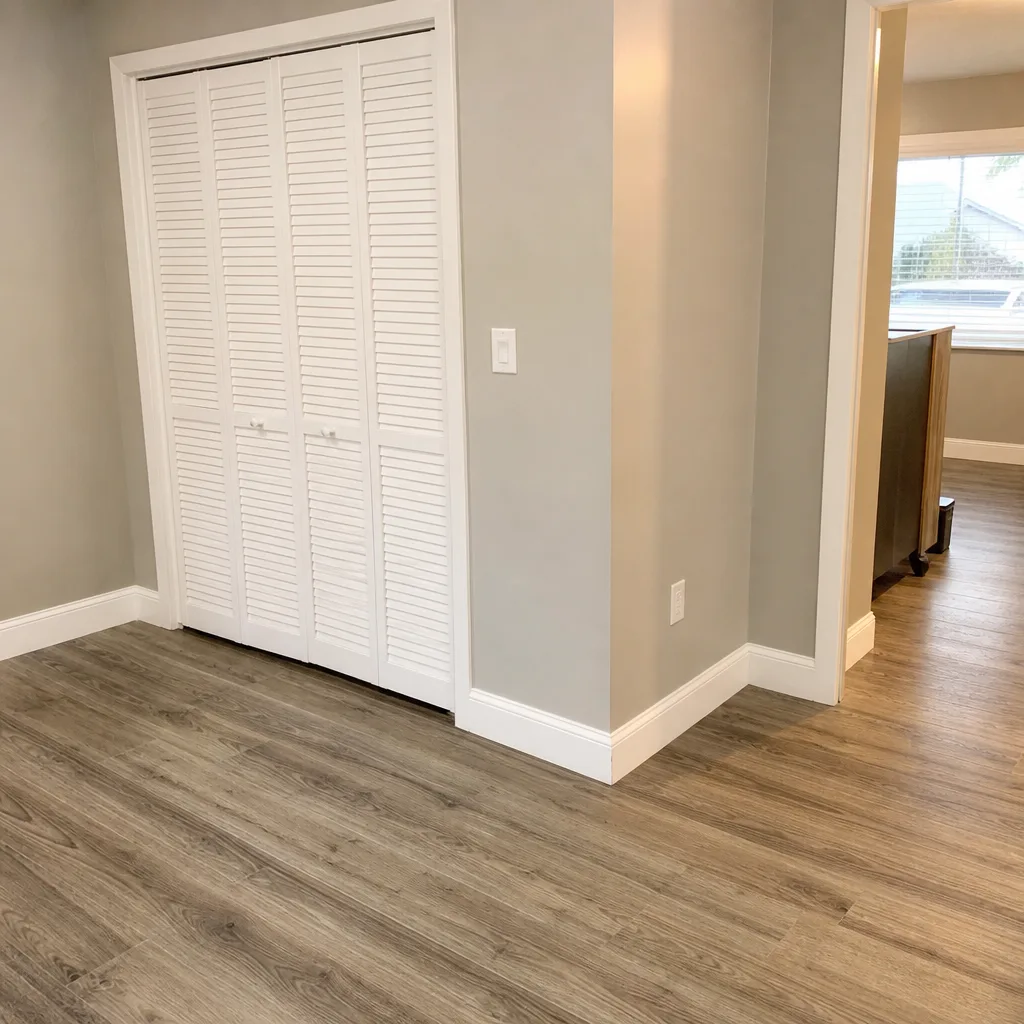 After
After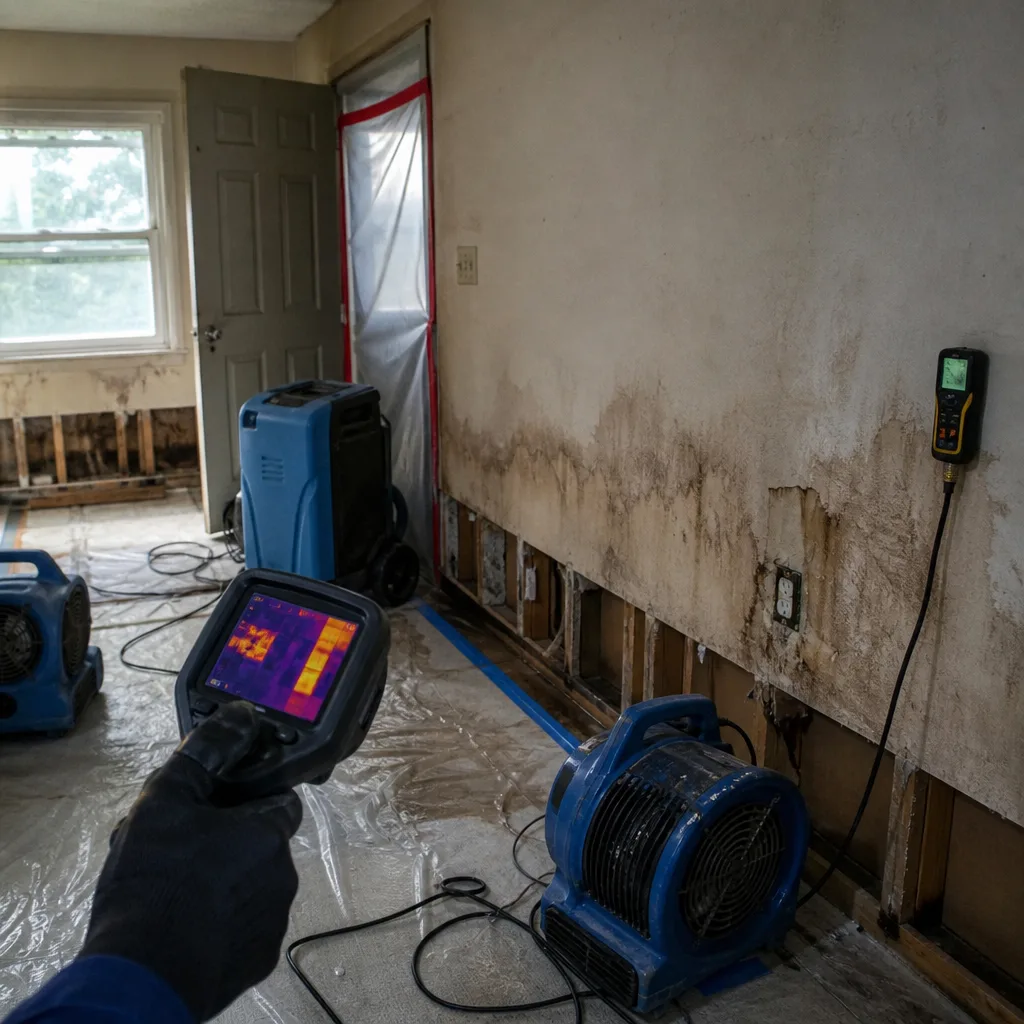 Before
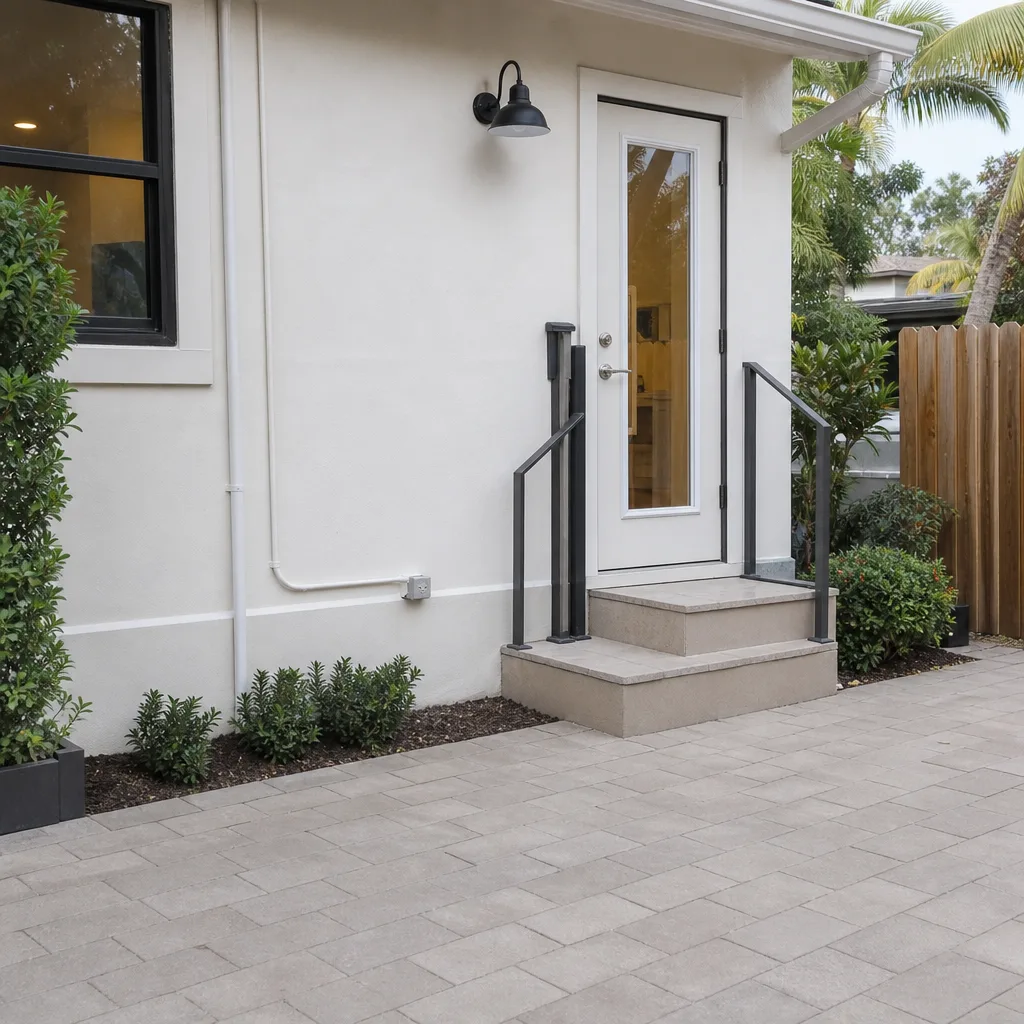 After
AfterDamage Restoration Warning Signs: A Hollywood Homeowner’s Reference Guide
A persistent 65% relative humidity reading inside a Hollywood home with no visible staining is a more urgent warning sign than a ceiling stain in a room that now reads 48% RH. Most more guides & resources stop at what you can see - the brown ring, the bubbling paint, the musty smell. But in Hollywood’s subtropical climate, where afternoon thunderstorms push vapor through stucco and concrete block walls year-round, the real early warnings are numbers: moisture content percentages, vapor pressure differentials, and relative humidity thresholds that precede visible damage by weeks or months. This guide shows you what to measure, where to measure it, and what those readings mean for your home’s structural integrity and your insurance claim.
Quick Answer
The most actionable warning signs of water, mold, and structural damage in Hollywood homes are measurable threshold readings, not just visible symptoms. Relative humidity above 60% in living spaces, moisture content above 16% in wood framing, and vapor pressure differentials exceeding 0.5 inches of mercury between interior and exterior walls indicate active moisture accumulation that will lead to mold growth or material degradation within 72 hours. These readings, combined with specific structural indicators like efflorescence on concrete block and rust staining at steel lintels, give Hollywood homeowners a 2-4 week advance warning before visible damage appears.
Table of Contents
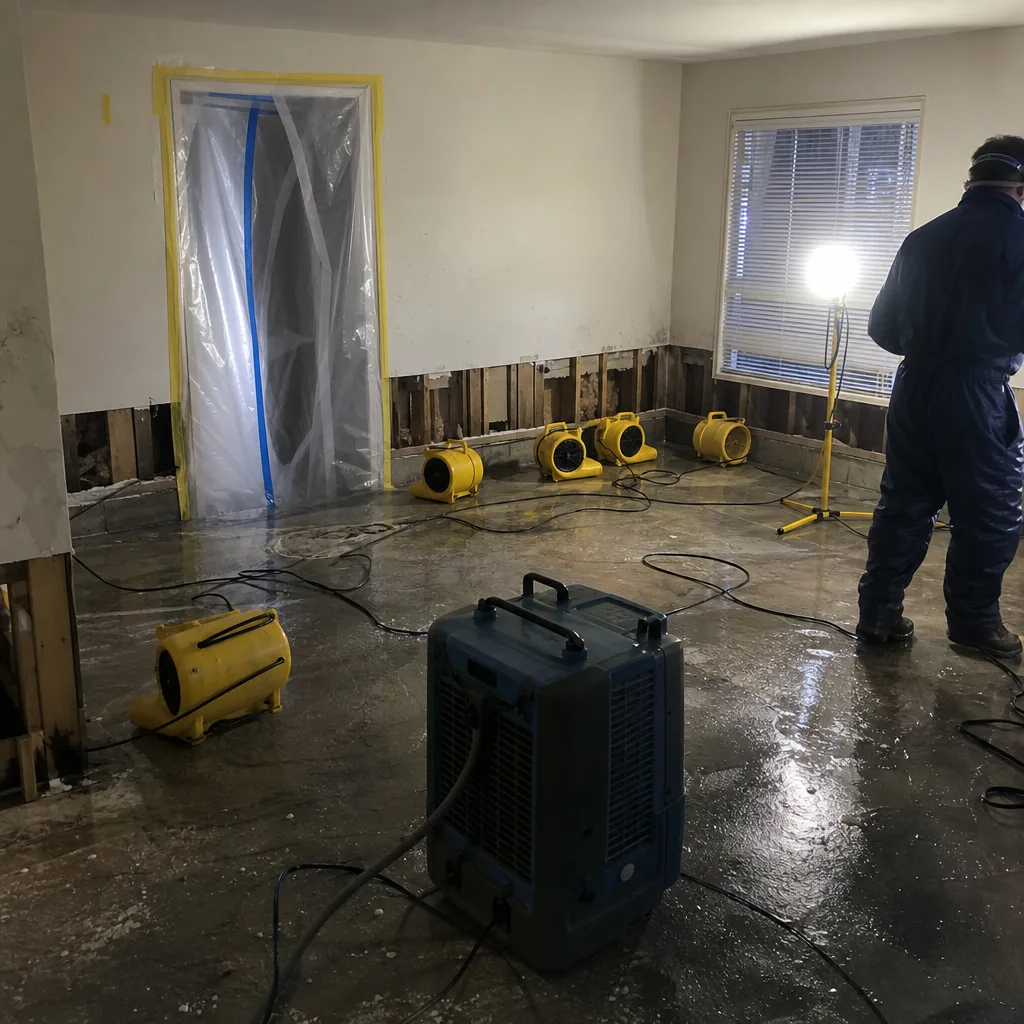
- Relative Humidity Thresholds by Room Type: The Numbers That Predict Hidden Damage
- How to Use a Pinless Moisture Meter on Hollywood’s Three Highest-Risk Concealment Points
- Musty Odor from Humidity vs. Active Mold Growth: Measurable Indicators That Distinguish Them
- Structural Warning Signs in Hollywood’s CBS Construction: Efflorescence, Delamination, and Lintel Rust
- Decision Tree: Homeowner Action vs. Licensed Mold Assessor Threshold
- The Documentation Gap: Why Your Insurance Claim Depends on What You Record Now
- Professional Equipment Standards: What the Numbers Should Look Like After Mitigation
- Common Mistakes to Avoid
- When to Call a Professional
- Frequently Asked Questions
 Before
 After
AfterRelative Humidity Thresholds by Room Type: The Numbers That Predict Hidden Damage
In Hollywood, where the outdoor relative humidity averages 74% annually and summer afternoons routinely hit 85%, the air inside your home is in constant tension with the air outside. Your air conditioning system isn’t just for comfort; it’s the primary moisture management system for your building envelope. When that balance shifts, damage follows a predictable timeline - but only if you know which numbers matter.
We use psychrometric data, which is the measurement of how temperature, humidity, and air pressure interact to move moisture through materials, to map risk in every home we assess. In Hollywood’s climate, this isn’t theoretical. A home in Emerald Hills with a failing HVAC return in a hallway closet will show elevated readings in that closet 10-14 days before mold appears on the drywall surface.
Here are the threshold readings that should trigger action, organized by room type and function:
| Room Type | Safe RH Range | Caution Zone (Action Needed) | Critical Zone (Professional Assessment) |
|---|---|---|---|
| Living spaces, bedrooms | 30-50% | 51-60% for 48+ hours | Above 60% sustained |
| Kitchens, bathrooms (in use) | 40-60% | 61-70% for 24+ hours | Above 70% or condensation on surfaces |
| Garages, lanais, porches | 50-65% | 66-75% with visible condensation | Above 75% or water pooling |
| Attics (ventilated) | Within 10% of outdoor RH | More than 15% above outdoor RH | Above 70% with temperature above 85°F |
| Crawl spaces, slab perimeter | Below 60% | 60-70% with musty odor | Above 70% or standing water |
| Interior closets, cabinets | Within 5% of adjacent room | More than 10% above adjacent room | Above 65% with no obvious source |
A $30 digital hygrometer placed in the highest-risk locations - the closet under your Hollywood Hills staircase, the cabinet beneath your kitchen sink, the garage corner nearest the water heater - will catch what your eyes miss. In our experience across 12,000+ homes restored since 2011, the homeowners who detect damage earliest are the ones who own three hygrometers and move them seasonally, as outlined in our Seasonal Damage Restoration Care for Hollywood: Year-Round Homeowner’s Guide, not the ones who wait for stains.
The vapor pressure differential, which measures how hard moisture is pushing through your walls, adds another layer. When the interior vapor pressure exceeds exterior by more than 0.5 inches of mercury (inHg), moisture is actively migrating through your building envelope toward cooler surfaces. In Hollywood’s CBS construction, that cooler surface is often the interior face of your concrete block walls, where condensation forms in the 1/4-inch air gap behind drywall. By the time you see a stain, that gap has been wet for weeks.
We document these readings on every assessment using equipment calibrated to IICRC standards. If you’re tracking your own numbers, photograph the hygrometer display with a timestamp. That photo becomes evidence if your insurer questions whether damage was “sudden and accidental” versus long-term neglect.
How to Use a Pinless Moisture Meter on Hollywood’s Three Highest-Risk Concealment Points
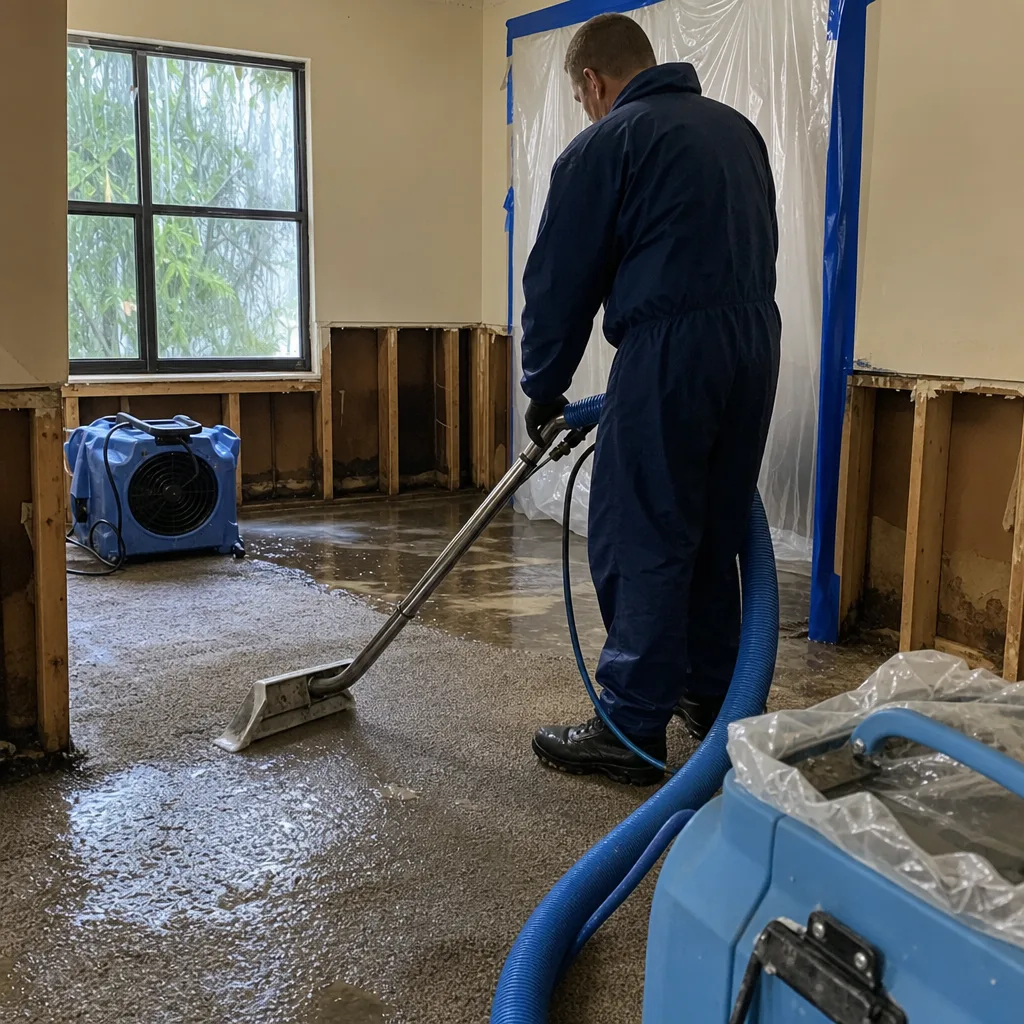
A pinless moisture meter uses electromagnetic signals to detect moisture content in materials without piercing the surface. For homeowners in Hollywood, where invasive testing can compromise stucco or trigger disclosure obligations in a future sale, this $40-$80 tool is the most practical early warning system available. The three highest-probability concealment points in South Florida construction are baseboards, window jambs, and cabinet toe-kicks - each for specific reasons tied to how Hollywood homes are built and how water moves through them.
Baseboards: The Capillary Wicking Zone
Water from slab leaks, irrigation overspray against exterior walls, or minor flooding moves upward through baseboards by capillary action - liquid drawn through porous material against gravity. In Hollywood’s concrete slab construction, where plumbing runs through or beneath the slab, this is the most common hidden damage pathway we encounter.
- Remove the hygrometer from the area for 30 minutes so your body heat doesn’t skew readings.
- Place the meter flat against the baseboard, 2-4 inches above the floor, where wicking peaks before dispersing into drywall.
- Take three readings per wall section: left, center, right. Record all three; variation indicates an active moisture front moving through the material.
- Interpret the numbers: Painted or primed wood baseboards should read 7-12% moisture content. Readings of 13-16% indicate active moisture contact. Above 16%, wood fiber saturation has been reached and microbial growth is likely within 72 hours under typical Hollywood temperatures.
In Hollywood’s older neighborhoods like Hollywood Lakes, where original 1950s baseboards are often solid pine without modern moisture-resistant primers, we’ve seen readings of 22% with no visible exterior damage. The wood was structurally compromised and harbored active mold growth in the wall cavity behind it.
Window Jambs: The Thermal Bridge Collection Point
Aluminum-framed windows, common in Hollywood homes built 1960-1990, create thermal bridges - pathways where heat moves rapidly, chilling the interior surface below the dew point. Morning condensation runs down the jamb and into the rough opening, where it accumulates in the sill plate and adjacent framing.
- Measure the interior jamb at the bottom corner, where condensation pools and drainage weeps are often clogged with paint or insect debris.
- Measure the drywall return adjacent to the jamb, 2 inches from the window frame - this catches migration that hasn’t reached visible surfaces.
- Compare left and right sides of the same window. Asymmetric readings indicate directional water entry (driving rain from the east, for instance, which is common in Hollywood’s summer storm pattern) rather than generalized condensation.
Moisture content above 15% in window jamb framing warrants removal of interior trim for visual inspection. In our documentation for insurance claims, we photograph the meter display, the measurement location, and the surrounding context in a single frame. This triple-documentation protocol, standard under The Haven Standard, eliminates disputes about when and where damage was found.
Cabinet Toe-Kicks: The Invisible Reservoir
The 3-4 inch recessed space beneath kitchen and bathroom cabinets is the lowest point in the room and the last place water evacuates. It’s also the least inspected. A slow leak from a dishwasher drain hose or sink P-trap can maintain 80%+ relative humidity in this enclosed space while the rest of the kitchen reads a normal 45%.
- Kneel and place the meter against the toe-kick panel, not the floor - the panel material (usually MDF or plywood) will show elevated readings before tile or vinyl flooring does.
- Measure the cabinet floor through the toe-kick opening if your meter has a narrow sensor head; otherwise, remove the toe-kick panel (typically held by clips or a few screws).
- Sniff for the sharp, acrid odor of active mold versus the flat, earthy smell of general dampness. This distinction matters for your next decision.
We’ve documented toe-kick moisture content of 28% in Hollywood homes where the homeowner reported “a little mustiness under the sink.” The subfloor beneath was delaminated, the cabinet base was structurally failed, and mold growth extended 4 feet into the wall cavity. A $50 moisture meter and 10 minutes of inspection would have caught this at 14%.
Musty Odor from Humidity vs. Active Mold Growth: Measurable Indicators That Distinguish Them
Not every musty smell means mold remediation. In Hollywood’s climate, where afternoon rains spike outdoor humidity and older homes breathe through unsealed stucco, a generalized damp odor is common and usually benign. But the odor of active mold growth - microbial volatile organic compounds (MVOCs) released by fungal metabolism - signals a colonized substrate that requires professional assessment and, often, a licensed mold assessor’s written report under Florida law.
The distinction matters for your health, your home’s value, and your insurance coverage. Florida’s mold-related health claim laws are strict, and insurers increasingly exclude long-term mold damage from policies. Documenting what you found, when you found it, and what the numbers said protects your claim position.
Here are the measurable indicators that separate humidity odor from active mold:
| Indicator | Humidity Odor (Manageable) | Active Mold Growth (Professional Required) |
|---|---|---|
| Relative humidity at source | 55-65%, reduces with ventilation | Often 70%+, persists with ventilation |
| Moisture content of adjacent materials | Below 15% | Above 16% with sustained elevation |
| Odor character | Flat, earthy, “after-rain” quality | Sharp, acrid, “dirty socks” or ammonia-like |
| Odor persistence | Dissipates within 30 minutes of air movement | Intensifies with disturbance; returns within hours |
| Visible signs | None, or light dust on surfaces | Discoloration, fuzziness, or defined patches any color |
| Health symptoms (if present) | None, or mild stuffiness in sensitive individuals | Persistent respiratory irritation, headaches in occupants |
| Temperature at source | At or below room temperature | Often elevated 2-4°F from microbial metabolism |
The temperature differential is the most overlooked indicator. Active mold colonies generate heat as they digest organic material. In a Hollywood home with consistent HVAC operation, a wall cavity or cabinet space reading 2-4°F above the adjacent room temperature, combined with elevated moisture and characteristic odor, is nearly diagnostic of active growth without destructive testing.
We use infrared thermography to map these differentials during assessments, but a basic infrared thermometer ($25-$40) gives homeowners a screening tool. Measure the suspect surface and a known-dry surface of the same material at the same height. A consistent difference of 2°F or more warrants professional evaluation.
If your readings suggest active mold, Florida law requires a licensed mold assessor (not a remediation company) to provide a written protocol before remediation begins, unless the affected area is less than 10 square feet and the cause has been resolved. We coordinate directly with assessors and can recommend qualified professionals in Hollywood, but we cannot legally assess our own remediation projects. This separation protects homeowners from conflicts of interest and is codified in our Haven Standard operating procedures.
Structural Warning Signs in Hollywood’s CBS Construction: Efflorescence, Delamination, and Lintel Rust
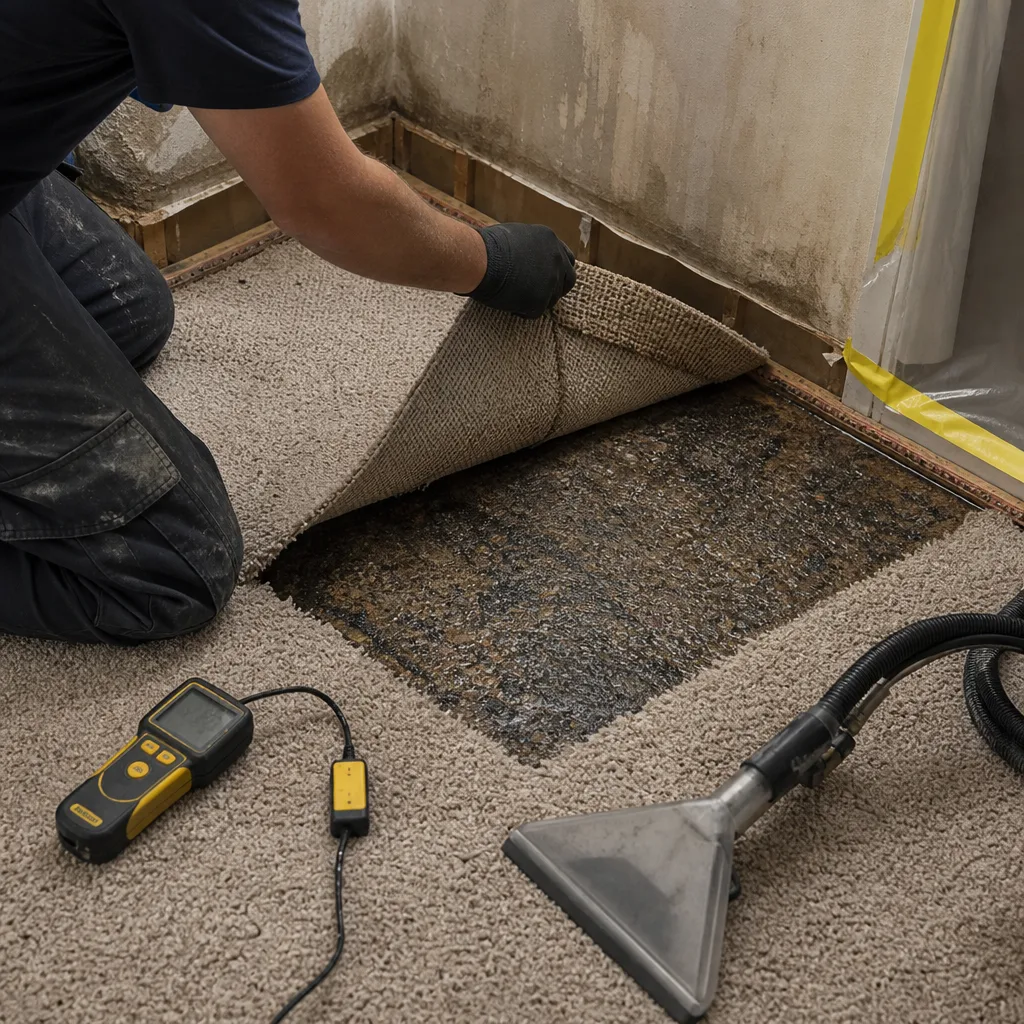
Hollywood’s dominant construction type - concrete block and stucco (CBS) - handles moisture differently than wood-frame construction common in northern climates. The concrete block is porous, the stucco is breathable, and the steel reinforcing elements are vulnerable to corrosion when the wall system stays wet. Understanding these specific failure modes helps homeowners distinguish cosmetic issues from structural threats.
Efflorescence: The Salt Signature of Water Migration
Efflorescence is the white, powdery deposit that appears on concrete block or stucco surfaces when water dissolves salts within the masonry and deposits them at the surface as it evaporates. In Hollywood, where irrigation systems frequently overspray foundation walls and summer storms drive rain against exterior surfaces, efflorescence is common on north and east-facing walls.
The pattern matters more than the presence. A thin, uniform dusting near the base of a wall suggests seasonal moisture wicking from grade - usually manageable with grading and drainage correction. A dense, crusty accumulation in a vertical streak pattern indicates a concentrated water pathway, often from a failed flashing detail or crack in the stucco. When efflorescence appears on interior surfaces, the wall system is fully saturated and the moisture source is significant and ongoing.
Scrape a sample with a plastic card and note the texture. Powdery, easily removed efflorescence is recent and surface-level. Crystalline, hard deposits indicate long-term cycling and likely degradation of the block’s surface integrity. We photograph efflorescence patterns under raking light during assessments; the shadow detail reveals texture that flat lighting obscures.
Stucco Delamination: The Hollow Sound of Failure
Stucco applied over concrete block in Hollywood’s humid climate relies on mechanical bond and, in newer construction, a moisture barrier between stucco and block. When that bond fails - from prolonged moisture exposure, improper mix, or freeze-thaw cycling in unusual cold events - the stucco separates from the substrate.
Test by tapping with a hard rubber mallet or the plastic handle of a screwdriver. Solid stucco produces a sharp, high-pitched report. Delaminated areas sound hollow and dull, with a larger dead zone than the visible crack might suggest. Map the boundary by tapping in a grid pattern; delamination often extends 12-18 inches beyond visible cracking.
In Hollywood, we’ve seen extensive delamination on homes where landscape irrigation was adjusted to spray block walls “to cool the house.” The thermal benefit is negligible; the moisture load is substantial. A single rotor head spraying a wall for 20 minutes daily can introduce 30+ gallons of water weekly into the wall system.
Lintel Rust Staining: The Structural Red Flag
Steel lintels above windows and doors in CBS construction support the block course above the opening. When moisture reaches the steel through failed sealant, cracked stucco, or inadequate flashing, corrosion begins. The rust expands to several times the original steel volume, cracking the surrounding masonry and eventually compromising the lintel’s load-bearing capacity.
Rust staining appears as orange-brown streaks originating from the lintel line and running downward. Early staining is narrow and faint; advanced failure shows wide, heavy streaks with spalling (flaking) of the stucco or block surface. In Hollywood’s coastal environment, salt-laden air accelerates this corrosion, making lintel inspection a priority for homes within 2 miles of the Intracoastal or ocean.
A professional assessment of lintel rust staining should include probing of the steel with a moisture meter and, if indicated, removal of stucco to expose the lintel for structural evaluation. We coordinate with licensed structural engineers for this evaluation when our initial assessment indicates advanced corrosion. The cost of lintel replacement ($800-$2,500 per opening in Hollywood’s market) is often claimable if the moisture source was sudden and accidental, such as storm damage or failed flashing from a roof leak.
Decision Tree: Homeowner Action vs. Licensed Mold Assessor Threshold
Knowing what you’ve found is only useful if you know what to do next. This decision tree, based on Florida’s regulatory framework and our experience with Hollywood homeowners’ insurance claims, maps readings and observations to appropriate actions - whether you choose DIY vs Professional Damage Restoration: The Hollywood Homeowner’s Decision Guide.
Homeowner Action: Monitor, Document, and Mitigate
- Relative humidity 51-60% in living spaces: Increase ventilation, check HVAC operation, monitor for 48 hours.
- Moisture content 13-15% in baseboards or trim: Identify and eliminate moisture source, dry with directed airflow, re-measure in 72 hours.
- Isolated musty odor with RH below 60% and no visible growth: Clean and dry affected area, monitor for recurrence.
- Efflorescence limited to exterior base of wall, powdery texture: Correct drainage and irrigation, monitor for expansion.
- Stucco delamination less than 1 square foot, no interior moisture: Seal against water entry, schedule professional evaluation within 30 days.
Professional Restoration Assessment: Call DryMark Restoration Hollywood
- Relative humidity above 60% sustained for 24+ hours with no identifiable source.
- Moisture content above 16% in any structural material with visible discoloration or odor.
- Water intrusion from any source affecting multiple rooms or originating from plumbing, roof, or foundation.
- Any fire, smoke, or sewage damage - these require immediate professional mitigation for health and safety reasons.
- Storm damage with visible structural compromise or water entry.
Licensed Mold Assessor Required: Legal Threshold in Florida
- Visible mold growth exceeding 10 square feet in contiguous area.
- Moisture content above 20% with characteristic mold odor and any visible discoloration.
- Any mold-related health concern raised by occupant physician or documented symptoms.
- Real estate transaction where seller disclosure is required and mold is suspected.
- Insurance claim where carrier requires independent assessment before coverage determination.
We provide free second opinions on any competitor’s written estimate, including assessor protocols. If an assessor’s scope seems excessive or insufficient, we’ll review it against IICRC standards and explain where we agree or differ. Haven Standard, Clause 1 applies: you’ll receive a written price before any work begins, with no exceptions.
The Documentation Gap: Why Your Insurance Claim Depends on What You Record Now
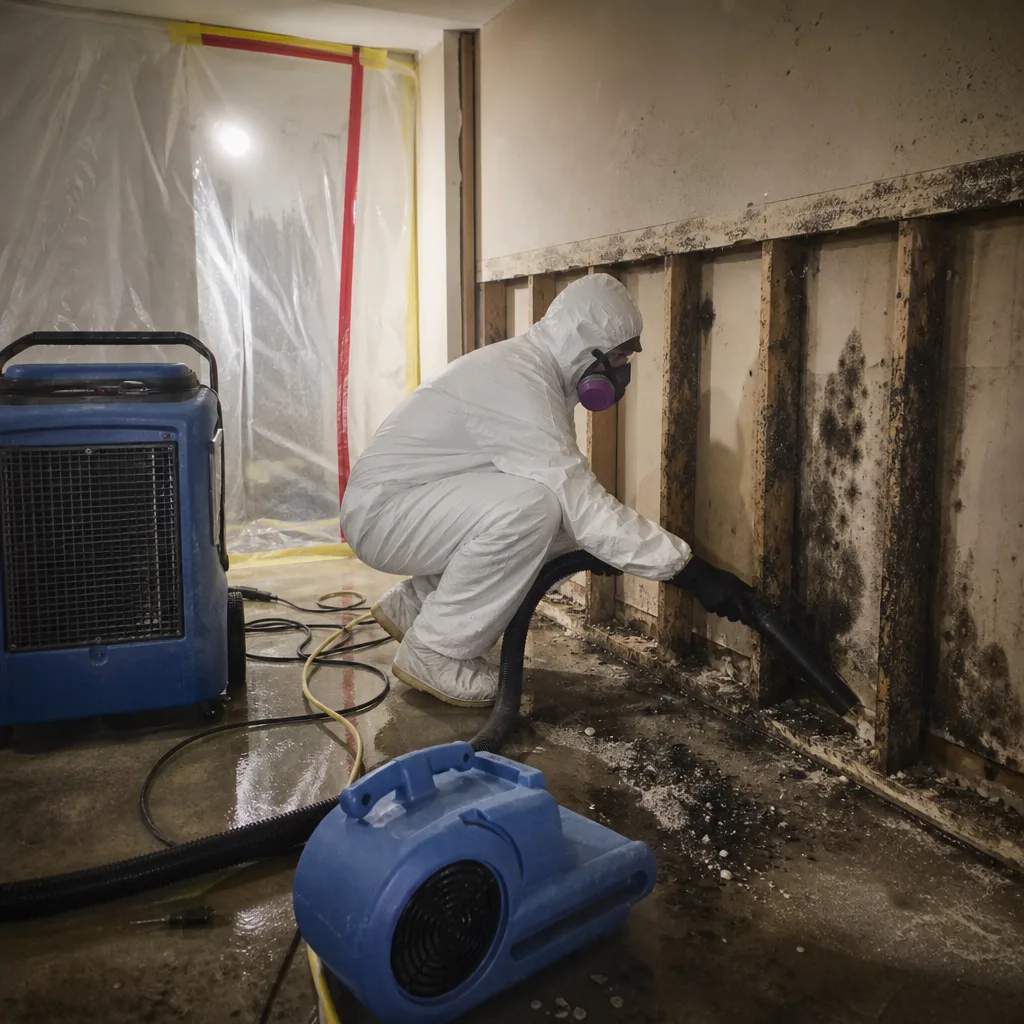
Back to Dry Restoration was founded in 2011 by a former claims adjuster who built the company around a specific problem: the documentation gap that costs homeowners their claims. In our experience, the difference between a paid claim and a denied claim is rarely the damage itself. It’s the record of when the damage was discovered, what indicated it, and what was done in response.
When you detect a warning sign, your documentation protocol should be immediate and specific:
- Photograph the reading or observation with a timestamp. Most smartphones embed GPS and time data; verify this is enabled. Include a recognizable reference point in the frame - a wall outlet, cabinet door, or window - to establish location.
- Record the measurement in a dedicated log: date, time, room, device used, reading, and any environmental conditions (HVAC on/off, recent rain, plumbing use).
- Note your response: what you checked, what you adjusted, and when you plan to re-measure.
- Preserve physical evidence: if you remove a damaged baseboard or cabinet panel, photograph it in place first, then label and store the sample.
This documentation transforms your observation from a homeowner’s memory into evidence. When an insurer’s adjuster asks, “When did this start?” your answer is a dated photo of a moisture meter reading 18% with visible efflorescence in the background, not “I noticed it last month, maybe?”
Our documentation protocol extends this principle. Every visit produces a photo record, a written drying log with psychrometric data, and a moisture map of affected areas. These records are delivered to you and, with your authorization, directly to your adjuster. The daily moisture logs we produce using equipment from Dri-Eaz, Phoenix, and Injectidry turn restoration invoices into payable claims because they show progression: here’s where we started, here’s what we did, here’s where we finished.
The Haven Standard, Clause 1 - written price before work begins - also protects your claim position. A scope agreed in writing before work starts cannot be disputed as excessive after the fact. A price documented before materials are ordered establishes reasonableness. We’ve seen competitors’ invoices challenged because the scope expanded during work with no written authorization, leaving homeowners to pay the difference or fight their carrier alone.
Professional Equipment Standards: What the Numbers Should Look Like After Mitigation
When you hire a damage restoration contractor in Hollywood, you’re hiring their equipment and their documentation discipline as much as their labor. Professional-grade drying systems from manufacturers like XPOWER, B-Air, and Injectidry produce measurable, verifiable results that should be documented and reported to you.
Here are the target readings we achieve and document on every water damage mitigation project in Hollywood:
| Parameter | Initial Reading (Typical) | 24-Hour Target | 72-Hour Target | Dry Standard Achieved |
|---|---|---|---|---|
| Relative humidity (affected area) | 65-85% | Below 60% | 50-55% | Within 5% of unaffected areas |
| Moisture content: wood framing | 18-30% | Below 18% | Below 16% | Within 2% of dry standard (typically 10-12%) |
| Moisture content: drywall | 15-25% | Below 15% | Below 12% | Below 12% or within 1% of unaffected wall |
| Moisture content: concrete/slab | Saturated to 100% RH | Below 85% RH in vapor emission | Below 80% RH | Below 75% RH or 3 lbs/1000 sq ft/24hr emission |
| Vapor pressure differential | 0.8-1.5 inHg | Below 0.6 inHg | Below 0.4 inHg | Below 0.3 inHg |
| Temperature (drying zone) | Varies | 70-80°F maintained | 70-80°F maintained | Consistent with HVAC setpoint |
Tertiary drying, which is the final phase where bound moisture is removed from deep within materials, often requires 5-7 days in Hollywood’s humid climate even after surface readings appear normal. We continue monitoring until the dry standard is achieved, not until the equipment rental period ends. This distinction matters: a competitor who removes equipment at 72 hours because “it looks dry” leaves bound moisture that will support mold growth within 30 days.
Our drying logs, produced to IICRC and RIA standards, record these readings at minimum twice daily during active drying. You receive the complete log as a standard deliverable, not an upsell. If your insurer requests additional documentation, we provide it directly with your authorization.
Common Mistakes to Avoid
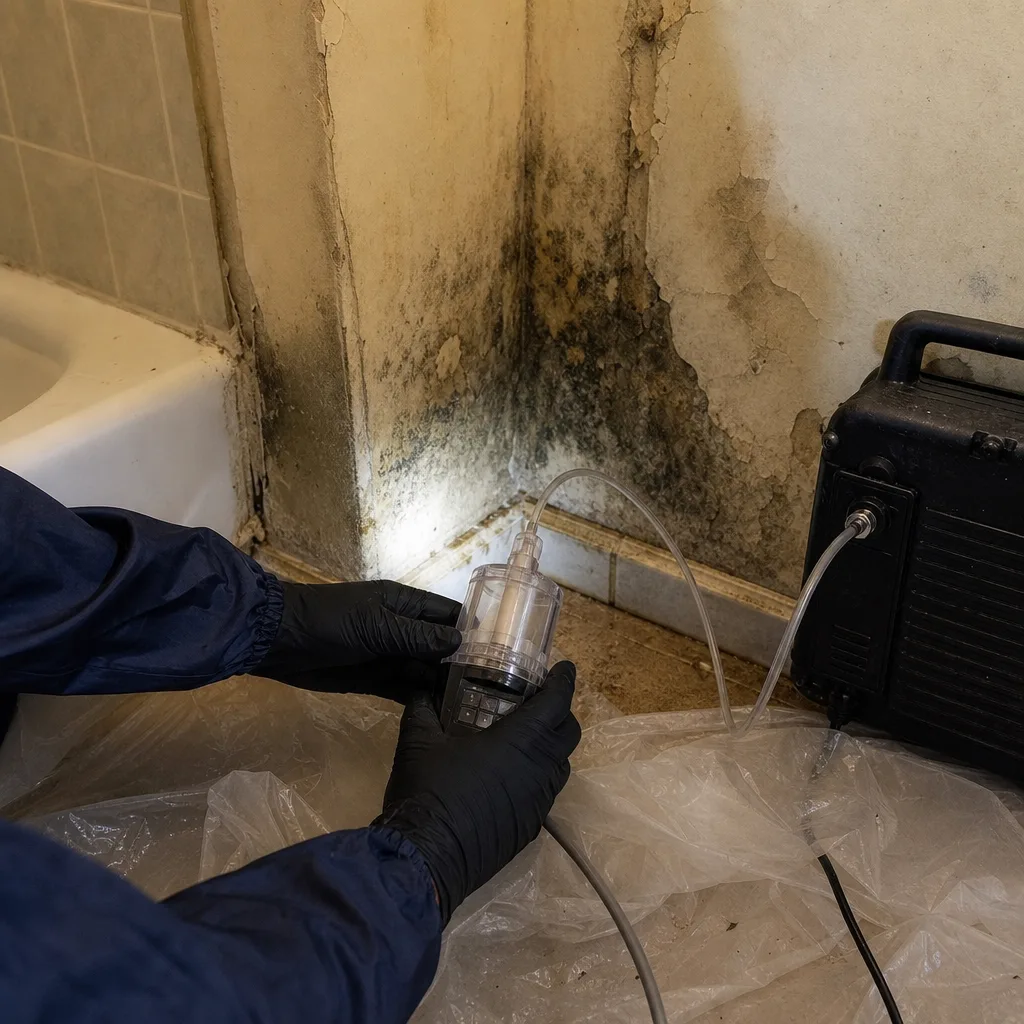
- Waiting for visible stains before acting. In Hollywood’s climate, visible damage is late-stage damage. By the time you see a stain, mold growth is established and structural materials may be compromised.
- Using a single hygrometer location as representative. A bedroom reading 48% RH means nothing if the closet behind it reads 67%. Measure the highest-risk zones, not the most comfortable spaces.
- Assuming new construction is immune. Hollywood’s building boom 2015-2022 produced homes with documented flashing failures, improper stucco curing, and HVAC commissioning errors. We’ve restored water damage in homes less than 2 years old.
- Ignoring seasonal irrigation patterns. Many Hollywood homeowners run irrigation systems installed by previous owners without knowing spray patterns. A rotor head adjusted in 2019 may now spray your bedroom wall after landscape maturity changed the geometry.
- Accepting verbal estimates for restoration work. Haven Standard, Clause 1 exists because verbal scopes are unenforceable and frequently disputed. A written price before work begins protects you from scope creep and gives your insurer a fixed point of reference.
- Discarding damaged materials before documentation. That water-stained baseboard is evidence of the water line height and duration. Photograph it in place, then remove it. Your adjuster may need to see it.
- Assuming bleach kills mold on porous materials. Bleach penetrates poorly into drywall and wood, leaves moisture that feeds regrowth, and can damage surfaces. Effective mold remediation requires removal of colonized materials and professional application of EPA-registered antimicrobials.
When to Call a Professional
Call a professional when your readings cross the thresholds in this guide, when you cannot identify or safely stop a moisture source, or when any damage involves sewage, fire, or structural compromise. In Hollywood’s climate, the 48-72 hour window between water intrusion and mold colonization is real and unforgiving. Waiting for Monday, waiting for your brother-in-law’s opinion, or waiting to see if it “dries out on its own” has cost homeowners tens of thousands in uncovered damage.
DryMark Restoration Hollywood offers free estimates in Hollywood - call (754) 222-3479. A live person answers every call, 24 hours a day, 7 days a week, with no voicemail on emergency lines. Every job is quoted in writing before work begins, documented with a photo record on every visit, and covered by the 365-Day Done Right Promise under The Haven Standard. We provide a free second opinion on any competitor’s written estimate, and we coordinate directly with your insurance adjuster with photo-documented assessments that support your claim.
Frequently Asked Questions
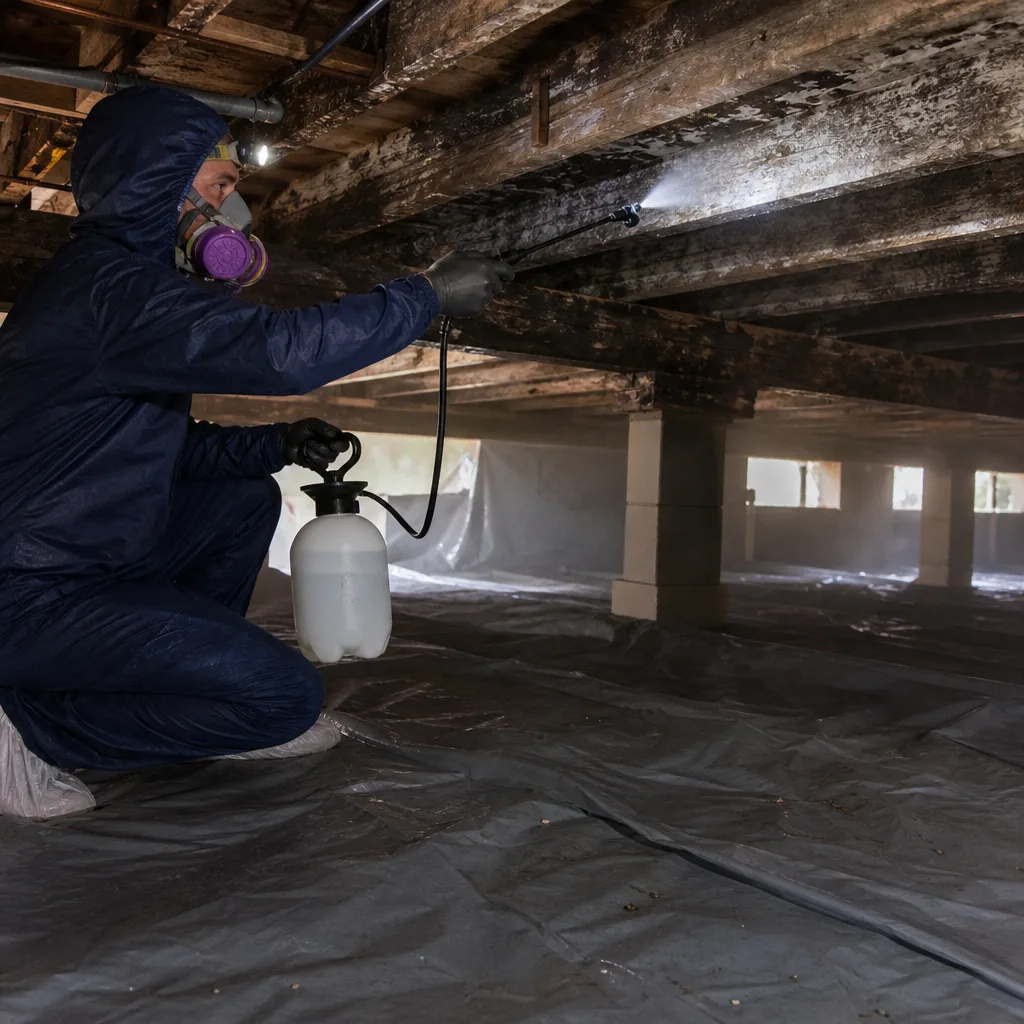
Initial moisture assessment and written estimate from DryMark Restoration Hollywood is provided at no charge. A detailed assessment including infrared thermography, pinless and pin-type moisture mapping, and a written scope with line-item pricing typically takes 60-90 minutes. For mold-specific concerns requiring a licensed assessor’s written protocol, we can recommend qualified professionals; their fees typically range $300-$600 in the Hollywood market, though this varies by scope. Call (754) 222-3479 to schedule.
Yes, if the damage resulted from a covered peril and you documented the finding properly. Insurance covers sudden and accidental damage, not long-term neglect. A dated photograph of a moisture meter reading 18% with no visible stain, followed by professional assessment and prompt mitigation, demonstrates responsible homeowner action. The key is documentation and response speed, not visibility of damage. We work directly with adjusters to present our findings in the format carriers require for claim processing.
Our live dispatch operates 24 hours a day, 7 days a week with no voicemail on emergency lines. For active water intrusion, sewage backup, or fire damage in Hollywood, we typically arrive within 60-90 minutes of your call. For assessment-only requests without active damage, we schedule within 24 hours. Response time to the initial call is immediate - a live person, not a menu tree. Call (754) 222-3479.
For areas under 10 square feet with a resolved moisture source and no health symptoms, homeowners may clean with appropriate PPE and EPA-registered products. For larger areas, hidden growth suspected, HVAC system involvement, or any occupant respiratory symptoms, professional remediation is warranted. In Florida, areas over 10 square feet require a licensed mold assessor’s protocol. We cannot legally assess our own remediation projects; this separation protects you. We’ll review any assessor’s protocol against IICRC standards and provide a written remediation price before work begins.
We do, with your authorization. Our documentation - daily moisture logs, photo records, written scopes - is formatted for direct adjuster submission. Alicia Brennan’s background as a former claims adjuster informs our documentation discipline: we know what adjusters need to see to approve payment without dispute. We attend adjuster meetings when requested, provide supplemental documentation for questioned line items, and maintain a complete file you can access at any time. You are never left to translate technical findings to your carrier alone.
The 365-Day Done Right Promise is a written guarantee under The Haven Standard, not a verbal assurance or generic warranty language. If any aspect of our work is not done right, we make it right - including return visits, corrections, and coordination with other trades if our scope intersected with theirs. It’s stamped on every job file, not buried in fine print. Standard contractor warranties often limit coverage to materials or exclude consequential damage; our promise covers the outcome of our work. Documentation of the original scope and completion readings supports any claim under the promise.
The Bottom Line
The most valuable warning signs in a Hollywood home are numbers, not stains. A $30 hygrometer and a $50 moisture meter, used consistently at the right locations, will detect moisture accumulation 2-4 weeks before visible damage appears. The thresholds are specific: 60% RH sustained, 16% moisture content in wood, 0.5 inHg vapor pressure differential. Document what you find with dated photographs, act promptly when thresholds are crossed, and demand written scopes and documented outcomes from any professional you hire. Your insurance claim, your home’s structural integrity, and your family’s health all depend on evidence, not assumptions.
Written by Alicia Brennan, Owner at DryMark Restoration Hollywood, serving Hollywood since 2011.